
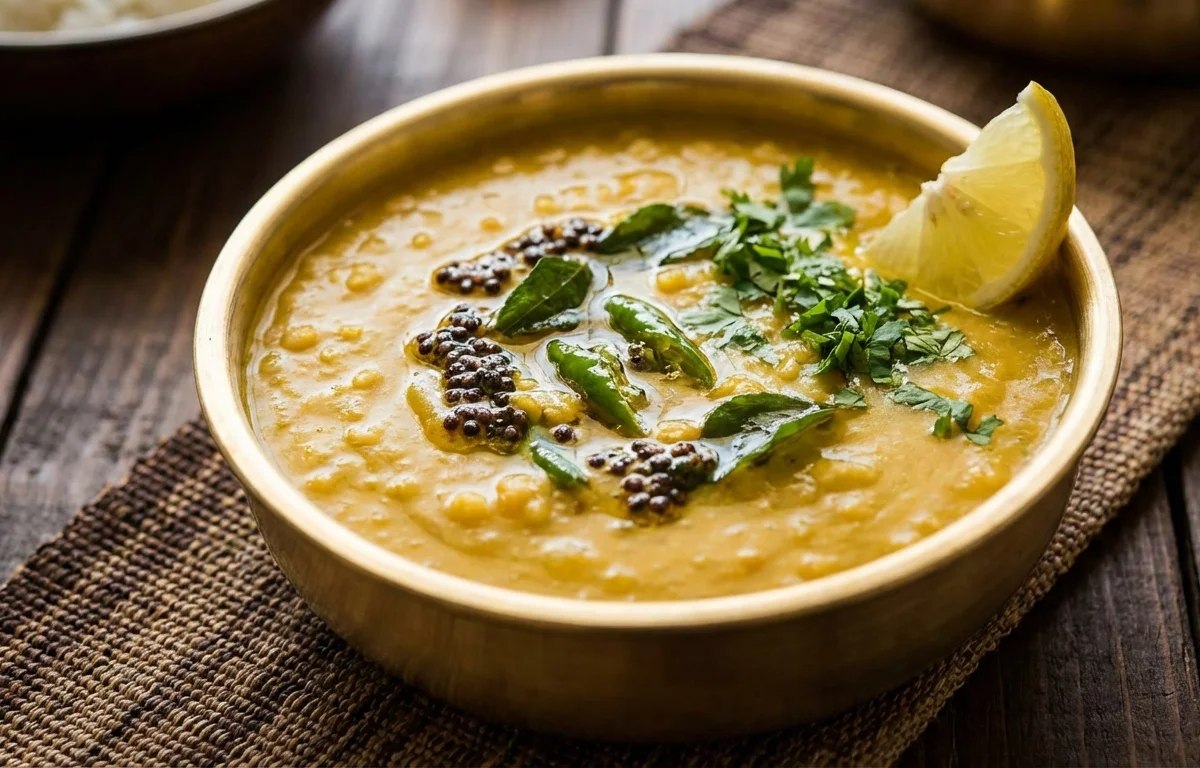
Dal Thove
A simple, comforting lentil soup from Konkani cuisine. Made with split pigeon peas and a light tempering of mustard seeds and curry leaves, it's the perfect soothing accompaniment to steamed rice.
For 4 servings
Pressure Cook the Dal
- Rinse the toor dal under running water until the water runs clear. For faster cooking, you can soak it in warm water for 30 minutes, then drain.
- Place the rinsed dal in a pressure cooker. Add 4 cups of water and the turmeric powder.
- Secure the lid and cook on medium heat for 4-5 whistles, or for about 15 minutes, until the dal is completely soft and mushy.
- Allow the pressure to release naturally. Once safe, open the cooker.
Prepare the Dal Base
- Using a whisk or an immersion blender, blend the cooked dal until it is smooth and creamy.
- Place the cooker back on low heat. Add 1-2 cups of hot water to achieve a thin, soupy consistency. Dal Thove is traditionally not thick.
- Add salt to taste and stir well. Bring the dal to a gentle boil and let it simmer for 3-5 minutes for the flavors to meld together.
Prepare the Tempering (Tadka)
- While the dal simmers, heat ghee in a small tadka pan over medium heat.
- Once the ghee is hot, add the mustard seeds. Wait for them to splutter completely, which should take about 30 seconds.
- Lower the heat, then add the hing, broken dried red chilli, slit green chillies, and curry leaves. Be cautious as the curry leaves will sputter.
- Sauté for another 30 seconds until the curry leaves turn crisp and aromatic.
Combine and Serve
- Turn off the heat for the dal. Immediately pour the hot tempering over the dal. You should hear a satisfying sizzle.
- Stir the tempering into the dal. Add the freshly squeezed lemon juice and mix again.
- Garnish with freshly chopped coriander leaves and serve immediately with hot steamed rice.
What to keep in mind.
5 tips from the recipe — small details that make a real difference to the final dish.
- 1The consistency of Dal Thove is key; it should be thin and pourable, similar to a light soup. Always use hot water to adjust it, as cold water can affect the taste and texture.
- 2Don't skip the hing (asafoetida). It is crucial for the authentic flavor profile of this Konkani dish and also aids in digestion.
- 3For the best flavor, add the lemon juice only after turning off the heat. Boiling lemon juice can make it bitter and destroy its Vitamin C content.
- 4Use fresh curry leaves for the best aroma. If using dried, crush them slightly before adding to the hot ghee.
- 5To make this recipe vegan, simply substitute ghee with coconut oil, which also imparts a lovely coastal flavor.
Adapt it for your goals.
Flavor Addition
For a mild garlicky flavor, you can add 2-3 cloves of lightly crushed garlic to the tempering along with the chillies.
Lentil VariationLentil Variation
While traditionally made with toor dal, you can also make this with a mix of toor dal and moong dal for a different texture and flavor.
Vegetable AdditionVegetable Addition
For a more wholesome meal, you can add finely chopped spinach or tomatoes to the dal while it simmers.
Why this is on our healthy list.
Rich in Plant-Based Protein
Toor dal is an excellent source of vegetarian protein, which is essential for muscle building, cell repair, and overall body function.
Aids Digestion
The combination of fiber from lentils and the carminative properties of hing (asafoetida) helps promote healthy digestion and can prevent bloating and gas.
Boosts Immunity
Ingredients like turmeric (containing curcumin), lemon juice (rich in Vitamin C), and curry leaves are packed with antioxidants that help strengthen the immune system.
Heart-Healthy
This dal is low in saturated fat and cholesterol-free. The fiber in lentils can also help manage cholesterol levels, contributing to better cardiovascular health.
Frequently asked questions
Yes, Dal Thove is very healthy. It is rich in plant-based protein and dietary fiber from the lentils, low in fat, and packed with nutrients from spices like turmeric. It's a light, easily digestible meal.