
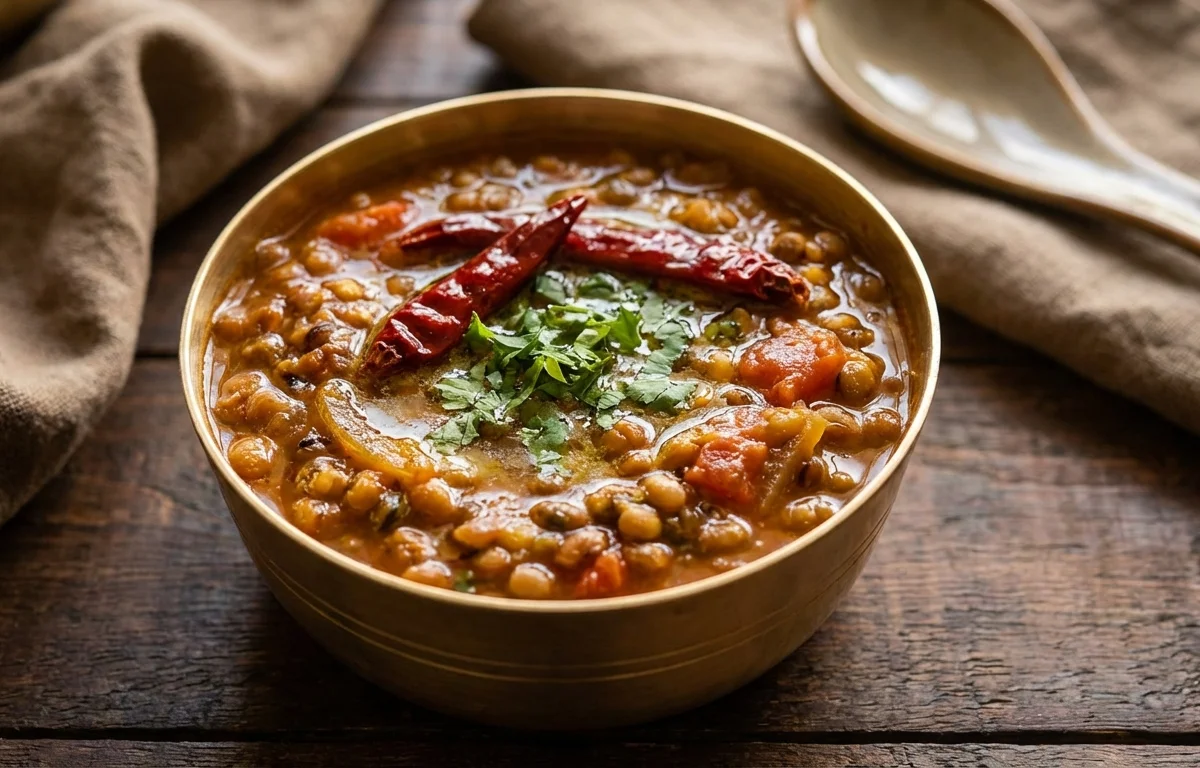
Dal Moth
A wholesome and hearty North Indian curry made from nutritious moth beans. This simple, protein-packed dal is simmered in a savory onion-tomato masala, perfect with hot rotis or steamed rice.
For 4 servings
6 steps. 30 minutes total.
- 1
Step 1
- a.Soak and Cook Moth Beans
- b.Rinse the moth beans thoroughly under running water. Soak them in 3-4 cups of water for at least 4 hours, or preferably overnight.
- c.Drain the soaking water. Transfer the beans to a pressure cooker.
- d.Add 3 cups of fresh water, 0.5 tsp turmeric powder, and 1 tsp of salt. Secure the lid.
- e.Pressure cook on medium heat for 4-5 whistles, or for about 15 minutes, until the beans are tender but still hold their shape. Allow the pressure to release naturally.
- 2
Step 2
- a.Prepare the Base Masala
- b.While the beans cook, heat 2 tbsp of ghee in a kadai or heavy-bottomed pan over medium heat.
- c.Add 0.5 tsp of cumin seeds and let them crackle for about 30 seconds.
- d.Add the finely chopped onion and sauté for 5-6 minutes until it becomes soft and golden brown.
- e.Add the ginger-garlic paste and slit green chilies. Sauté for another minute until the raw aroma disappears.
- 3
Step 3
- a.Cook the Tomato Masala
- b.Pour in the tomato puree. Add the red chili powder and coriander powder.
- c.Mix well and cook the masala for 6-8 minutes, stirring occasionally, until it thickens and you see ghee separating from the sides of the pan.
- 4
Step 4
- a.Combine and Simmer the Dal
- b.Once the pressure has released, open the cooker. Add the cooked moth beans along with their cooking liquid to the prepared masala in the kadai.
- c.Stir everything together gently. If the dal seems too thick, add 0.5 to 1 cup of hot water to reach your desired consistency.
- d.Add the remaining 0.25 tsp of salt (or to taste). Bring the dal to a gentle boil, then reduce the heat and let it simmer for 5-7 minutes for the flavors to meld.
- e.Stir in the garam masala and turn off the heat.
- 5
Step 5
- a.Prepare the Final Tempering (Tadka)
- b.In a small tadka pan, heat the remaining 1 tbsp of ghee over medium heat.
- c.Add the remaining 0.5 tsp of cumin seeds, hing, and the dried red chilies.
- d.Sauté for 30-45 seconds until the seeds splutter and the chilies darken slightly. Be careful not to burn the spices.
- 6
Step 6
- a.Garnish and Serve
- b.Immediately pour the hot tempering over the prepared dal. You will hear a satisfying sizzle.
- c.Garnish with freshly chopped coriander leaves.
- d.Serve hot with steamed basmati rice, jeera rice, or fresh rotis.
What to keep in mind.
5 tips from the recipe — small details that make a real difference to the final dish.
- 1Soaking the moth beans is essential for even cooking and better digestion. Do not skip this step.
- 2For a richer flavor, you can use homemade tomato puree made from fresh, ripe tomatoes.
- 3To make the dal creamier, gently mash about 1/4 cup of the cooked beans with the back of a spoon before adding them to the masala.
- 4The final tempering (tadka) is key to the authentic flavor of this dal. Use ghee for the best taste.
- 5If you prefer a tangier dal, add a teaspoon of amchur (dry mango powder) along with the garam masala at the end.
Adapt it for your goals.
Vegan Version
Replace the ghee with a neutral vegetable oil or coconut oil to make this recipe completely plant-based.
Jain VersionJain Version
Omit the onion and ginger-garlic paste. Increase the amount of hing slightly and add more tomato puree for a rich base.
Sprouted Dal MothSprouted Dal Moth
Use sprouted moth beans for an extra nutritional boost. Reduce the pressure cooking time to 2-3 whistles as sprouts cook faster.
With VegetablesWith Vegetables
Add diced vegetables like carrots, potatoes, or bottle gourd (lauki) to the pressure cooker along with the beans for a more wholesome one-pot meal.
Why this is on our healthy list.
Excellent Source of Protein
Moth beans are packed with plant-based protein, which is essential for muscle building, tissue repair, and overall body function.
High in Dietary Fiber
The high fiber content promotes healthy digestion, prevents constipation, and helps in maintaining stable blood sugar levels.
Rich in Minerals
This dal is a good source of important minerals like iron for blood health, magnesium for nerve function, and potassium for maintaining blood pressure.
Supports Weight Management
The combination of protein and fiber provides a feeling of fullness (satiety), which can help reduce overall calorie intake and support weight management goals.
Frequently asked questions
Yes, Dal Moth is very healthy. It is an excellent source of plant-based protein and dietary fiber, which aids digestion and keeps you full. It's also rich in essential minerals like iron, magnesium, and potassium.