
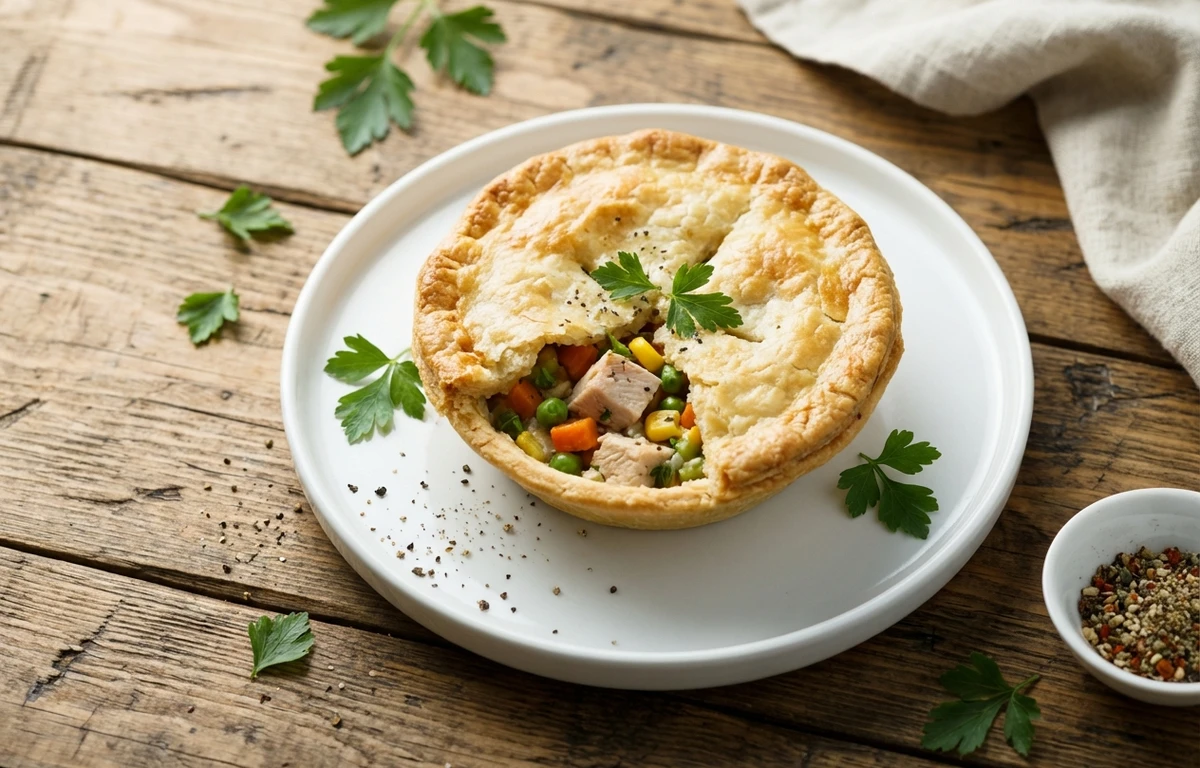
Crust-Light Chicken Pot Pie
Enjoy classic comfort food without the worry. This single-serving chicken pot pie features tender chicken and low-potassium vegetables in a savory, salt-free gravy, all topped with a simple, light crust. It's perfectly portioned for a kidney-friendly diet.
For 4 servings
5 steps. 20 minutes total.
- 1
Step 1
- a.Preheat oven and prepare vegetables
- b.Preheat your oven to 400°F (200°C).
- c.Place the cauliflower, carrots, and green beans in a medium pot and cover with water.
- d.Bring to a boil and cook for 5-7 minutes until slightly tender.
- e.Drain the vegetables completely, discarding all the cooking water to reduce potassium.
- 2
Step 2
- a.Make the chicken filling
- b.In a skillet over medium heat, melt 2 tbsp of unsalted butter.
- c.Add the chopped onion and cook until softened, about 3-4 minutes.
- d.Add the cubed chicken and cook until no longer pink, about 5-6 minutes.
- e.Sprinkle 2 tbsp of flour over the chicken and stir for 1 minute to cook out the raw flour taste.
- f.Slowly whisk in the low-sodium chicken broth until smooth. Add garlic powder, thyme, and black pepper.
- g.Bring the mixture to a simmer and cook for 2-3 minutes until the gravy thickens.
- h.Stir in the boiled and drained vegetables. Remove from heat.
- 3
Step 3
- a.Prepare the light crust topping
- b.In a small bowl, whisk together 1 cup of all-purpose flour and the baking powder.
- c.Cut in the 2 tbsp of cold, cubed butter using your fingertips or a pastry blender until the mixture resembles coarse crumbs.
- d.Stir in the cold water, 1 tablespoon at a time, until a soft dough forms. Do not overmix.
- 4
Step 4
- a.Assemble and bake the pot pies
- b.Divide the chicken filling evenly among four 8-ounce oven-safe ramekins.
- c.Divide the crust dough into four equal portions. On a lightly floured surface, pat each portion into a round disc slightly larger than the top of your ramekins.
- d.Place one dough disc on top of each ramekin, gently pressing the edges to seal.
- e.Cut a small slit in the top of each crust to allow steam to escape.
- f.Place the ramekins on a baking sheet and bake for 20-25 minutes, or until the crust is golden brown and the filling is bubbly.
- 5
Step 5
- a.Rest and serve
- b.Carefully remove the pot pies from the oven and let them cool for at least 5-10 minutes before serving, as the filling will be very hot.
What to keep in mind.
4 tips from the recipe — small details that make a real difference to the final dish.
- 1Ensure your garlic powder and broth are truly salt-free or very low in sodium, as this is where hidden sodium can be found.
- 2Do not skip the step of boiling and draining the vegetables; it's crucial for reducing potassium content.
- 3For extra flavor without salt, add a pinch of dried rosemary or sage to the filling.
- 4The crust dough can be made ahead and kept refrigerated for up to 24 hours.
Adapt it for your goals.
Dairy free
To make this recipe completely dairy-free, replace the unsalted butter with an equal amount of olive oil or a dairy-free butter substitute.
gluten freeGluten free
For a gluten-free version, use an all-purpose gluten-free flour blend for both the filling thickener and the crust. You may need to add a little extra water to the crust dough.
Why this is on our healthy list.
Low in Sodium
By eliminating salt and using low-sodium ingredients, this recipe helps manage blood pressure and reduce fluid retention, which is critical for kidney health.
Controlled Potassium
Utilizing low-potassium vegetables and a boiling technique to further reduce their potassium levels helps protect kidney function.
Portion-Controlled Protein
The recipe provides a specific, limited amount of high-quality protein from chicken, which helps reduce the workload on the kidneys.
Low in Phosphorus
Avoiding dairy, whole grains, and nuts keeps the phosphorus content low, which is important for bone health in individuals with CKD.
Frequently asked questions
Yes, this version is designed to be healthy for individuals on a renal diet. It is low in sodium, potassium, and phosphorus, and provides controlled protein, making it a much healthier alternative to traditional pot pies.