
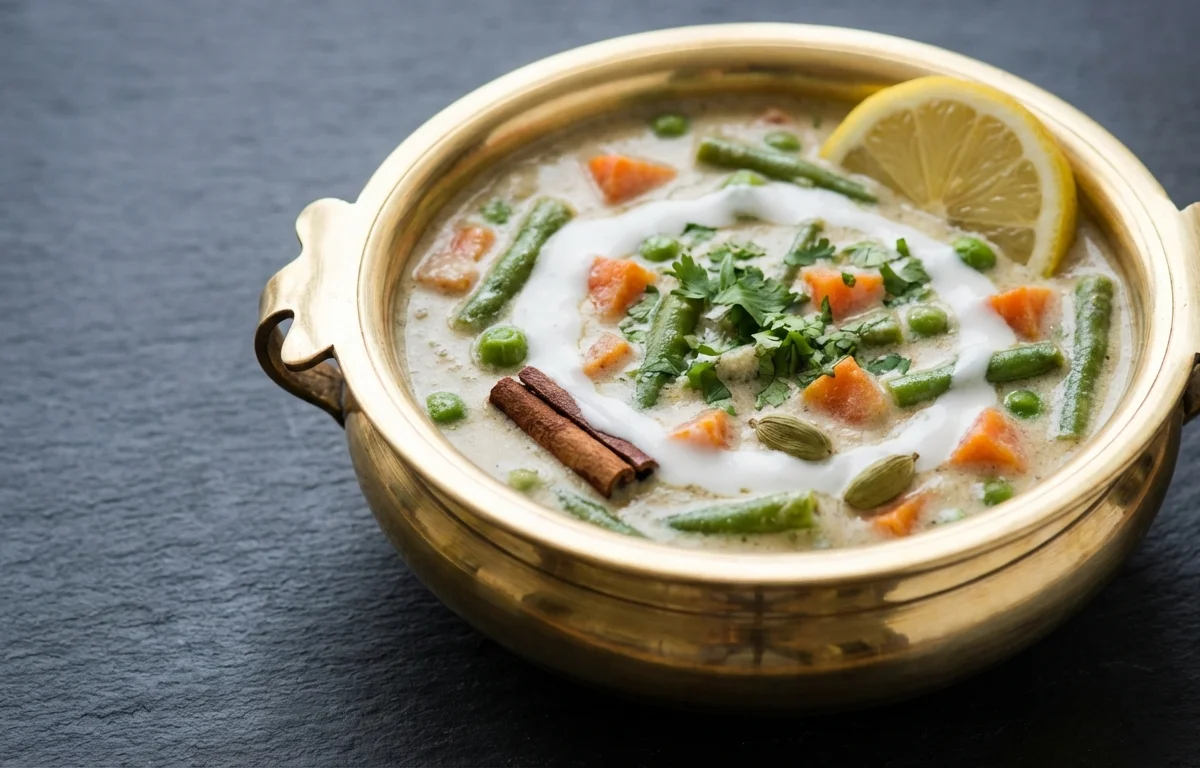
Coconut Vegetable Korma
A creamy and fragrant South Indian curry made with mixed vegetables and chickpeas simmered in a delicate coconut and cashew gravy. This mildly spiced korma is a comforting main dish that pairs perfectly with appam, parotta, or steamed rice.
For 4 servings
Prepare the Korma Paste
- Soak the raw cashews in 1/4 cup of warm water for at least 15 minutes to soften them.
- In a high-speed blender, combine the soaked cashews (along with their soaking water), fresh grated coconut, fennel seeds, white poppy seeds, green chilies, ginger, and garlic.
- Add about 1/4 to 1/2 cup of fresh water and blend until you have a completely smooth, creamy paste. Set aside.
Temper Spices and Sauté Aromatics
- Heat coconut oil in a heavy-bottomed pot or kadai over medium heat.
- Once the oil is hot, add the cinnamon stick, cloves, crushed green cardamom pods, and bay leaf. Sauté for 30-45 seconds until they become fragrant.
- Add the thinly sliced onions and a pinch of salt. Cook for 5-7 minutes, stirring occasionally, until the onions are soft, translucent, and lightly golden at the edges.
Cook the Vegetables
- Add the chopped mixed vegetables (carrots, beans, potato) and turmeric powder to the pot. Sauté for 3-4 minutes.
- Pour in 1.5 cups of water and the remaining salt. Stir well and bring the mixture to a boil.
- Once boiling, reduce the heat to medium-low, cover the pot, and let the vegetables cook for 8-10 minutes until they are tender but not mushy.
- Add the green peas (if using fresh or frozen) and the drained chickpeas. Cook for another 2 minutes.
Simmer the Korma
- Pour the prepared coconut-cashew paste into the pot with the cooked vegetables. Stir gently to combine everything well.
- Rinse the blender with a little warm water (about 1/4 cup) and add it to the pot to not waste any paste.
- Bring the korma to a gentle simmer over low heat. Do not let it come to a rolling boil, as this can cause the coconut gravy to split.
- Let it simmer for 5-7 minutes, stirring occasionally, until the raw taste of the paste is gone and the gravy has thickened to your desired consistency.
Finish and Serve
- Turn off the heat. Stir in the fresh lemon juice for a hint of brightness.
- Garnish generously with freshly chopped coriander leaves.
- Serve the Coconut Vegetable Korma hot with appam, idiyappam, parotta, or steamed basmati rice.
What to keep in mind.
5 tips from the recipe — small details that make a real difference to the final dish.
- 1For the creamiest texture, use fresh or frozen grated coconut. If using desiccated coconut, soak it in 1/2 cup of hot water for 20 minutes before grinding.
- 2Do not boil the korma vigorously after adding the coconut paste. A gentle simmer is key to prevent the gravy from splitting and to maintain its creamy texture.
- 3Cut all vegetables into uniform, bite-sized pieces to ensure they cook evenly and at the same rate.
- 4For a richer korma, you can substitute half of the water in the gravy with thin coconut milk.
- 5The korma thickens as it cools. Adjust the consistency with a splash of warm water when reheating.
Adapt it for your goals.
Protein-Rich
Add 200g of cubed paneer or firm tofu along with the chickpeas for an extra protein boost. Pan-fry the cubes until golden before adding.
Nut FreeNut-Free
For a nut-free version, replace the cashews and poppy seeds with 2 tablespoons of melon seeds (magaz) or roasted gram dal (pottukadalai).
Spicier VersionSpicier Version
Increase the number of green chilies to 3-4 or add 1/2 teaspoon of red chili powder along with the turmeric powder for more heat.
With Coconut MilkWith Coconut Milk
For an even creamier and richer gravy, add 1/2 cup of thick coconut milk at the end and heat through gently for 1-2 minutes without boiling.
Why this is on our healthy list.
Rich in Dietary Fiber
The combination of mixed vegetables and chickpeas makes this dish an excellent source of dietary fiber, which aids in digestion, promotes gut health, and helps maintain stable blood sugar levels.
Provides Healthy Fats
Coconut and cashews are good sources of healthy fats, including medium-chain triglycerides (MCTs) from coconut, which provide a quick source of energy and support overall satiety.
Plant-Based Protein Source
Chickpeas contribute a significant amount of plant-based protein, making this a satisfying and nutritious meal for vegetarians and vegans, supporting muscle health and repair.
Packed with Vitamins and Minerals
The variety of vegetables ensures a good intake of essential vitamins and minerals like Vitamin A from carrots, Vitamin C, and potassium, which are crucial for immune function and overall well-being.
Frequently asked questions
One serving of this Coconut Vegetable Korma contains approximately 350-400 calories, depending on the specific vegetables used and the amount of oil.