
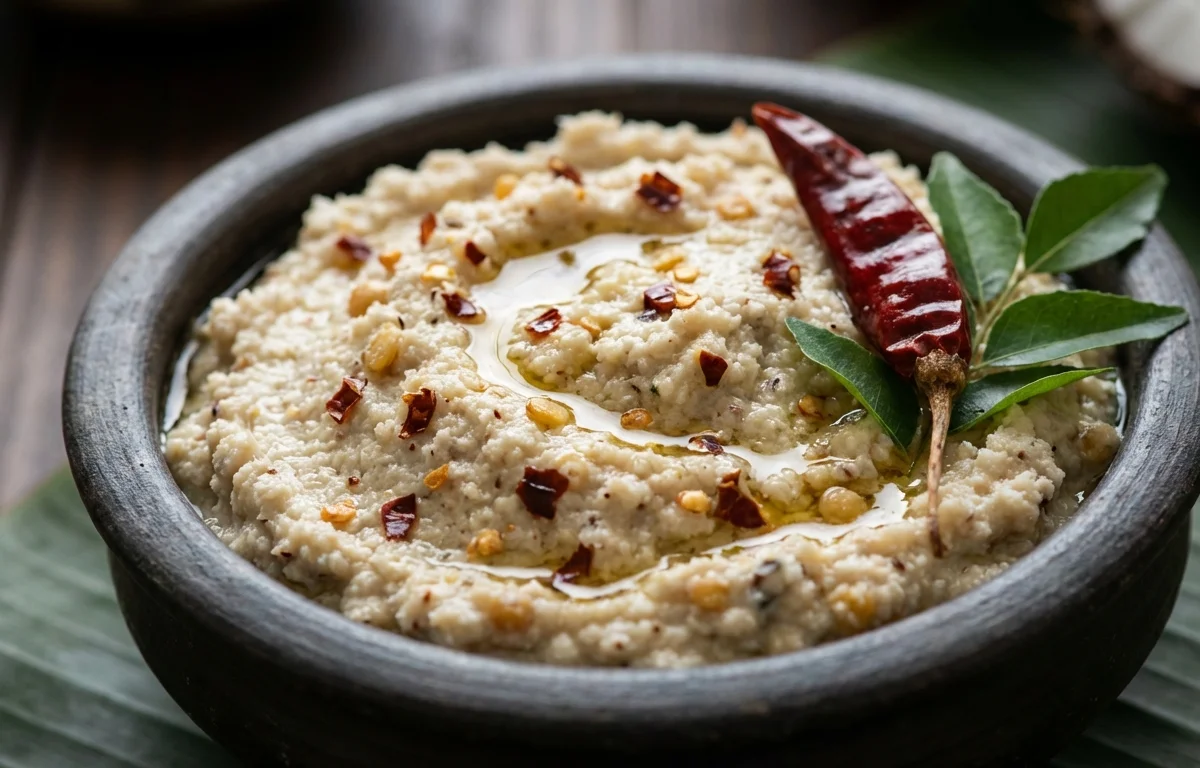
Coconut Thuvaiyal
A classic South Indian thick chutney made by roasting coconut, lentils, and red chilies. This tangy and spicy condiment has a coarse texture and is perfect mixed with hot rice and a drizzle of sesame oil.
For 4 servings
Roast Lentils and Spices
- Heat 1 tablespoon of sesame oil in a heavy-bottomed pan over low-medium heat.
- Add the urad dal and dried red chilies. Sauté continuously for 3-4 minutes until the dal turns a deep golden brown and becomes aromatic.
- Add the hing and stir for another 10-15 seconds.
Toast Coconut and Cool
- Add the grated coconut to the pan. Continue to roast, stirring constantly, for 1-2 minutes until the coconut is fragrant. Do not let it brown.
- Turn off the heat and immediately transfer the entire mixture to a plate to cool down completely. This prevents it from over-roasting in the hot pan.
Grind the Thuvaiyal
- Once the mixture is at room temperature, transfer it to a grinder jar or a small food processor.
- Add the tamarind piece and salt.
- Grind to a coarse, thick paste without adding water at first. If the mixture is too dry to grind, add 1-2 tablespoons of water, a little at a time, just enough to get the blades moving. The final texture should be thick and coarse, not a smooth paste.
Prepare the Tempering (Tadka)
- In a small tadka pan, heat the remaining 0.5 tablespoon of sesame oil over medium heat.
- Once the oil is hot, add the mustard seeds. Wait for them to splutter completely, which should take about 30 seconds.
- Add the curry leaves and stand back as they will sizzle and pop. Sauté for a few seconds until crisp.
Combine and Serve
- Pour the hot tempering over the ground thuvaiyal.
- Mix well to combine.
- Serve immediately with hot steamed rice and a drizzle of ghee or sesame oil, or as a side for idli, dosa, or curd rice.
What to keep in mind.
5 tips from the recipe — small details that make a real difference to the final dish.
- 1Ensure the urad dal is roasted to a perfect golden brown on low heat. This is crucial for the nutty aroma and flavor of the thuvaiyal.
- 2Always cool the roasted ingredients completely before grinding. Grinding a warm mixture can make it pasty and release too much oil.
- 3Use minimal water while grinding. Thuvaiyal is meant to be thick and coarse. Add water one teaspoon at a time only if necessary.
- 4For the most authentic flavor, use sesame oil (gingelly oil). It imparts a unique nutty taste that complements the other ingredients.
- 5If you don't have a piece of tamarind, you can use 1/2 teaspoon of tamarind paste instead. Add it directly to the grinder.
Adapt it for your goals.
Ingredient Swap
For a different flavor profile, you can add 2-3 cloves of garlic or a small piece of ginger while roasting the dal.
Lentil VariationLentil Variation
Replace urad dal with toor dal (split pigeon peas) or use a combination of both for a slightly different taste and texture.
Herb AdditionHerb Addition
Add a handful of fresh mint leaves (pudina) or coriander leaves (dhania) along with the coconut for a herby twist.
Spicier VersionSpicier Version
Add 1-2 fresh green chilies along with the dried red chilies for a sharper, fresher heat.
Why this is on our healthy list.
Rich in Healthy Fats
The coconut and sesame oil provide medium-chain triglycerides (MCTs) and unsaturated fats, which are beneficial for heart health and provide a quick source of energy.
Good Source of Fiber
Urad dal and coconut are excellent sources of dietary fiber, which aids digestion, promotes gut health, and helps in maintaining stable blood sugar levels.
Provides Plant-Based Protein
The inclusion of urad dal contributes a good amount of plant-based protein, which is essential for muscle repair, growth, and overall body function.
Frequently asked questions
Thuvaiyal is a thick, coarse, and semi-dry condiment from Tamil cuisine, typically mixed directly with rice. Chutneys are generally smoother and have a more dip-like consistency, served as an accompaniment to dishes like idli and dosa.