
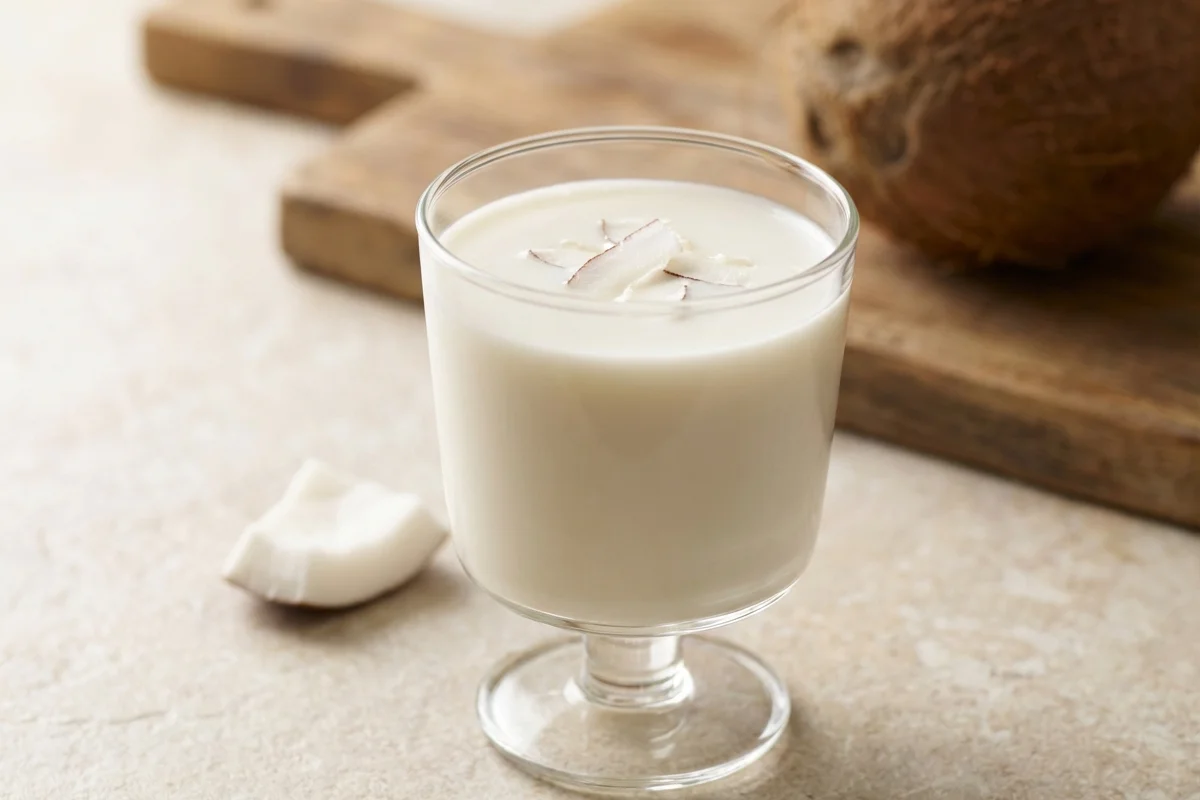
Coconut Milk
Creamy, rich, and fragrant homemade coconut milk made from fresh coconuts. Perfect for adding a luscious base to curries, soups, and desserts. It's surprisingly easy and tastes far superior to canned versions.
For 4 servings
4 steps.
- 1
Prepare the Coconut (Approx
- a.5 minutes)
- b.Find the three 'eyes' on the coconut. Pierce the softest one with a corkscrew or sharp knife and drain the coconut water into a glass. This water is delicious to drink on its own.
- c.To crack the shell, firmly tap the coconut's equator with the back of a heavy knife or a hammer, rotating it as you go, until it splits into two halves.
- d.Use a coconut scraper or a sturdy, blunt knife to carefully pry the white meat away from the hard shell.
- 2
First Press for Thick Milk (Approx
- a.5 minutes)
- b.Rinse the coconut meat and chop it into small, 1-inch pieces.
- c.Place the coconut pieces into a high-speed blender with 2 cups of warm water.
- d.Blend on high for 2-3 minutes until the mixture is smooth, thick, and creamy.
- e.Pour the blended mixture through a nut milk bag, a double layer of cheesecloth, or a fine-mesh sieve set over a large bowl.
- f.Squeeze firmly with clean hands to extract all the liquid. This rich, creamy liquid is your thick coconut milk (first press).
- 3
Second Press for Thin Milk (Approx
- a.3 minutes)
- b.Return the squeezed coconut pulp from the bag back into the blender.
- c.Add the remaining 2 cups of warm water and blend again on high for 1-2 minutes.
- d.Strain this mixture through the same nut milk bag into a separate bowl, squeezing well to extract the remaining liquid. This is your thin coconut milk (second press).
- 4
Store the Coconut Milk (Approx
- a.2 minutes)
- b.Depending on your recipe's needs, you can use the thick and thin milk separately or combine them.
- c.Pour the milk into a clean, airtight glass jar or bottle and store it in the refrigerator. It will stay fresh for up to 4 days.
- d.Note: The milk will naturally separate, with a thick layer of cream rising to the top. This is normal; simply shake or stir well before using.
What to keep in mind.
5 tips from the recipe — small details that make a real difference to the final dish.
- 1Always use a mature, brown coconut for the best flavor and highest fat content, which results in creamier milk.
- 2Using warm (not boiling) water is key, as it helps to extract more of the oils and flavor from the coconut flesh.
- 3The thick, first-press milk is ideal for rich curries, desserts like kheer, and whipping into coconut cream.
- 4The thin, second-press milk is perfect for cooking rice, thinning out soups, or as a base for lighter curries and stews.
- 5Don't discard the leftover coconut pulp! You can dry it in an oven at a low temperature to make coconut flour, or add it to oatmeal, granola, or baked goods for extra fiber.
Adapt it for your goals.
Sweetened Milk
For a sweet beverage, blend the final milk with 1-2 pitted dates, a teaspoon of maple syrup, or a small piece of jaggery until smooth.
Spiced MilkSpiced Milk
Add a pinch of ground cardamom, cinnamon, or a drop of vanilla extract to the blender for a fragrant, spiced version perfect for desserts or warm drinks.
Using Desiccated CoconutUsing Desiccated Coconut
If you can't find fresh coconut, you can rehydrate 2 cups of unsweetened desiccated coconut in 4 cups of hot water for 30 minutes, then blend and strain as directed.
Why this is on our healthy list.
Rich in Healthy Fats
Coconut milk is a good source of medium-chain triglycerides (MCTs), a type of saturated fat that is more easily metabolized by the body for energy compared to other fats.
Excellent Dairy-Free Alternative
Being completely plant-based, it is a fantastic milk alternative for those with lactose intolerance or dairy allergies, and fits perfectly into vegan diets.
Provides Key Minerals
It contains essential minerals like manganese, which is vital for bone health and metabolism, as well as copper, magnesium, and iron.
Frequently asked questions
One cup (240g) of combined homemade coconut milk contains approximately 350-400 calories, primarily from fat. The first press (thick milk) will be higher in calories and fat than the second press (thin milk).