
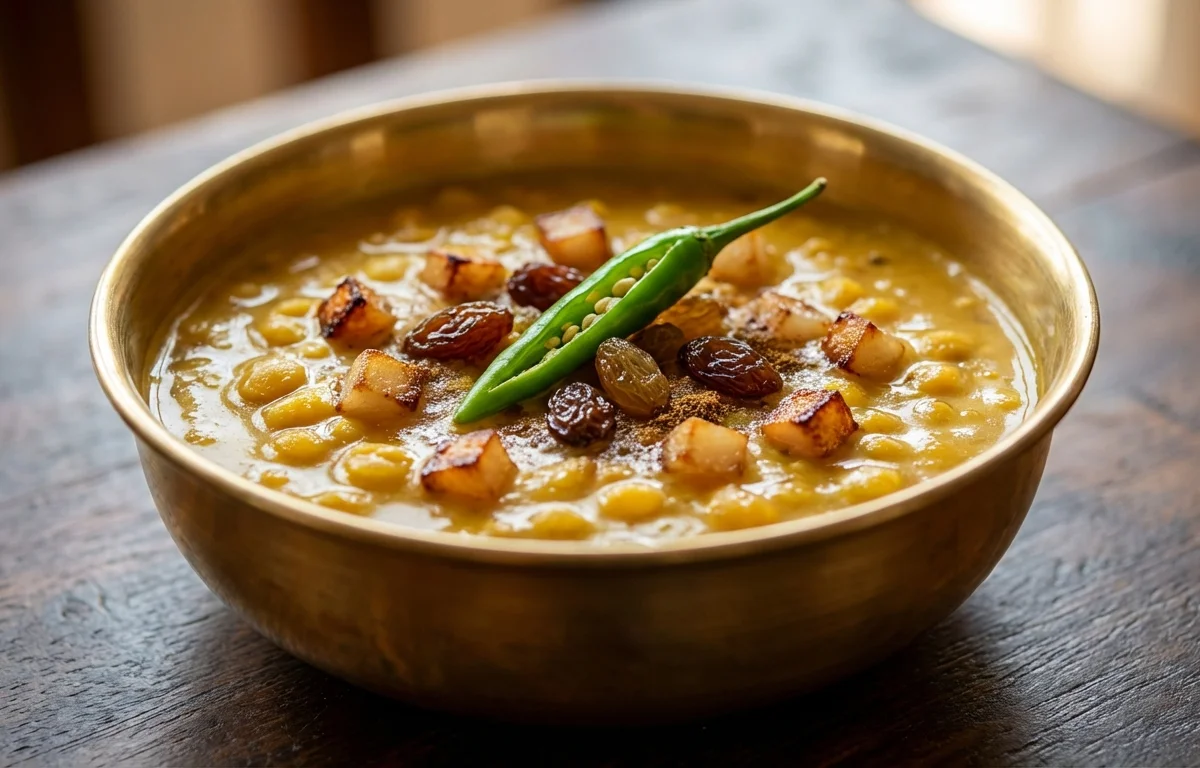
Cholar Dal Narkel Diye
A classic Bengali delicacy, this chana dal is cooked with sweet coconut pieces and fragrant whole spices. The perfect balance of sweet and savory, it's a festive favorite often served with luchi or rice.
For 4 servings
Prepare and Cook the Dal
- Rinse the cholar dal thoroughly under running water. Soak it in 3 cups of water for at least 2-3 hours.
- Drain the soaking water completely. Transfer the dal to a pressure cooker.
- Add 3 cups of fresh water, 1/2 tsp of salt, and the turmeric powder. Stir well.
- Secure the lid and pressure cook on medium heat for 3-4 whistles, or for about 15 minutes. The dal should be soft but retain its shape. Allow the pressure to release naturally.
Prepare the Tempering (Phoron)
- While the dal cooks, heat 1 tbsp of ghee in a kadai or heavy-bottomed pan over medium heat.
- Add the coconut pieces and fry, stirring frequently, for 2-3 minutes until they turn a deep golden brown. Remove with a slotted spoon and set aside.
- In the same pan, add the remaining 2 tbsp of ghee. Once hot, add the bay leaves, dried red chilies, cinnamon stick, crushed green cardamoms, cloves, and cumin seeds.
- Sauté for about 30-40 seconds until the spices release their aroma and the cumin seeds splutter.
- Add the ginger paste and cook for another minute until its raw smell disappears.
Combine and Simmer
- Carefully pour the cooked dal from the pressure cooker into the pan with the tempering. Mix gently to combine.
- Add the sugar, remaining 1/2 tsp of salt, slit green chilies, raisins, and the fried coconut pieces you set aside earlier.
- Stir everything together and bring the dal to a gentle simmer.
- Let it cook uncovered for 5-7 minutes, allowing the flavors to meld. If the dal seems too thick, add a splash of hot water to reach your desired consistency.
Finish and Serve
- Sprinkle the garam masala powder over the dal and stir it in. For extra richness, you can add another teaspoon of ghee at this stage.
- Turn off the heat, cover the pan, and let the dal rest for 5 minutes. This helps the flavors to deepen.
- Serve hot with traditional Bengali luchi, porota (paratha), or steamed basmati rice.
What to keep in mind.
6 tips from the recipe — small details that make a real difference to the final dish.
- 1Soaking the dal for at least 2-3 hours is crucial for an even, creamy texture without the dal turning mushy.
- 2For the most authentic flavor, use fresh coconut pieces (narkel) rather than desiccated or frozen.
- 3Fry the coconut pieces in ghee until they are a deep golden brown. This step is key to developing a rich, nutty aroma and flavor.
- 4The dal should be cooked until soft but the grains should still hold their shape. Be careful not to overcook it in the pressure cooker.
- 5This dal has a characteristic sweet and savory (mishti) taste. Don't skip the sugar, but feel free to adjust the amount to your preference.
- 6Cholar Dal thickens considerably as it cools. Adjust the consistency with a splash of hot water before serving if needed.
Adapt it for your goals.
Vegan
Replace ghee with coconut oil or another neutral vegetable oil for a fully plant-based version.
SweetenerSweetener
Use jaggery (gur) instead of sugar for a more traditional and earthy sweetness. Crumble or grate the jaggery before adding.
Richer FlavorRicher Flavor
For a special occasion, add a few strands of saffron soaked in warm milk or water along with the garam masala at the end.
Why this is on our healthy list.
Excellent Source of Protein
Chana dal is a powerhouse of plant-based protein, crucial for building and repairing tissues, muscle development, and overall body function.
Rich in Dietary Fiber
High in fiber, this dal aids in digestion, helps maintain bowel regularity, and promotes a feeling of fullness, which can assist in weight management.
Energy Boosting
The combination of complex carbohydrates from the dal, healthy fats from ghee and coconut, and simple sugars provides a sustained release of energy.
Frequently asked questions
Bengali Cholar Dal is unique due to its 'mishti' or sweet and savory flavor profile. It uses whole spices like cinnamon and cardamom, fried coconut pieces, and raisins, which are not typically found in North Indian chana dal preparations.