
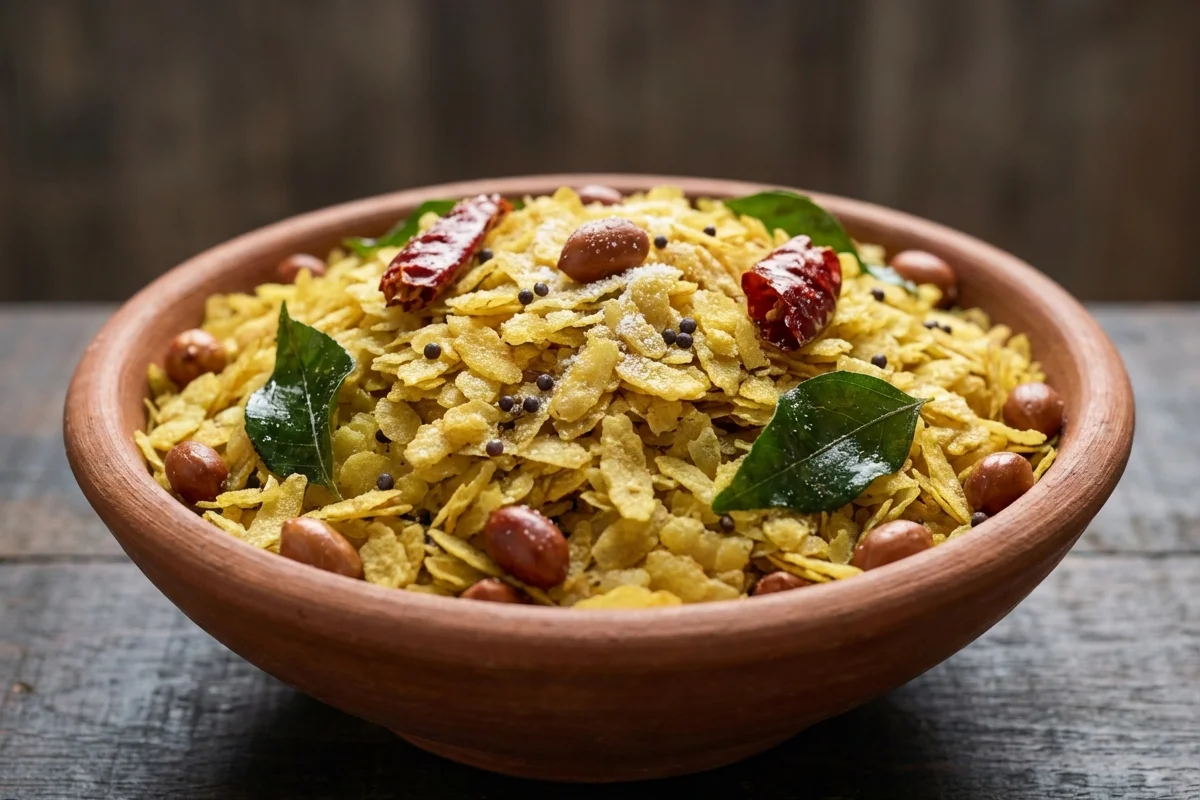
Chire Bhaja
A crunchy, savory Bengali snack made from fried flattened rice, peanuts, and aromatic spices. This addictive treat is ready in minutes and perfect with a cup of tea.
For 4 servings
4 steps. 15 minutes total.
- 1
Step 1
- a.Fry the Poha
- b.Heat the oil in a wide, heavy-bottomed pan or kadai over medium-high heat. To check if the oil is ready, drop a single poha flake; it should sizzle and puff up immediately.
- c.Working in 2-3 small batches, add the thin poha to the hot oil. Do not overcrowd the pan.
- d.Fry each batch for 45-60 seconds, stirring gently, until the flakes are light, puffy, and crisp.
- e.Using a slotted spoon, quickly remove the fried poha and transfer it to a large bowl lined with paper towels to drain excess oil.
- 2
Step 2
- a.Prepare the Tempering
- b.Reduce the heat to low-medium. In the same pan with the remaining oil, add the raw peanuts.
- c.Sauté for 2-3 minutes, stirring frequently, until they turn golden brown and crunchy.
- d.Add the mustard seeds and allow them to splutter, which should take about 30 seconds.
- e.Add the broken dried red chilies and curry leaves. Sauté for another 30-45 seconds until the curry leaves become crisp and fragrant. Be careful not to burn them.
- 3
Step 3
- a.Combine and Season
- b.Turn off the heat. Immediately add the turmeric powder to the hot oil and give it a quick stir for 5 seconds.
- c.Add the fried poha back into the pan along with the fried peanuts and tempering.
- d.Sprinkle the salt and powdered sugar evenly over the mixture.
- e.Gently toss everything together until the poha is uniformly coated with the spices. Use a light hand to avoid crushing the delicate poha flakes.
- 4
Step 4
- a.Cool and Store
- b.Spread the prepared Chire Bhaja on a large tray or plate in a single layer to cool down completely. This step is crucial for ensuring maximum crispness.
- c.Once at room temperature, transfer the snack to a clean, dry, airtight container.
- d.Store at room temperature. It will stay fresh and crispy for up to 2 weeks.
What to keep in mind.
4 tips from the recipe — small details that make a real difference to the final dish.
- 1Use thin or 'paper' poha for the crispiest, lightest texture. Thick poha will result in a harder, chewier snack.
- 2Frying the poha in small batches is key. Overcrowding the pan will lower the oil temperature and make the poha absorb too much oil, becoming soggy instead of crisp.
- 3Ensure the Chire Bhaja has cooled completely before storing. Any residual warmth will create condensation inside the container, ruining its crunch.
- 4Keep the heat on medium-low during tempering to prevent the delicate spices and curry leaves from burning and turning bitter.
Adapt it for your goals.
Ingredient Addition
For extra crunch and flavor, add 1/4 cup of roasted chana dal (futana), 1/4 cup of thin dry coconut slices, or a handful of cashews along with the peanuts.
Flavor ProfileFlavor Profile
For a tangy twist, sprinkle 1/2 teaspoon of amchur (dry mango powder) over the finished Chire Bhaja after it has cooled slightly.
Sweeter VersionSweeter Version
Add 2-3 tablespoons of raisins to the tempering in the last 30 seconds of frying for a classic sweet and savory flavor combination.
Why this is on our healthy list.
Source of Instant Energy
Flattened rice (poha) is rich in healthy carbohydrates, providing a quick and easily digestible source of energy, making it an excellent snack to beat midday slumps.
Rich in Plant-Based Protein
The addition of peanuts provides a good amount of plant-based protein and healthy fats, which contribute to satiety and are essential for muscle repair.
Gut-Friendly Snack
Poha is light on the stomach and easy to digest. When consumed, it can act as a probiotic in the gut, promoting the growth of healthy bacteria.
Frequently asked questions
Thin or paper poha is essential for a light, crispy texture. Thick poha is better suited for dishes where it's soaked and will become hard and chewy if fried this way.