
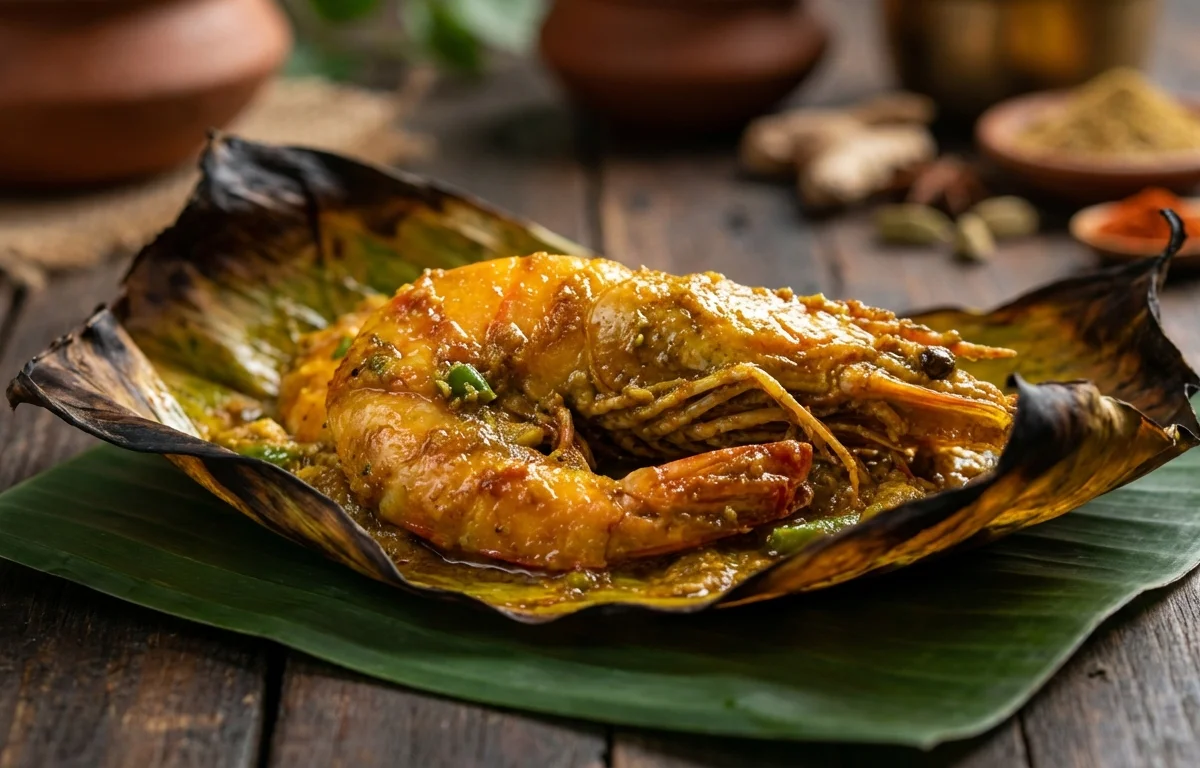
Chingudi Patrapoda
A classic Odia delicacy where succulent prawns are marinated in a pungent mustard and garlic paste, wrapped in aromatic turmeric leaves, and slow-cooked to perfection. This dish captures the essence of coastal Odisha.
For 4 servings
Prepare the Mustard Paste
- Soak the black mustard seeds in warm water for 15 minutes. Drain the water.
- In a grinder, combine the soaked mustard seeds, garlic cloves, ginger, and green chilies.
- Add 1-2 tablespoons of water and grind to a smooth, thick paste. Avoid over-grinding, which can make the paste bitter.
Marinate the Prawns
- In a mixing bowl, add the cleaned and deveined prawns.
- Add the prepared mustard paste, finely chopped onion, turmeric powder, red chili powder, salt, and lemon juice.
- Pour in 2 tablespoons of mustard oil and mix thoroughly until each prawn is evenly coated.
- Cover and let the prawns marinate for at least 15-20 minutes.
Prepare the Turmeric Leaves
- Carefully wash the turmeric leaves under running water and pat them dry.
- Briefly pass each leaf over a low open flame for a few seconds. This wilting process makes them pliable and prevents them from tearing when folded.
Assemble the Parcels
- Lay a wilted turmeric leaf flat. Place a portion of the marinated prawn mixture in the center.
- Drizzle a few drops of the remaining mustard oil over the prawns.
- Fold the leaf from all sides to create a secure, rectangular parcel. If necessary, tie it with a cotton thread to keep it sealed.
- Repeat with the remaining mixture and leaves.
Cook the Parcels
- Heat a heavy-bottomed pan or tawa over low-medium heat.
- Place the wrapped parcels on the pan in a single layer.
- Cover the pan with a lid and cook on low heat for about 8-10 minutes.
- Carefully flip the parcels and cook for another 8-10 minutes on the other side. The leaves will become charred in spots, which imparts a smoky aroma.
Serve
- Remove the cooked parcels from the pan and let them rest for 2-3 minutes.
- Serve the parcels hot, allowing each person to unwrap their own to enjoy the burst of aroma.
- This dish pairs wonderfully with steamed rice.
What to keep in mind.
6 tips from the recipe — small details that make a real difference to the final dish.
- 1For the most authentic flavor, use fresh, tender turmeric leaves. If unavailable, banana leaves are the best substitute.
- 2The consistency of the marinade is key. It should be a thick paste that clings to the prawns, not a watery one.
- 3Do not overcook the prawns. They cook quickly inside the leaf parcels and can become tough if left on the heat for too long.
- 4The charring on the leaves is desirable as it infuses the prawns with a unique smoky flavor.
- 5For a milder flavor, you can use a mix of yellow and black mustard seeds.
- 6You can also bake these parcels in a preheated oven at 180°C (350°F) for 15-20 minutes.
Adapt it for your goals.
Protein Swap
Replace prawns with firm fish fillets like Bhetki (Barramundi), Pomfret, or even paneer cubes for a vegetarian version. Adjust cooking time accordingly.
Add CoconutAdd Coconut
Incorporate 3-4 tablespoons of freshly grated coconut into the marinade for a richer, slightly sweeter flavor profile, which is common in some regional variations.
Spicier VersionSpicier Version
Add 1-2 dried red chilies along with the green chilies when grinding the paste for an extra kick of heat.
Why this is on our healthy list.
Rich in Lean Protein
Prawns are an excellent source of high-quality, lean protein, which is essential for muscle building, tissue repair, and overall body function.
Anti-inflammatory Properties
The use of turmeric, ginger, and garlic provides powerful anti-inflammatory compounds like curcumin and allicin, which help combat inflammation in the body.
Contains Heart-Healthy Fats
Mustard oil is rich in monounsaturated and polyunsaturated fats (MUFAs and PUFAs), including omega-3 fatty acids, which are beneficial for cardiovascular health.
Frequently asked questions
While the leaves provide a unique aroma, you can use parchment paper as a substitute. Wrap the prawn mixture in parchment paper and then wrap that in aluminum foil to seal it properly before cooking on the tawa or baking.