
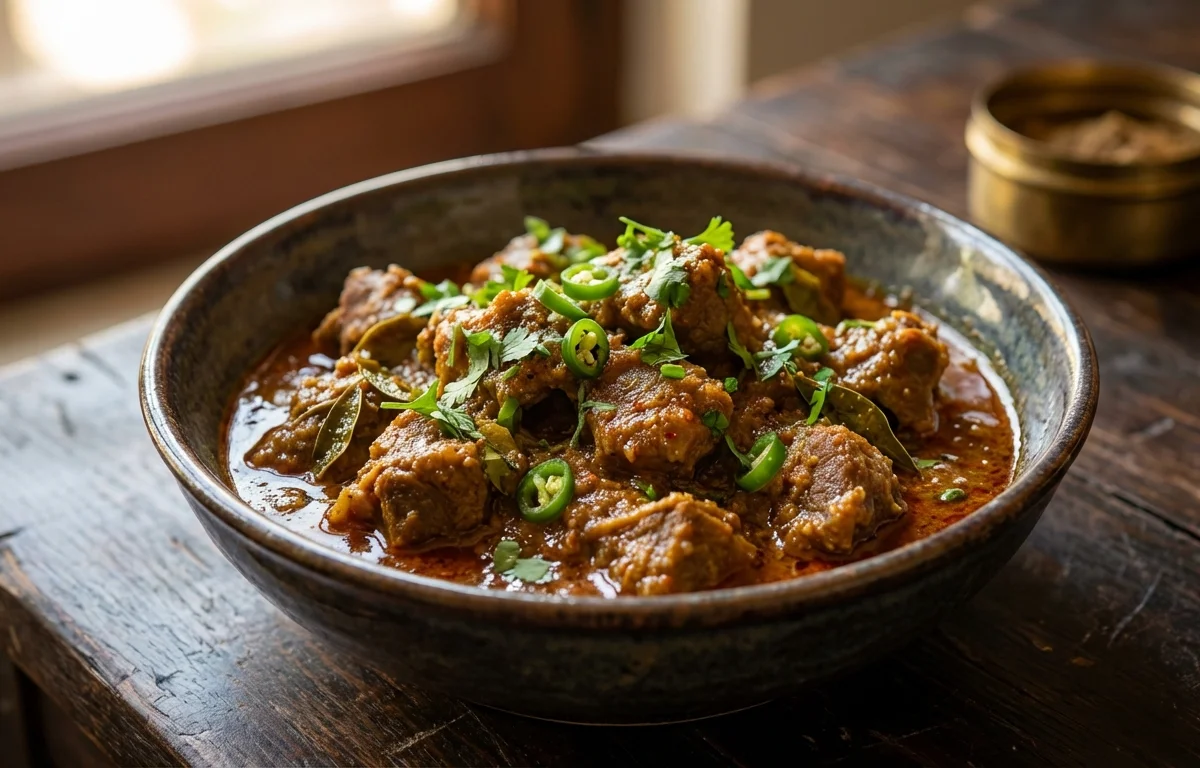
Chigur Gosht
A classic Hyderabadi curry featuring tender mutton slow-cooked with young, tangy tamarind leaves. This dish offers a unique blend of sour and spicy flavors, creating a rich, aromatic gravy perfect with rice or roti.
For 4 servings
Marinate the Mutton
- In a large bowl, combine the mutton pieces, whisked curd, ginger-garlic paste, turmeric powder, red chilli powder, coriander powder, and 1 tsp of salt.
- Mix thoroughly until the mutton is evenly coated with the marinade.
- Cover the bowl and let it marinate for at least 30 minutes at room temperature, or for up to 4 hours in the refrigerator for deeper flavor.
Sauté Aromatics
- Heat oil in a pressure cooker or a heavy-bottomed pot over medium heat.
- Add the cinnamon stick, green cardamom pods, and cloves. Sauté for about 30 seconds until they become fragrant.
- Add the sliced onions and sauté for 10-12 minutes, stirring occasionally, until they are soft and golden brown.
Sear the Mutton
- Add the marinated mutton to the cooker.
- Increase the heat to medium-high and cook for 7-8 minutes, stirring frequently. Continue cooking until the mutton is well-seared and the oil begins to separate from the masala (this step is crucial for flavor).
Pressure Cook the Mutton
- Pour in 1.5 cups of water and add the remaining 0.5 tsp of salt. Stir well to combine, scraping any bits from the bottom of the cooker.
- Secure the lid of the pressure cooker. Cook on medium heat for 6-7 whistles, which should take about 20-25 minutes.
- Turn off the heat and allow the pressure to release naturally. This can take 10-15 minutes.
Add Tamarind Leaves and Simmer
- Once the pressure has fully released, carefully open the cooker.
- Add the cleaned tender tamarind leaves and the slit green chilies to the cooked mutton.
- Stir gently to incorporate them into the gravy.
- Simmer uncovered on low heat for 10-12 minutes. The leaves will wilt and infuse their tangy flavor into the curry as the gravy thickens.
Finish and Serve
- Sprinkle the garam masala and chopped coriander leaves over the curry.
- Give it a final gentle stir to mix everything together.
- Turn off the heat and let the curry rest for 5-10 minutes to allow the flavors to meld.
- Serve Chigur Gosht hot with steamed rice, bagara khana, or fresh rotis.
What to keep in mind.
6 tips from the recipe — small details that make a real difference to the final dish.
- 1Always use fresh, tender tamarind leaves (chigur) for the best tangy flavor without bitterness. Avoid mature, dark green leaves.
- 2Searing the mutton properly (bhunao) before pressure cooking is crucial for developing a deep, rich flavor in the gravy.
- 3Ensure the curd is at room temperature and well-whisked before adding it to the marinade to prevent it from splitting.
- 4This curry tastes even better the next day as the flavors have more time to infuse into the meat.
- 5If you don't have a pressure cooker, you can slow-cook the mutton in a covered pot for about 1.5 to 2 hours or until tender, adding hot water as needed.
- 6The tanginess of tamarind leaves can vary. You can adjust the quantity based on your preference.
Adapt it for your goals.
With Chicken
Replace mutton with 500g of bone-in chicken. Reduce the pressure cooking time to 2-3 whistles (about 10-12 minutes).
Spicier VersionSpicier Version
Increase the amount of red chilli powder to 2 tsp and add 5-6 green chillies. You can also add a teaspoon of black pepper powder along with the garam masala for extra heat.
Creamier GravyCreamier Gravy
For a richer, restaurant-style gravy, add 2 tablespoons of cashew paste along with the tamarind leaves and simmer until the gravy thickens.
Why this is on our healthy list.
Rich in Protein
Mutton is a high-quality protein source, essential for building and repairing tissues, muscle growth, and overall body function.
Excellent Source of Iron
This dish provides a significant amount of heme iron from the mutton, which is more easily absorbed by the body than non-heme iron from plant sources. Iron is vital for preventing anemia and maintaining energy levels.
Contains Antioxidants
The spices used, such as turmeric, and the tamarind leaves themselves contain antioxidants that help combat oxidative stress and inflammation in the body.
Frequently asked questions
'Chigur' is the Telugu word for tender, young tamarind leaves. They are available seasonally, typically in the spring, and are prized for their unique sour and slightly astringent flavor, which is milder than that of tamarind pulp.