
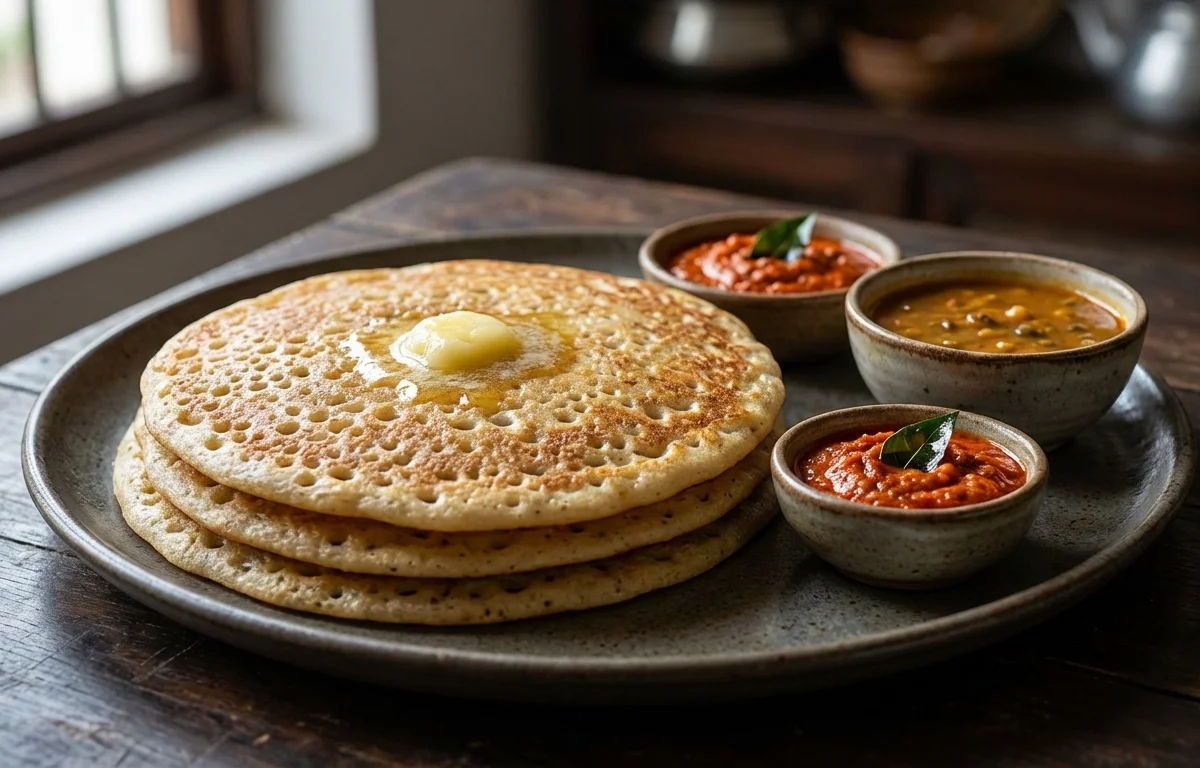
Chettinad Kal Dosai
A popular breakfast from Tamil Nadu's Chettinad region, these dosas are soft, thick, and wonderfully spongy. Their porous texture makes them perfect for soaking up spicy curries and chutneys. Note: This recipe requires 6 hours of soaking and 8-12 hours of fermentation time.
For 4 servings
4 steps. 20 minutes total.
- 1
Step 1
- a.Soak the Rice and Lentils
- b.In a large bowl, rinse the idli rice 3-4 times until the water runs clear. Add 3 cups of fresh water and let it soak.
- c.In a separate medium bowl, rinse the urad dal and methi seeds together. Add fresh water to cover them by at least 2 inches.
- d.Let both bowls soak for a minimum of 6 hours, or overnight.
- 2
Step 2
- a.Grind the Batter
- b.Rinse the thick poha and soak it in 1/2 cup of water for 15-20 minutes before you start grinding.
- c.Drain the urad dal and methi seeds, reserving the soaking water. Using a wet grinder or a high-speed blender, grind them into a very smooth, light, and fluffy batter. Add the reserved soaking water little by little (about 3/4 to 1 cup). This should take about 15-20 minutes. Transfer this fluffy batter to a large, deep container.
- d.Next, drain the rice and add it to the grinder along with the soaked poha (and its water). Grind to a smooth yet slightly grainy consistency, similar to fine rava (semolina). Use cold water as needed (about 1 cup) to prevent the grinder from overheating.
- e.Pour the rice batter into the container with the urad dal batter. Add the rock salt.
- 3
Step 3
- a.Mix and Ferment
- b.Using your clean hands, mix both batters together thoroughly for 2-3 minutes. The warmth from your hands aids in the fermentation process. The final batter should be thick but pourable.
- c.Cover the container with a lid (do not seal it tightly) and place it in a warm, draft-free place for 8 to 12 hours. In colder climates, place it inside a turned-off oven with the light on.
- d.The batter is perfectly fermented when it has doubled in volume, is bubbly, and has a pleasant sour aroma.
- 4
Step 4
- a.Cook the Kal Dosai
- b.Once fermented, gently stir the batter just once or twice. Do not overmix, as this will deflate the air pockets. The consistency should be like a thick pancake batter; if it's too thick, add a tablespoon or two of water.
- c.Heat a cast-iron tawa or a non-stick griddle over medium heat. To check if it's ready, sprinkle a few drops of water; they should sizzle and evaporate immediately.
- d.Pour a ladleful (about 1/2 cup) of batter onto the center of the hot tawa. Do not spread it thin. Gently swirl the ladle to form a thick dosa, about 5-6 inches in diameter.
- e.Drizzle about 1/2 teaspoon of gingelly oil around the edges and on top. You will see small holes (pores) forming on the surface.
- f.Cover with a lid and cook for 60-90 seconds on medium flame. The top surface will appear cooked and will no longer be liquid.
- g.Kal Dosai is traditionally cooked only on one side. There is no need to flip it. Gently lift it with a spatula, fold it in half, and serve immediately.
What to keep in mind.
5 tips from the recipe — small details that make a real difference to the final dish.
- 1For the best texture, use a well-seasoned cast-iron tawa (kal).
- 2The key to a soft kal dosai is a thick, well-fermented batter. Do not spread it thin like a regular dosa.
- 3Using non-iodized salt (like rock salt) promotes better fermentation.
- 4Use cold water while grinding, especially in a blender, to prevent the batter from heating up, which can affect fermentation.
- 5Store leftover batter in an airtight container in the refrigerator for up to 4 days. Bring it to room temperature before making dosas.
Adapt it for your goals.
Vegetable Kal Dosai
After pouring the batter on the tawa, sprinkle finely chopped onions, grated carrots, or chopped cilantro on top before covering to cook.
Podi Kal DosaiPodi Kal Dosai
Sprinkle a generous amount of idli podi (gunpowder) on top of the dosa along with the oil before covering it to cook.
Millet Kal DosaiMillet Kal Dosai
Replace half of the idli rice with a millet like foxtail millet (thinai) or kodo millet (varagu) for a healthier, fiber-rich version. Soaking times may vary.
Why this is on our healthy list.
Promotes Gut Health
The fermentation process enriches the batter with probiotics (good bacteria), which improve digestion, gut flora, and overall digestive health.
Good Source of Plant-Based Protein
Urad dal is a key ingredient and an excellent source of vegetarian protein, essential for muscle repair, growth, and overall body function.
Provides Sustained Energy
The complex carbohydrates from rice and lentils provide a steady release of energy, keeping you full and energetic for longer periods without causing sharp spikes in blood sugar.
Easily Digestible
Fermentation breaks down the complex starches and proteins in the rice and dal, making the dosas light on the stomach and easy to digest.
Frequently asked questions
Yes, it is a very healthy dish. It's a balanced combination of carbohydrates and protein. The fermentation process makes it rich in probiotics, which are great for gut health, and also makes the nutrients easier to digest and absorb.