
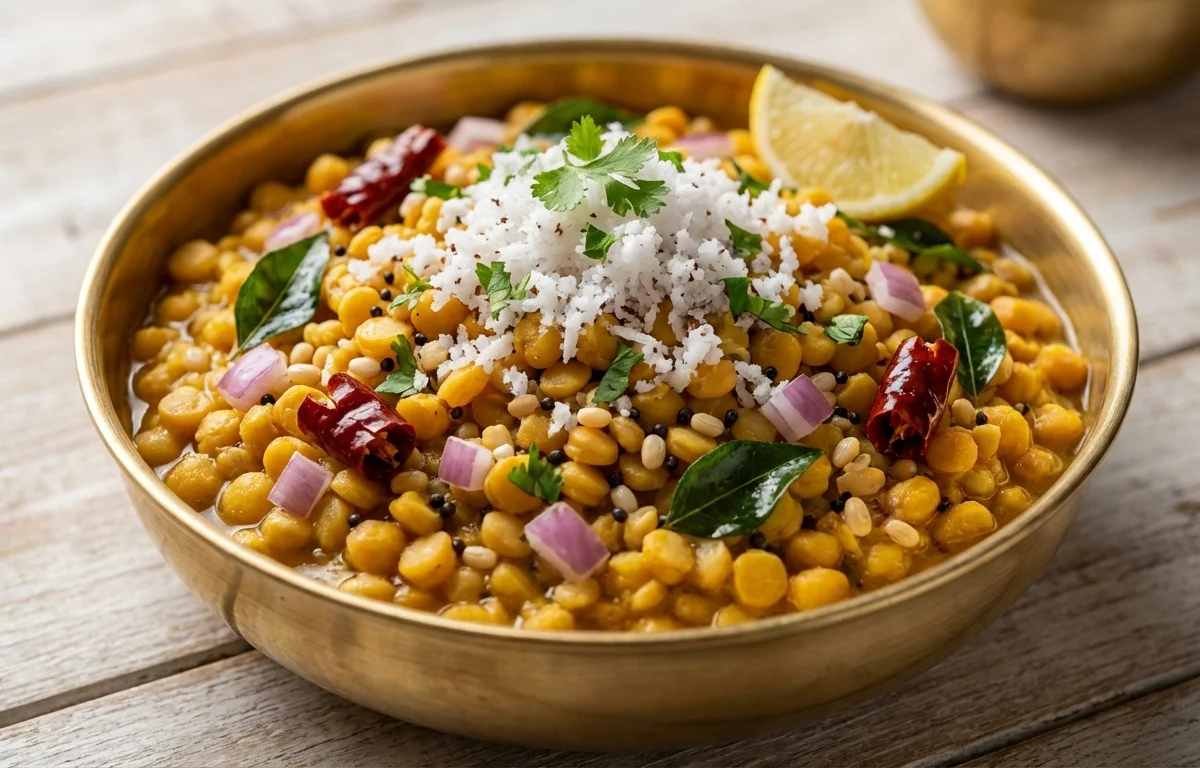
Chana Dal Palya
A simple and nutritious South Indian stir-fry made with split chickpeas, fresh coconut, and a classic tempering. This wholesome dish from Karnataka is a perfect side for rice or rotis. Similar to Sundal from Tamil Nadu, this dish showcases regional variations in South Indian cuisine.
For 4 servings
Prepare the Chana Dal
- Rinse 1 cup of chana dal under cold water until the water runs clear. Soak it in ample water for a minimum of 2 hours, or up to 4 hours.
- Drain the soaking water. In a medium pot, combine the soaked dal, 3 cups of fresh water, and 0.5 tsp of turmeric powder.
- Bring the water to a boil over high heat, then reduce to a simmer. Cook for 15-20 minutes, uncovered. The dal should be tender and easily mashable with a finger, but still hold its shape. Do not overcook.
- Once cooked, carefully drain all the excess water using a colander and set the dal aside.
Prepare the Tempering (Oggarane)
- Heat 2 tbsp of coconut oil in a wide pan (kadai) over medium heat.
- Once the oil is hot, add 1 tsp of mustard seeds and wait for them to splutter completely, which takes about 30 seconds.
- Add 1 tsp of urad dal and sauté for about 1 minute until it turns a light golden brown. Be careful not to burn it.
- Immediately add 2 broken dried red chilies, 3 slit green chilies, 10 curry leaves, and 0.25 tsp of hing. Sauté for another 30-45 seconds until the curry leaves are crisp and fragrant.
Combine and Finish the Palya
- Add the cooked and drained chana dal to the pan with the tempering. Add 1 tsp of salt.
- Gently fold everything together, ensuring the dal is evenly coated with the spices without mashing it. Stir-fry for 2-3 minutes to allow the flavors to meld.
- Turn off the heat. Add 0.5 cup of fresh grated coconut and 1 tbsp of fresh lemon juice. Mix gently to combine.
- Garnish with 2 tbsp of finely chopped coriander leaves and serve warm.
What to keep in mind.
5 tips from the recipe — small details that make a real difference to the final dish.
- 1The key to a perfect palya is the texture of the dal. It must be cooked through but retain a slight bite (al dente).
- 2Soaking is a crucial step; do not skip it. It ensures even and faster cooking.
- 3For a quicker cooking method, use a pressure cooker. Cook the soaked dal with water and turmeric for 1-2 whistles on medium heat. Let the pressure release naturally.
- 4Always add the fresh coconut and lemon juice after turning off the heat to retain their fresh flavor and nutrients.
- 5Ensure the dal is drained very well. Any excess water will make the final dish soggy.
Adapt it for your goals.
Add Vegetables
Incorporate finely chopped vegetables like carrots, green beans, or raw mango along with the tempering for added crunch and nutrition.
Protein BoostProtein Boost
Add 1/2 cup of crumbled paneer or firm tofu at the end with the coconut for a more substantial dish.
Spicier VersionSpicier Version
Add 1/4 to 1/2 teaspoon of red chili powder along with the salt for extra heat.
Different LentilDifferent Lentil
This recipe can also be made with whole green moong dal or black chickpeas (kala chana), adjusting the soaking and cooking times accordingly.
Why this is on our healthy list.
Rich in Plant-Based Protein
Chana dal is an excellent source of vegetarian protein, which is crucial for building and repairing tissues, muscle maintenance, and overall body function.
High in Dietary Fiber
The high fiber content from the dal aids in digestion, promotes gut health, helps maintain stable blood sugar levels, and contributes to a feeling of fullness, which can help with weight management.
Good Source of Complex Carbs
This dish provides complex carbohydrates that release energy slowly, preventing sudden spikes in blood sugar and providing sustained energy throughout the day.
Packed with Essential Minerals
Chana dal is a good source of minerals like manganese, folate, iron, and phosphorus, which are vital for bone health, red blood cell formation, and energy metabolism.
Frequently asked questions
One serving of Chana Dal Palya (approximately 1 cup or 135g) contains around 250-280 calories, primarily from the lentils, coconut, and oil.