
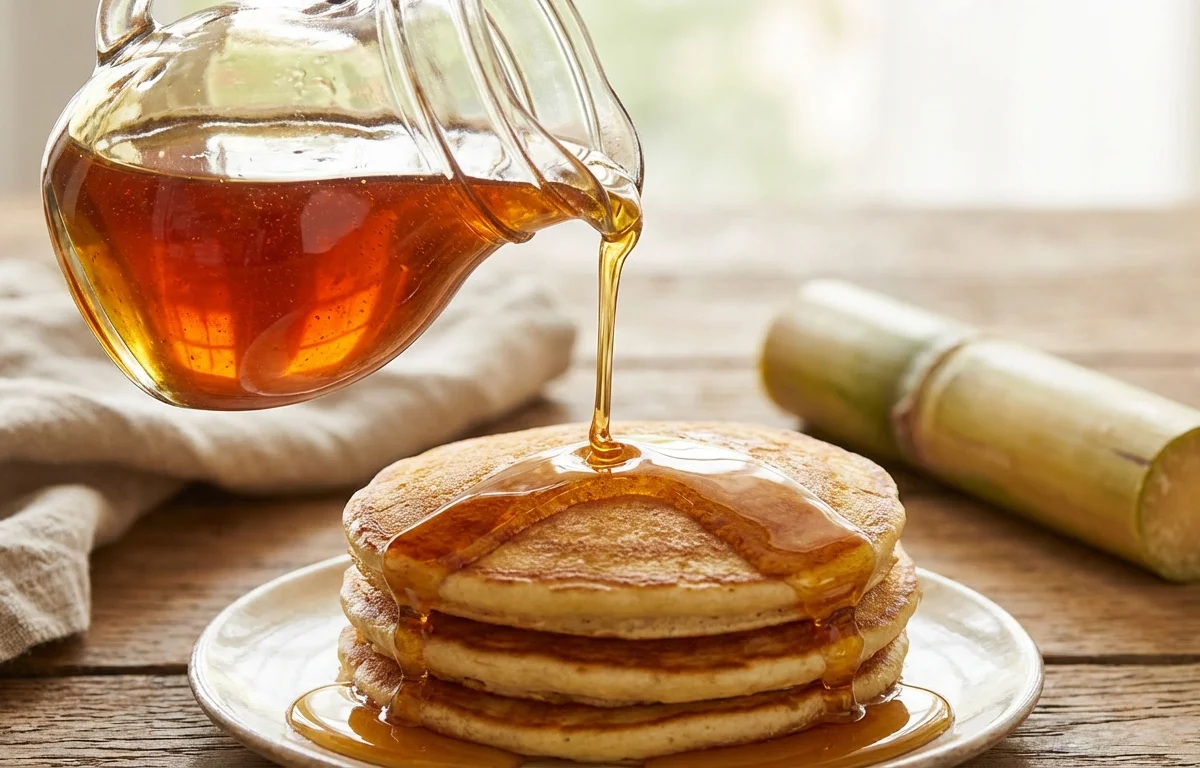
Cane Syrup
A traditional Southern sweetener made by slowly boiling fresh sugarcane juice until it becomes a rich, dark, and flavorful syrup. Perfect for drizzling over pancakes, biscuits, or using in classic Southern baking recipes.
For 16 servings
5 steps. 180 minutes total.
- 1
Step 1
- a.Prepare the Juice
- b.Pour the fresh sugarcane juice into a large, heavy-bottomed, non-reactive pot (like stainless steel or enamel).
- c.The pot should be at least three times the volume of the juice to prevent it from boiling over during the initial foaming stage.
- 2
Step 2
- a.Boil and Skim Impurities
- b.Place the pot over medium-high heat and bring the juice to a rolling boil. This will take about 15-20 minutes.
- c.As it boils, a thick, greenish-gray foam of impurities will rise to the surface. Use a fine-mesh skimmer to carefully and thoroughly remove all of it.
- d.Continue skimming for about 20-30 minutes, or until very little new foam appears. This step is crucial for a clear, clean-tasting syrup.
- 3
Step 3
- a.Simmer and Reduce
- b.Once the foam is mostly gone, reduce the heat to maintain a steady, gentle simmer. Do not cover the pot.
- c.Allow the juice to simmer and reduce for 2.5 to 3 hours. The color will gradually change from pale green to a deep, rich amber.
- d.Stir with a long-handled spoon every 20-30 minutes to prevent the bottom from scorching, especially as the syrup begins to thicken.
- 4
Step 4
- a.Test for Doneness
- b.After about 2.5 hours, begin testing for doneness. The syrup is ready when it has reduced to about 1/8th of its original volume.
- c.Using a candy thermometer, the temperature should be between 220-225°F (104-107°C).
- d.Alternatively, perform a spoon test: dip a cool metal spoon into the syrup and lift it out. The syrup should coat the back of the spoon and fall off in a slow, connected 'sheet' rather than thin drips.
- e.Once the desired consistency is reached, stir in the optional lime juice.
- 5
Step 5
- a.Cool and Store
- b.Remove the pot from the heat and let the syrup cool in the pot for 20-30 minutes. It will continue to thicken as it cools.
- c.While still warm and pourable, carefully ladle the syrup into sterilized, dry glass jars or bottles.
- d.Seal the jars tightly. Store at room temperature in a cool, dark place for up to 6 months, or in the refrigerator for up to a year.
What to keep in mind.
5 tips from the recipe — small details that make a real difference to the final dish.
- 1Use the largest pot you have. A stockpot is ideal. The juice will foam up dramatically at first, and a large pot prevents a sticky mess.
- 2Patience during the skimming phase pays off. The more impurities you remove, the better the final flavor and clarity of your syrup.
- 3The syrup thickens significantly as it cools. It's best to stop cooking when it's slightly thinner than your desired final consistency.
- 4In the last 30 minutes of cooking, watch the syrup very closely. The high sugar content means it can go from perfect to burnt very quickly.
- 5Using a non-reactive pot like stainless steel or enameled cast iron is essential to prevent the syrup from developing a metallic taste.
Adapt it for your goals.
Spiced Cane Syrup
Add a cinnamon stick, a star anise, or a few whole cloves to the pot during the last 30 minutes of simmering. Strain them out before bottling.
Vanilla Bean Cane SyrupVanilla Bean Cane Syrup
Add a split vanilla bean to the syrup for the last hour of cooking. The seeds will infuse the syrup with a rich, warm flavor.
Ginger Cane SyrupGinger Cane Syrup
Add a few slices of fresh ginger during the last 30-45 minutes of simmering for a spicy kick. Strain out before storing.
Why this is on our healthy list.
Natural Sweetener
As an unrefined sweetener, cane syrup is a more natural alternative to highly processed sugars, retaining some of the original plant's nutrients.
Source of Trace Minerals
Unlike refined sugar, cane syrup contains small amounts of essential minerals like manganese, magnesium, potassium, and iron, which are beneficial for overall health.
Contains Antioxidants
Sugarcane juice is a source of polyphenolic antioxidants. The gentle cooking process to make syrup helps retain some of these compounds, which can help combat oxidative stress in the body.
Frequently asked questions
A 2-tablespoon (approx. 42g) serving of homemade cane syrup contains about 120-130 calories, almost entirely from carbohydrates in the form of sugar.