
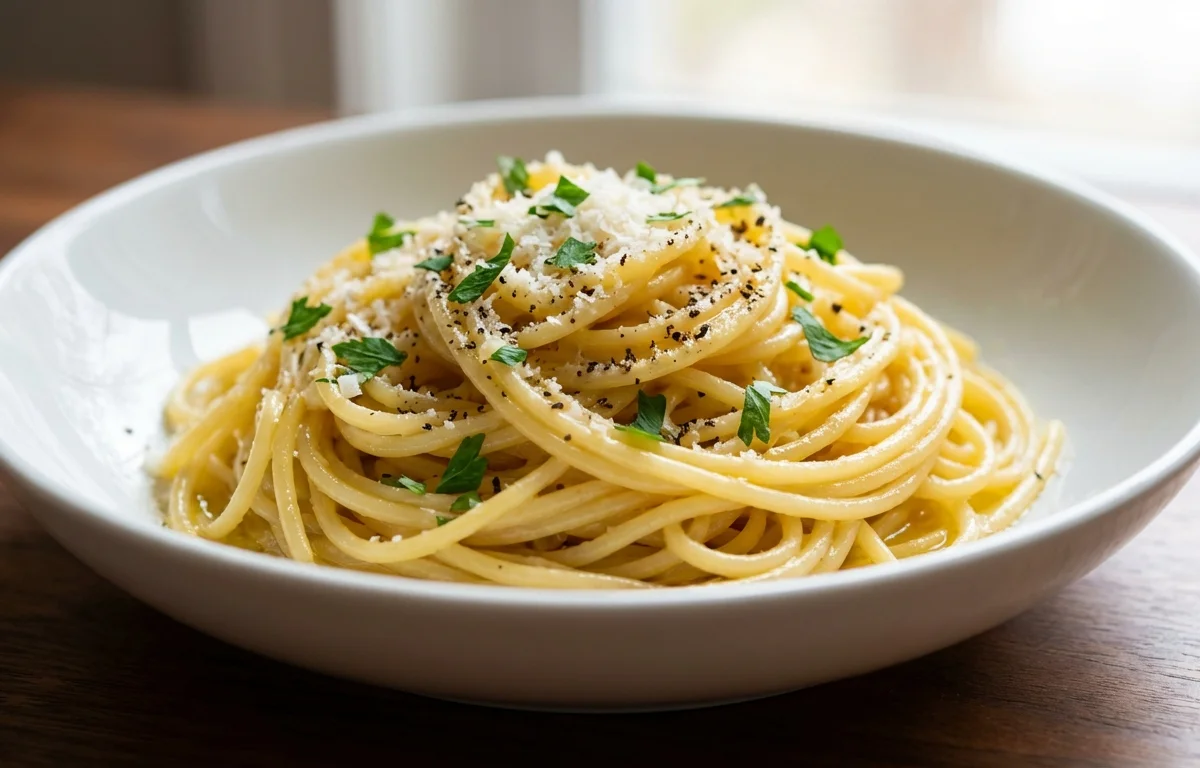
Buttered Pasta
A timeless comfort food classic, this Buttered Pasta comes together in minutes. Perfectly al dente pasta is tossed in a rich, creamy sauce of melted butter, savory Parmesan cheese, and starchy pasta water, creating a simple yet deeply satisfying meal loved by all ages.
For 4 servings
Cook the Pasta
- Bring a large pot of generously salted water to a rolling boil (add 1.5 tsp salt).
- Add the spaghetti and cook according to package directions until al dente, typically 8-10 minutes.
- Crucially, before draining, use a mug or measuring cup to reserve at least 1 cup of the starchy pasta water. This is the key to a creamy sauce.
- Drain the pasta in a colander. Do not rinse it.
Melt the Butter
- While the pasta is cooking, place the cubed butter in a large skillet or pan over low-medium heat.
- Allow the butter to melt completely, swirling the pan occasionally, about 2-3 minutes. Avoid letting it brown for a classic flavor.
Create the Emulsified Sauce
- Transfer the hot, drained pasta directly into the skillet with the melted butter.
- Immediately add the grated Parmesan cheese, 0.25 tsp salt, and freshly ground black pepper.
- Pour in 1/2 cup of the reserved pasta water to start.
- Using tongs, toss the pasta vigorously and continuously for 1-2 minutes. This action is essential to emulsify the butter, cheese, and starchy water into a smooth, creamy sauce that clings to every strand.
Adjust and Serve
- Check the consistency. If the sauce seems too thick or the pasta looks dry, add another splash of the reserved pasta water and toss again until it reaches your desired creaminess.
- Taste and adjust seasoning if necessary.
- Divide the pasta among serving bowls, garnish with fresh parsley if desired, and serve immediately for the best texture.
What to keep in mind.
6 tips from the recipe — small details that make a real difference to the final dish.
- 1Use high-quality butter and Parmesan cheese. Since there are few ingredients, their quality will shine through.
- 2Do not rinse the pasta after draining. The starch on its surface is vital for helping the sauce adhere properly.
- 3The reserved starchy pasta water is the secret ingredient. It contains starches that help the butter and cheese emulsify into a cohesive sauce rather than a greasy coating.
- 4Toss vigorously! The mechanical action of tossing helps create the creamy, emulsified sauce.
- 5Serve immediately. The butter and cheese sauce can separate or become clumpy as it cools.
- 6For a nuttier, more complex flavor, allow the butter to gently brown (beurre noisette) before adding the pasta. Watch it carefully to prevent burning.
Adapt it for your goals.
Brown Butter & Sage
Melt the butter and continue to cook it until it foams and brown specks appear. Add a few fresh sage leaves for the last minute of browning for a nutty, aromatic twist.
Garlic & Red PepperGarlic & Red Pepper
Sauté 1-2 minced garlic cloves in the melting butter for 30-60 seconds until fragrant. Add a pinch of red pepper flakes for a gentle kick of heat.
Lemon & HerbLemon & Herb
After tossing the pasta, stir in the zest of one lemon and a tablespoon of fresh lemon juice for a bright, zesty flavor. Add other fresh herbs like basil or chives along with the parsley.
Add ProteinAdd Protein
Toss in cooked, shredded chicken, sautéed shrimp, or a can of drained chickpeas at the end for a more substantial meal.
Why this is on our healthy list.
Quick Energy Source
The carbohydrates from the pasta provide a quick and efficient source of energy, making this a satisfying meal to refuel your body.
Supports Bone Health
Parmesan cheese is a good source of calcium and phosphorus, essential minerals that play a vital role in building and maintaining strong bones and teeth.
Frequently asked questions
A typical serving of this Buttered Pasta contains approximately 700-750 calories, primarily from the pasta, butter, and cheese.