
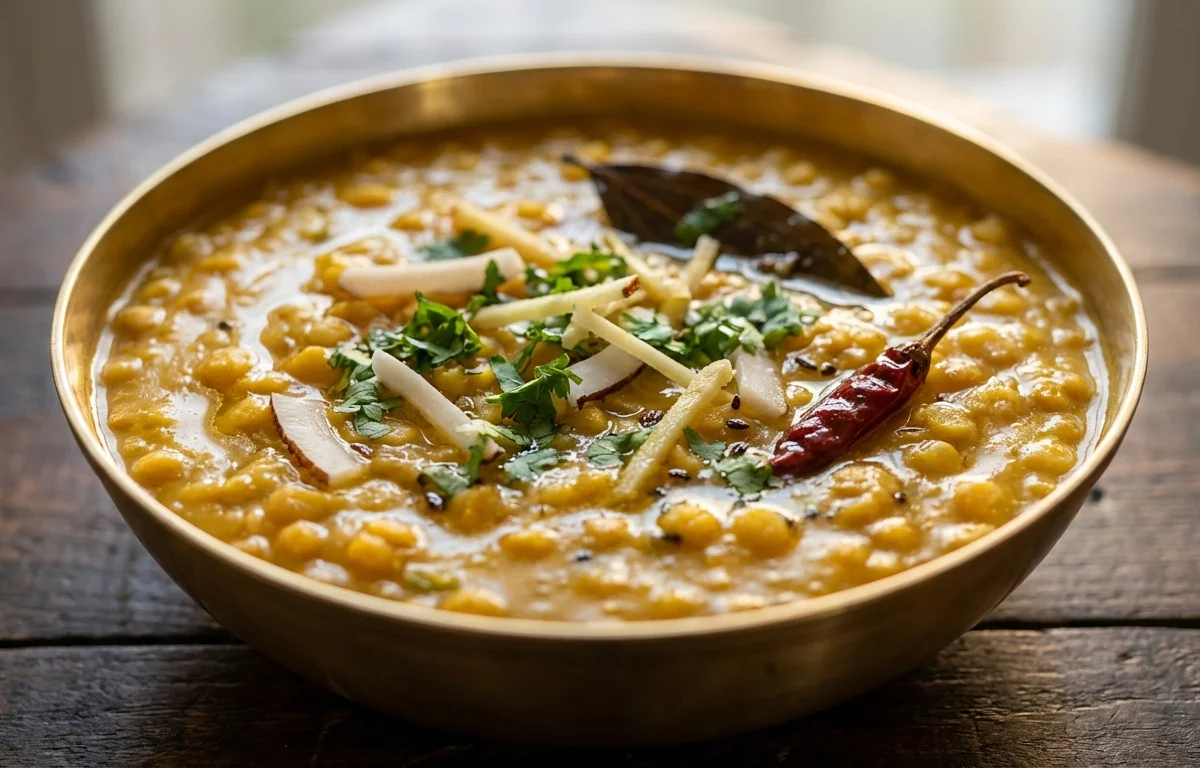
Bootor Dali
A classic Odia lentil dish made with chana dal, coconut, and a hint of sweetness. This comforting and flavorful dal is a staple in Odia cuisine, perfect with rice or puris.
For 4 servings
Pressure Cook the Dal
- Rinse the chana dal thoroughly under running water. Soak it in ample water for at least 2 hours, or up to 4 hours.
- Drain the soaked dal and transfer it to a pressure cooker.
- Add 3 cups of fresh water, turmeric powder, and salt. Stir well.
- Secure the lid and pressure cook on medium heat for 4-5 whistles (approximately 15-20 minutes).
- Turn off the heat and allow the pressure to release naturally. The dal should be cooked through but still hold its shape.
Prepare the Tempering (Chhunka)
- While the pressure is releasing, heat ghee in a small pan (tadka pan) over medium heat.
- Once the ghee is hot, add the bay leaf and dried red chilies. Sauté for 30 seconds until fragrant.
- Add the panch phoron and allow the seeds to crackle and splutter. This should take about 30-40 seconds.
- Add the hing, followed by the grated ginger and thinly sliced coconut.
- Fry for 2-3 minutes, stirring frequently, until the ginger is aromatic and the coconut slices turn a light golden brown.
Combine and Simmer
- Once the pressure cooker is safe to open, carefully pour the hot tempering directly into the cooked dal. Be cautious as it will sizzle.
- Add the sugar (or jaggery) and garam masala to the dal.
- Stir everything gently to combine. If the dal seems too thick, you can add a little hot water to adjust the consistency.
- Place the cooker back on the stove over low heat (without the lid) and let it simmer for 5-7 minutes. This allows the flavors to meld beautifully.
Garnish and Serve
- Turn off the heat. Garnish the dal with freshly chopped coriander leaves.
- Serve the Bootor Dali hot with steamed rice, roti, or traditional Odia puris.
What to keep in mind.
5 tips from the recipe — small details that make a real difference to the final dish.
- 1Soaking the dal is a non-negotiable step for a soft texture and faster cooking.
- 2For the most authentic flavor, use fresh coconut slices. If unavailable, you can use desiccated coconut, but add it in the last minute of frying to prevent burning.
- 3The signature flavor of this dal is a balance of savory, sweet, and spicy. Adjust the sugar and chili amount to your personal preference.
- 4Do not overcook the dal. It should be soft enough to press easily but not mushy. Each lentil should be distinct.
- 5Using ghee for tempering provides a rich, nutty aroma that is characteristic of this dish.
Adapt it for your goals.
Spicier Version
Add 1-2 slit green chilies along with the ginger in the tempering for an extra kick of heat.
Jaggery TwistJaggery Twist
Substitute sugar with an equal amount of powdered jaggery for a more earthy and traditional sweetness.
Creamier TextureCreamier Texture
For a slightly creamier dal, lightly mash about 1/4 of the cooked dal with the back of a spoon before adding the tempering.
No Onion/GarlicNo Onion/Garlic
This recipe is naturally Satvik (without onion and garlic), making it suitable for festive occasions and offerings.
Why this is on our healthy list.
Rich in Plant-Based Protein
Chana dal is a fantastic source of protein, essential for muscle repair, growth, and overall body function, making this dish a great choice for vegetarians and vegans.
High in Dietary Fiber
The high fiber content from the lentils aids in digestion, helps maintain stable blood sugar levels, and promotes a feeling of fullness, which can help with weight management.
Aids Digestion
Ingredients like ginger and hing (asafoetida) are well-known in Ayurveda for their digestive properties, helping to reduce bloating and improve gut health.
Provides Healthy Fats
Ghee and coconut are sources of healthy fats, including medium-chain triglycerides (MCTs), which provide energy and support brain health.
Frequently asked questions
Bootor Dali is a traditional and beloved lentil dish from the Indian state of Odisha. It's made with chana dal (split chickpeas), flavored with a unique tempering of panch phoron, ginger, and fried coconut, and has a characteristic sweet and savory taste.