
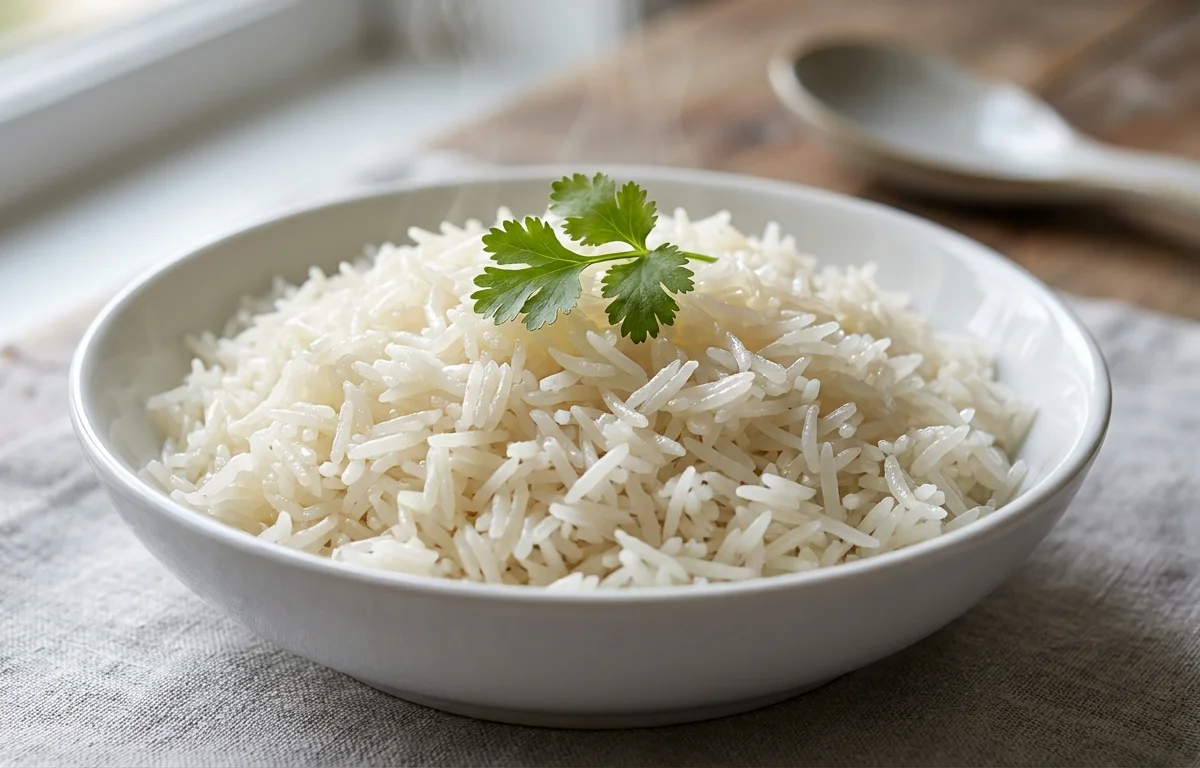
Boiled Rice
Master the art of cooking perfectly fluffy, separate grains of basmati rice with this foolproof method. An essential foundation for countless Indian meals, this simple recipe yields aromatic, non-sticky rice every time, ready to accompany your favorite curries, dals, and sabzis.
For 4 servings
6 steps. 20 minutes total.
- 1
Place the basmati rice in a fine-mesh sieve and rinse under cold running water
- a.Swirl the rice gently with your fingers until the water runs clear. This removes excess starch and prevents stickiness. For best results, soak the rinsed rice in fresh water for 20-30 minutes, then drain completely.
- 2
Step 2
- a.In a medium saucepan with a heavy bottom and a tight-fitting lid, combine the drained rice, 2.25 cups of fresh water, and salt (if using).
- 3
Bring the water to a rolling boil over medium-high heat
- a.As soon as it boils, give it one gentle stir to prevent the rice from sticking to the bottom.
- 4
Step 4
- a.Immediately reduce the heat to the lowest possible setting, cover the saucepan with the lid, and let it simmer for 12-15 minutes. Do not lift the lid during this time, as the steam is crucial for cooking the rice evenly.
- 5
After 12-15 minutes, all the water should be absorbed
- a.Turn off the heat and let the saucepan stand, still covered, for at least 5-10 minutes. This resting period allows the grains to firm up and finish steaming.
- 6
Step 6
- a.Uncover the rice and gently fluff the grains with a fork or a spatula to separate them. Serve hot as a perfect accompaniment to any meal.
What to keep in mind.
5 tips from the recipe — small details that make a real difference to the final dish.
- 1The rice-to-water ratio is key. For basmati rice, a 1:1.5 ratio (1 cup rice to 1.5 cups water) is ideal for the absorption method.
- 2Using a heavy-bottomed pan ensures even heat distribution and prevents the rice from scorching at the bottom.
- 3Resist the temptation to peek or stir while the rice is simmering. Lifting the lid releases steam, which can lead to unevenly cooked or hard rice.
- 4Soaking the rice is an optional step, but it results in longer, more separate, and fluffier grains.
- 5For extra aroma, you can add whole spices like a bay leaf, 2-3 green cardamom pods, or a small cinnamon stick to the water before boiling.
Adapt it for your goals.
Ghee Rice
Add 1 teaspoon of ghee to the rice after it's cooked and fluffed. The ghee adds a rich, nutty aroma and flavor.
Lemon RiceLemon Rice
Squeeze the juice of half a lemon over the cooked rice and fluff gently to mix. This adds a fresh, tangy flavor.
Aromatic RiceAromatic Rice
Toast a bay leaf, 2 cloves, and a 1-inch piece of cinnamon stick in the dry pot for 30 seconds before adding the rice and water. This infuses the rice with a subtle, warm spice fragrance.
Why this is on our healthy list.
Quick Energy Source
As a carbohydrate-rich food, boiled rice provides a quick and easily digestible source of energy, making it ideal for refueling the body.
Low in Fat and Cholesterol
Plain boiled rice is naturally very low in fat, cholesterol, and sodium, making it a heart-healthy base for meals when paired with nutritious curries and vegetables.
Naturally Gluten-Free
Rice is a gluten-free grain, making it an excellent and safe carbohydrate choice for individuals with celiac disease or gluten sensitivity.
Easy on the Digestive System
White rice is low in fiber and easy to digest, often recommended during digestive distress as part of a bland diet.
Frequently asked questions
Sticky rice is usually caused by three things: not rinsing the rice enough to remove surface starch, using too much water, or stirring the rice while it's simmering, which breaks down the grains and releases starch.