
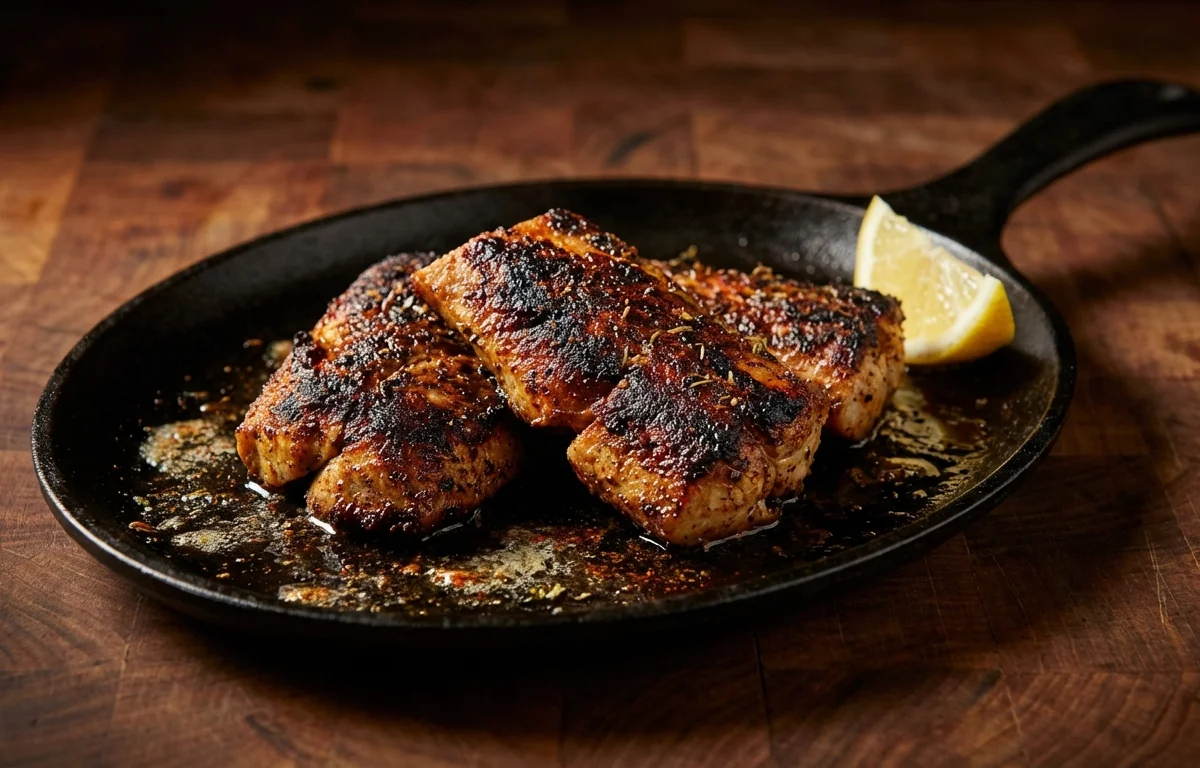
Blackened Alligator
Tender alligator meat coated in a bold Cajun spice blend and seared in a blazing hot skillet. This Louisiana classic has a smoky, spicy crust and a surprisingly delicate, juicy interior. A true taste of the bayou!
For 4 servings
4 steps. 10 minutes total.
- 1
Step 1
- a.Prepare the Alligator and Spice Blend
- b.If frozen, thaw the alligator meat completely. Cut the tenderloin into uniform 1-inch cubes or 1/2-inch thick medallions.
- c.Pat the alligator pieces completely dry with paper towels. This is crucial for achieving a perfect crust.
- d.In a shallow dish, combine the smoked paprika, sweet paprika, cayenne, garlic powder, onion powder, thyme, oregano, salt, black pepper, and white pepper. Whisk until evenly mixed.
- 2
Step 2
- a.Coat the Alligator
- b.Place the 1/2 cup of melted butter in a separate shallow bowl.
- c.Dip each piece of alligator into the melted butter, ensuring it's lightly coated, and allow any excess to drip off.
- d.Immediately transfer the buttered alligator to the spice blend. Toss gently to coat all sides thoroughly, pressing the seasoning onto the meat to help it adhere.
- 3
Step 3
- a.Blacken the Alligator
- b.Place a large cast-iron skillet over high heat. Allow it to preheat for 5-7 minutes until it is extremely hot and just begins to smoke. Ensure your kitchen is well-ventilated.
- c.Add 1 tablespoon of the remaining butter to the hot skillet. It should sizzle and brown almost instantly.
- d.Carefully place the coated alligator pieces in a single layer, ensuring not to overcrowd the pan. Work in batches if necessary.
- e.Sear for 2-3 minutes per side without moving the pieces. The spices will char and form a dark, flavorful crust.
- f.Use a meat thermometer to check for doneness. The alligator is cooked when the internal temperature reaches 160°F (71°C). Remove from the skillet immediately to prevent it from becoming tough.
- 4
Step 4
- a.Serve Immediately
- b.Transfer the cooked blackened alligator to a serving platter.
- c.Serve hot with fresh lemon wedges on the side for squeezing over the top. This dish is best enjoyed right away while the crust is crisp.
What to keep in mind.
6 tips from the recipe — small details that make a real difference to the final dish.
- 1Ventilation is key! The blackening process creates significant smoke. Open windows and use an exhaust fan.
- 2A cast-iron skillet is highly recommended as it retains high, even heat, which is essential for the perfect blackened crust.
- 3Do not overcrowd the skillet. Cooking in batches ensures each piece sears properly rather than steams.
- 4Alligator is very lean. Overcooking will make it tough and rubbery. Cook it quickly over high heat and remove it promptly.
- 5The internal temperature of 160°F (71°C) is the most reliable indicator of doneness.
- 6Serve with a cooling dipping sauce like a classic Louisiana remoulade or a creamy lemon-dill aioli to complement the intense spice.
Adapt it for your goals.
Adjust Spice Level
Reduce or omit the cayenne pepper for a milder version, or increase it for extra heat. You can also add a pinch of chili powder for a different smoky dimension.
Protein SubstitutionProtein Substitution
This blackening spice and technique work wonderfully on chicken breast tenders, firm white fish like mahi-mahi or catfish, or large shrimp.
Grilling MethodGrilling Method
For a smokier flavor, thread the coated alligator onto skewers and grill over high heat for 2-3 minutes per side until cooked through.
Why this is on our healthy list.
Excellent Source of Lean Protein
Alligator meat is packed with high-quality protein, which is essential for building and repairing muscle tissue, supporting immune function, and maintaining overall body strength.
Rich in Niacin (Vitamin B3)
This dish provides a significant amount of niacin, a B-vitamin that plays a crucial role in converting food into energy, supporting the nervous system, and maintaining healthy skin.
Contains Omega-3 Fatty Acids
Alligator is a surprising source of omega-3 fatty acids, which are known for their anti-inflammatory properties and benefits for heart and brain health.
Frequently asked questions
Alligator has a unique flavor that is often described as a cross between chicken and fish, with a firm, slightly chewy texture. The tail meat, or tenderloin, is the most tender and has the mildest flavor.