
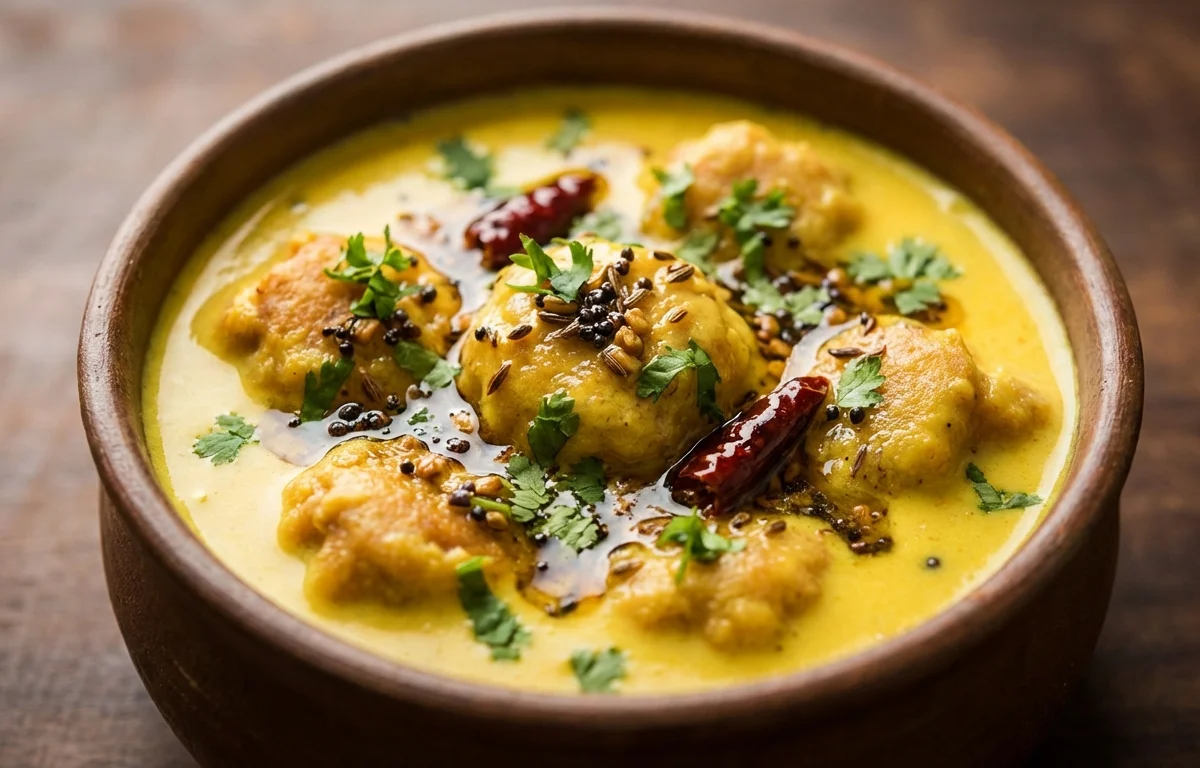
Bihari Kadhi Badi
A comforting yogurt and chickpea flour curry from Bihar, filled with soft, spongy gram flour dumplings. This tangy and mildly spicy dish is a regional staple, best enjoyed with steamed rice.
For 4 servings
Prepare the Badi Batter
- In a mixing bowl, combine 1 cup of besan, 0.5 tsp turmeric powder, 0.5 tsp red chili powder, and 0.5 tsp salt.
- Gradually add about 0.5 cup of water while whisking continuously to form a thick, smooth, and lump-free batter. The consistency should be like a thick pancake batter.
- Whisk the batter vigorously in one direction for 5-7 minutes. This incorporates air, making the badis light and spongy. To test, drop a small bit of batter into a bowl of water; it should float. Cover and set aside for 10 minutes.
Fry the Badis
- Heat mustard oil in a kadai or deep pan over medium-high heat. The oil is ready when a small drop of batter sizzles and rises to the top immediately.
- Carefully drop small, bite-sized portions of the batter into the hot oil using your fingers or a spoon. Do not overcrowd the pan; fry in batches.
- Fry for 4-5 minutes, turning occasionally, until the badis are golden brown, crisp, and cooked through.
- Remove the fried badis with a slotted spoon and place them on a plate lined with paper towels to drain excess oil.
Prepare the Kadhi Mixture
- In a large bowl, add the 2 cups of whisked sour curd and the remaining 0.25 cup (4 tbsp) of besan.
- Whisk them together thoroughly until no lumps of besan remain.
- Slowly pour in 5 cups of water, continuing to whisk to create a smooth, thin mixture.
- Stir in the remaining 0.75 tsp turmeric powder, 0.5 tsp red chili powder, 1.5 tsp salt, 1 tsp ginger paste, and 1 tsp garlic paste. Mix well.
Cook the Kadhi
- Pour the kadhi mixture into a heavy-bottomed pot or kadai.
- Bring the mixture to a boil over medium heat, stirring constantly and scraping the bottom and sides to prevent the yogurt from curdling.
- Once it reaches a rolling boil (this can take 8-10 minutes), reduce the heat to low.
- Let the kadhi simmer for 15-20 minutes, stirring occasionally. The kadhi will thicken slightly and the raw flavor of besan will cook off.
Combine Kadhi and Badi
- Gently add the fried badis to the simmering kadhi.
- Continue to simmer on low heat for another 5-7 minutes. This allows the badis to absorb the kadhi and become soft and flavorful. Turn off the heat.
Prepare the Tempering (Tadka)
- In a small tadka pan, heat 2 tbsp of ghee over medium heat.
- Once the ghee is hot, add 0.5 tsp mustard seeds and let them splutter.
- Add 0.5 tsp cumin seeds, 0.25 tsp fenugreek seeds, 2 broken dried red chilies, and 0.25 tsp asafoetida. Sauté for about 30 seconds until fragrant. Be careful not to burn the fenugreek seeds.
Finish and Serve
- Immediately pour the hot tempering over the kadhi badi. You will hear a satisfying sizzle. Stir gently to combine.
- Garnish with 2 tbsp of freshly chopped coriander leaves.
- Let the kadhi rest for at least 10 minutes before serving for the flavors to meld.
- Serve hot with steamed rice or jeera rice.
What to keep in mind.
6 tips from the recipe — small details that make a real difference to the final dish.
- 1For the most authentic tangy flavor, use sour curd. If your curd is fresh, leave it at room temperature for 4-5 hours to sour naturally.
- 2The key to soft, spongy badis is a well-aerated batter. Whisk it vigorously and perform the 'float test' to ensure it's ready.
- 3Constant stirring is crucial when bringing the kadhi to a boil. This prevents the yogurt from splitting and ensures a smooth texture.
- 4Use mustard oil for frying the badis to get the authentic Bihari taste and aroma.
- 5The kadhi will thicken as it cools. Adjust the consistency with a little hot water if it becomes too thick upon reheating.
- 6For extra soft badis, you can soak the fried badis in warm, salted water for 10 minutes before adding them to the simmering kadhi. Squeeze out the excess water before adding.
Adapt it for your goals.
Vegetable Addition
Add chopped spinach (palak) or fenugreek leaves (methi) to the badi batter for added nutrition and flavor. You can also add drumsticks to the kadhi while it simmers.
Spice LevelSpice Level
For a spicier version, add finely chopped green chilies to the badi batter or increase the amount of red chili powder in the kadhi.
Punjabi StylePunjabi Style
For a variation, add sliced onions and ginger-garlic paste to the tempering before adding other spices to create a flavor profile closer to Punjabi Kadhi Pakora.
Why this is on our healthy list.
Rich in Protein
Both besan (gram flour) and curd are excellent sources of protein, which is essential for muscle repair, cell growth, and overall body function.
Gut-Friendly Probiotics
The use of curd makes this dish rich in probiotics, which are beneficial bacteria that improve gut health, aid digestion, and boost the immune system.
Good for Bone Health
Curd is a great source of calcium and phosphorus, vital minerals for maintaining strong and healthy bones and teeth.
Complex Carbohydrates
Besan provides complex carbohydrates and has a lower glycemic index compared to wheat flour, leading to a slower release of sugar into the bloodstream and providing sustained energy.
Frequently asked questions
Kadhi usually curdles for two main reasons: 1) Not stirring continuously while bringing it to a boil. The yogurt solids separate from the whey when heated unevenly. 2) Adding salt too early. It's best to add salt after the kadhi has come to a boil to minimize the risk of splitting.