
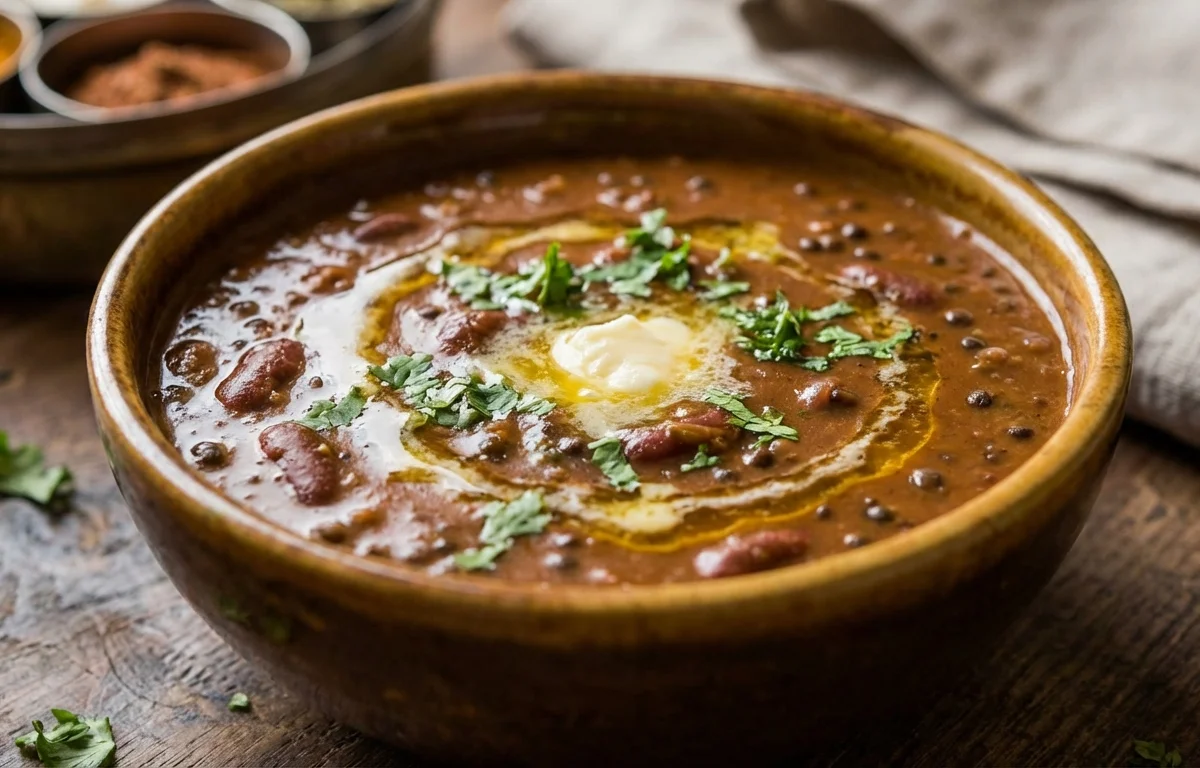
Bihari Dal Makhani
A rustic Bihari twist on the classic Punjabi Dal Makhani. This version uses whole black lentils and kidney beans, slow-cooked to perfection and tempered with fragrant panch phoran in mustard oil for a uniquely earthy and robust flavor.
For 4 servings
6 steps. 60 minutes total.
- 1
Step 1
- a.Soak and Pressure Cook Lentils
- b.Wash the whole black lentils and kidney beans thoroughly. Soak them in ample water overnight or for at least 8 hours.
- c.Drain the soaking water. Transfer the lentils and beans to a pressure cooker. Add 4 cups of fresh water, 1 tsp of salt, turmeric powder, and the bay leaf.
- d.Secure the lid and pressure cook on medium heat for 6-7 whistles, or for about 25-30 minutes, until the beans are completely soft and can be easily mashed.
- e.Allow the pressure to release naturally. Open the cooker and use the back of a ladle to lightly mash about a quarter of the dal against the side of the pot. This helps create a naturally creamy texture. Set aside.
- 2
Step 2
- a.Prepare the Masala Base
- b.In a heavy-bottomed pan (kadai), heat the mustard oil over medium-high heat until it just begins to smoke. This step is crucial to mellow its pungent flavor.
- c.Reduce the heat to medium, add the finely chopped onions, and sauté for 8-10 minutes until they are soft and golden brown.
- d.Add the ginger-garlic paste and cook for 1-2 minutes until the raw aroma disappears.
- e.Stir in the tomato puree and slit green chilies. Cook for 8-10 minutes, stirring occasionally, until the masala thickens and you see oil separating at the edges.
- 3
Step 3
- a.Combine and Simmer the Dal
- b.Add the coriander powder, cumin powder, and red chili powder to the masala. Sauté for 1 minute until the spices are fragrant.
- c.Pour the cooked lentil mixture into the pan with the masala. Mix everything together thoroughly.
- d.If the dal seems too thick, add up to 1 cup of hot water to reach your desired consistency.
- e.Bring the dal to a gentle boil, then reduce the heat to low. Cover partially and let it simmer for at least 15-20 minutes. Stir every few minutes to prevent it from sticking. This slow simmering is key to developing deep flavors.
- 4
Step 4
- a.Finish with Creaminess and Flavor
- b.Stir in the milk and unsalted butter until they are fully incorporated. This adds a subtle richness.
- c.Add the garam masala and crushed kasuri methi. Mix well and let it simmer for another 5 minutes.
- 5
Step 5
- a.Prepare the Bihari Tempering (Tadka)
- b.In a small tadka pan, heat the ghee over medium heat.
- c.Once the ghee is hot, add the panch phoran. Allow the seeds to crackle and become aromatic, which should take about 30 seconds.
- d.Add the dried red chilies and hing. Sauté for another 10-15 seconds, being careful not to burn the spices.
- e.Immediately and carefully pour this sizzling tempering over the simmering dal. It will sizzle loudly.
- 6
Step 6
- a.Garnish and Serve
- b.Gently stir the tempering into the dal. Check for salt and adjust if necessary.
- c.Garnish with freshly chopped coriander leaves.
- d.Serve hot with steamed rice, jeera rice, or your favorite Indian bread like roti or naan.
What to keep in mind.
5 tips from the recipe — small details that make a real difference to the final dish.
- 1Soaking the lentils and beans overnight is non-negotiable for a creamy texture and reduced cooking time.
- 2Properly heating the mustard oil until it's lightly smoking is essential to remove its raw, pungent taste.
- 3The slow simmering step is where the magic happens. Don't rush it, as this allows the dal to absorb all the flavors of the masala.
- 4Lightly mashing some of the cooked dal is a natural way to thicken it without adding any flour or cream.
- 5This dal tastes even better the next day as the flavors meld and deepen. It stores well in the refrigerator for up to 3 days.
Adapt it for your goals.
Vegan Version
Replace ghee and butter with a neutral vegetable oil or vegan butter. Substitute the milk with 1/4 cup of cashew cream (soaked cashews blended with water) or full-fat coconut milk for a similar creamy texture.
No Onion, No GarlicNo Onion, No Garlic
For a Sattvic or Jain version, omit the onions and ginger-garlic paste. Increase the amount of hing (asafoetida) in the tempering and add a pinch to the masala base along with grated ginger for flavor.
Spicier VersionSpicier Version
Increase the number of green chilies to 3-4. You can also add a pinch of freshly ground black pepper along with the garam masala at the end for an extra layer of heat.
Why this is on our healthy list.
Rich in Plant-Based Protein
Whole black lentils and kidney beans are excellent sources of plant-based protein, which is crucial for muscle repair, growth, and overall body function.
High in Dietary Fiber
The combination of lentils and beans provides a significant amount of dietary fiber, which aids digestion, promotes gut health, and helps in maintaining stable blood sugar levels.
Source of Essential Minerals
This dal is a good source of essential minerals like iron, magnesium, and potassium, which are vital for energy production, bone health, and maintaining healthy blood pressure.
Frequently asked questions
Yes, it's a very nutritious dish. It's packed with protein and fiber from lentils and kidney beans. The Bihari version uses mustard oil, which is rich in monounsaturated fats. However, it is moderately high in calories due to the use of butter and ghee, so portion control is key for a balanced diet.