
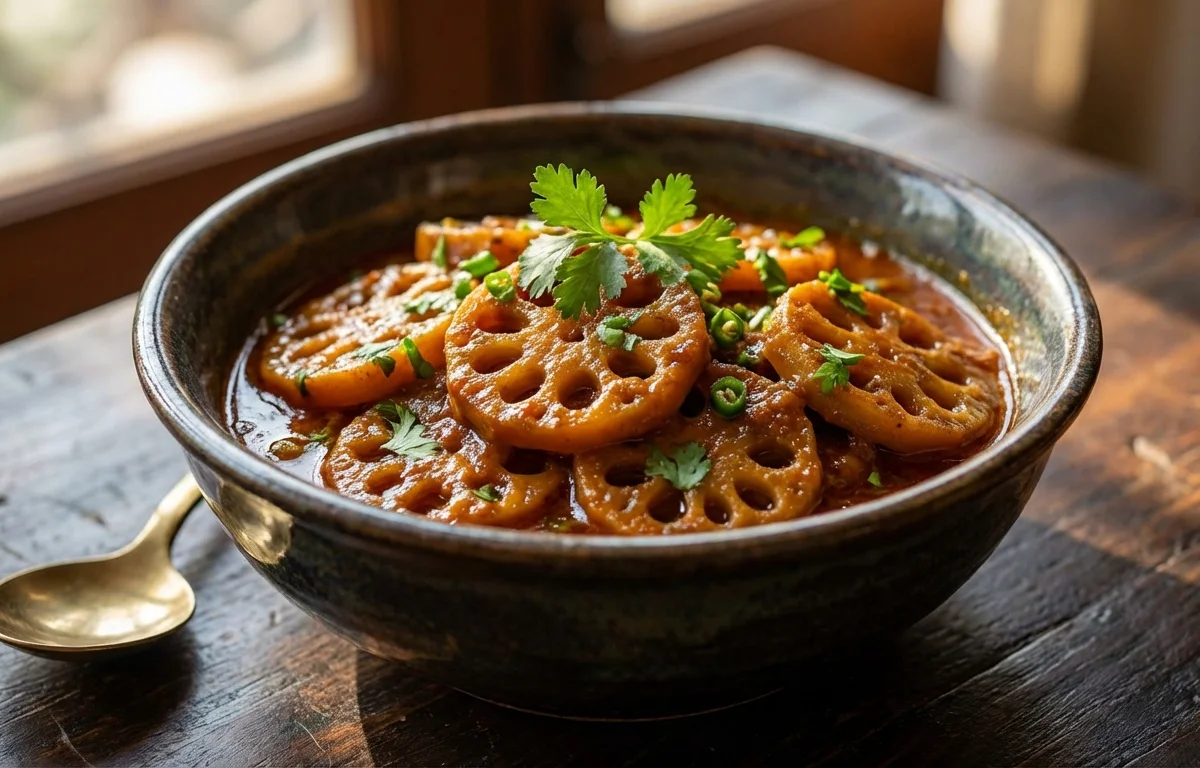
Bhugal Bhee
A classic Sindhi delicacy where tender lotus root is slow-cooked with deeply caramelized onions, tangy tomatoes, and aromatic spices. The term 'Bhugal' refers to the process of browning, which gives this semi-dry curry its signature sweet and savory depth. A comforting and unique dish.
For 4 servings
Prepare the Lotus Root
- Wash the lotus root thoroughly under running water. Peel the tough outer skin with a peeler.
- Slice it into 1/4-inch thick diagonal pieces. Hold each slice up to the light to inspect the holes for any hidden dirt. Use a thin skewer to clean them out if needed.
- In a pot, bring 4 cups of water and 1 tsp of salt to a rolling boil.
- Add the lotus root slices and blanch for 5-7 minutes. This cleans them and begins the cooking process. Drain completely and set aside.
Caramelize the Onions (The 'Bhugal' Process)
- Heat oil in a heavy-bottomed pan or kadai over medium-low heat.
- Add the thinly sliced onions and sauté, stirring frequently, for 15-18 minutes. Be patient, as they need to turn a deep, uniform golden-brown. This step is crucial for the dish's signature flavor.
Build the Masala Base
- Add the ginger-garlic paste and slit green chilies to the browned onions. Sauté for 1 minute until the raw aroma disappears.
- Add the asafoetida and stir. Immediately add the finely chopped tomatoes.
- Cook for 6-8 minutes, stirring occasionally, until the tomatoes break down completely and become soft and pulpy.
- Stir in the turmeric powder, Kashmiri red chili powder, coriander powder, and 1 tsp of salt. Mix well and cook for 2-3 minutes until the oil begins to separate from the masala.
Cook the Lotus Root
- Add the blanched lotus root slices to the pan. Gently stir for 2 minutes to coat them evenly with the masala.
- Pour in 1/2 cup of water, mix well, and bring the mixture to a simmer.
- Cover the pan, reduce the heat to low, and cook for 15-20 minutes, or until the lotus root is tender but still retains a slight bite.
- If there's excess water after cooking, remove the lid and cook on medium heat for a few more minutes until the gravy thickens to a semi-dry consistency, clinging to the lotus root.
Finish and Garnish
- Turn off the heat. Stir in the amchur powder and garam masala for a final burst of flavor and aroma.
- Garnish with freshly chopped coriander leaves.
- Let it rest for 5 minutes before serving. Serve hot with phulka, roti, or as a side dish with dal and rice.
What to keep in mind.
5 tips from the recipe — small details that make a real difference to the final dish.
- 1The key to authentic 'Bhugal Bhee' is the deep, even browning of the onions. Don't rush this step; it builds the foundational sweet and savory flavor.
- 2Cleaning the lotus root is paramount. After slicing, hold each piece up to the light to check for any dirt in the holes. Use a skewer or a thin brush to clean them out.
- 3For a slightly richer flavor, you can use ghee instead of oil.
- 4If you prefer a bit of gravy, you can add up to 1 cup of water in step 4 and simmer for a shorter time.
- 5To save time, you can pressure cook the dish. After sautéing the masala, add the lotus root and water, and cook for 1 whistle on high heat, then let the pressure release naturally.
Adapt it for your goals.
Aloo Bhee
Add one peeled and cubed potato along with the lotus root for a heartier version. You may need to add a splash more water.
Creamy VersionCreamy Version
Add 2 tablespoons of beaten curd (yogurt) after the tomatoes have cooked down for a slightly tangy and creamier texture. Ensure the heat is low to prevent curdling.
With PeasWith Peas
Add 1/2 cup of green peas in the last 5 minutes of cooking for a pop of color and sweetness.
Why this is on our healthy list.
Rich in Dietary Fiber
Lotus root is an excellent source of fiber, which aids digestion, promotes gut health, and helps in maintaining stable blood sugar levels.
Boosts Immunity
High in Vitamin C, an antioxidant that strengthens the immune system and helps protect the body against infections.
Supports Heart Health
The potassium in lotus root acts as a vasodilator, helping to regulate blood pressure. The fiber content also helps in managing cholesterol levels.
Frequently asked questions
Wash it thoroughly, peel the skin, and slice it. The most important part is cleaning the holes. Use a thin skewer or a small brush under running water to dislodge any hidden dirt. Blanching also helps in cleaning it further.