
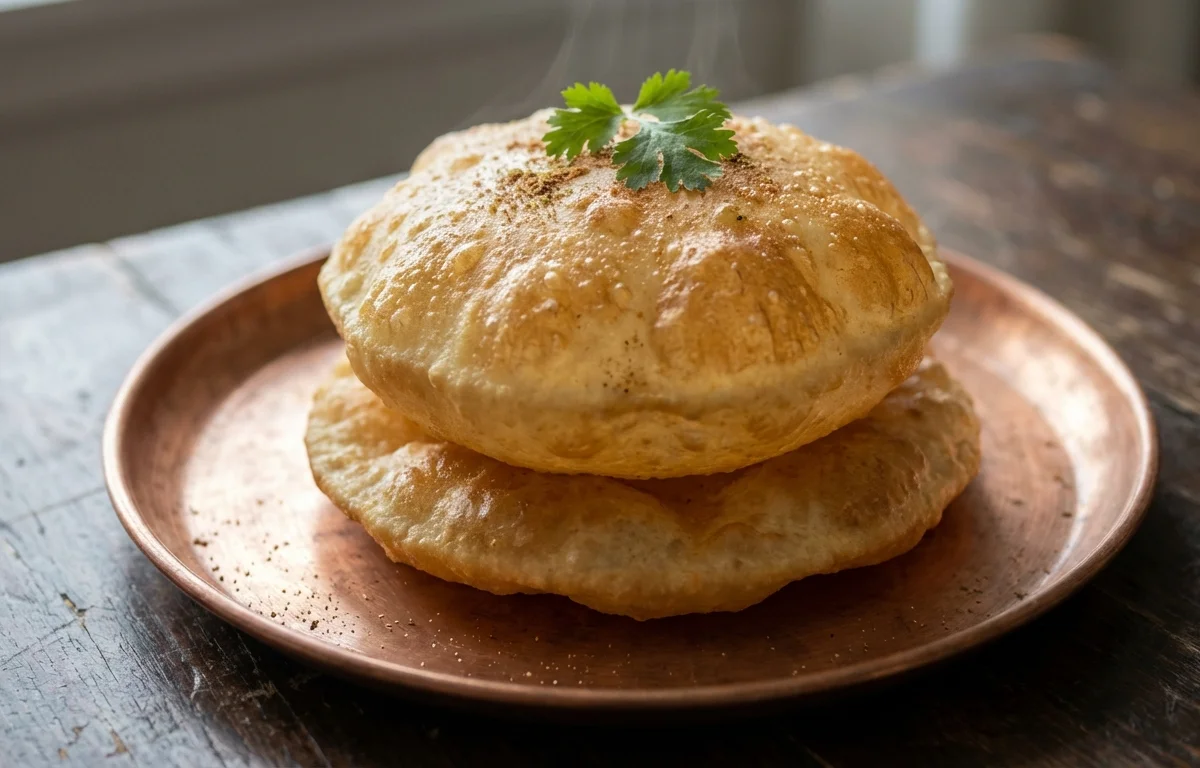
Bhature
These large, puffy fried breads are wonderfully soft and slightly chewy. A classic from Punjabi cuisine, bhature are the perfect companion for a spicy bowl of chole, making for an unforgettable meal.
For 4 servings
Prepare the Dough
- In a large mixing bowl, whisk together the all-purpose flour, fine semolina, sugar, baking powder, baking soda, and salt.
- Create a well in the center and add the plain yogurt and 2 tbsp of vegetable oil. Mix with your fingertips until the mixture resembles coarse crumbs.
- Gradually add warm water, a little at a time, and knead for 8-10 minutes to form a soft, smooth, and pliable dough. The dough should be soft but not sticky.
- Coat the dough with a thin layer of oil, cover it with a damp cloth or plastic wrap, and let it rest in a warm place for at least 2 hours, or up to 4 hours for a better flavor and texture.
Shape the Bhature
- After the resting period, gently knead the dough for one minute to release any air bubbles.
- Divide the dough into 8 equal portions and roll each portion into a smooth ball.
- Lightly grease your rolling surface and rolling pin with oil. Avoid using dry flour as it can burn in the frying oil and spoil it.
- Take one dough ball and roll it into an oval or round shape, about 6-7 inches in diameter and approximately 1/4 inch thick. Don't roll it too thin.
Fry the Bhature
- Heat the 3 cups of vegetable oil in a deep kadai or pan over medium-high heat. The oil should be hot, around 180-190°C (350-375°F). To test, drop a tiny piece of dough into the oil; it should sizzle and rise to the surface immediately.
- Carefully slide one rolled bhatura into the hot oil. It will sink initially and then float up.
- As it floats, gently press the center with a slotted spoon. This helps it to puff up completely like a balloon.
- Fry for about 30-40 seconds until the bottom is light golden brown, then flip it over.
- Fry the other side for another 30 seconds until it's also light golden. Avoid over-frying, as they should remain soft.
- Remove the bhatura with the slotted spoon, letting the excess oil drain back into the kadai.
Serve
- Place the fried bhatura on a plate lined with paper towels to absorb any extra oil.
- Repeat the frying process for the remaining dough balls.
- Serve immediately while hot and puffy with chole, pickled onions, and a lemon wedge.
What to keep in mind.
6 tips from the recipe — small details that make a real difference to the final dish.
- 1Using slightly sour yogurt gives the bhature a pleasant tangy flavor and aids in fermentation.
- 2The resting time is crucial. Do not skip it, as it allows the dough to ferment and develop the soft, chewy texture.
- 3Maintain a consistent, hot oil temperature. If the oil isn't hot enough, the bhature will absorb excess oil and become greasy. If it's too hot, they will burn on the outside before cooking through.
- 4Always use oil, not dry flour, for rolling. Dry flour particles will burn in the hot oil, giving it a bitter taste and dark color.
- 5After the dough has rested, knead it very gently for just a minute. Over-kneading at this stage can make the bhature tough.
- 6You can prepare the dough ahead and refrigerate it in an airtight container for up to 2 days. Bring to room temperature before rolling.
Adapt it for your goals.
Paneer Stuffed Bhature
Stuff the rolled dough with a mixture of crumbled paneer, finely chopped onions, green chilies, and spices before frying.
Aloo BhatureAloo Bhature
Incorporate one boiled, peeled, and mashed potato into the dough during kneading for an even softer and fluffier texture.
Whole Wheat BhatureWhole Wheat Bhature
For a healthier alternative, replace up to half of the all-purpose flour with whole wheat flour (atta). Note that this will result in a denser and less puffy bhatura.
Why this is on our healthy list.
Source of Energy
The carbohydrates from the all-purpose flour provide a quick and substantial source of energy, making it a very filling and satisfying meal.
Contains Probiotics
The use of yogurt (dahi) to ferment the dough introduces beneficial probiotics, which can help support gut health and improve digestion.
Comfort Food
As a beloved traditional dish, enjoying bhature can provide a sense of comfort and cultural connection, which is beneficial for overall mental well-being.
Frequently asked questions
This is a common issue with a few possible causes: the dough wasn't rested long enough, the oil was not hot enough (around 180°C/350°F is ideal), or the bhatura was rolled too thin. Ensure the oil is at the correct temperature and gently press the bhatura with a spoon as it fries to encourage puffing.