
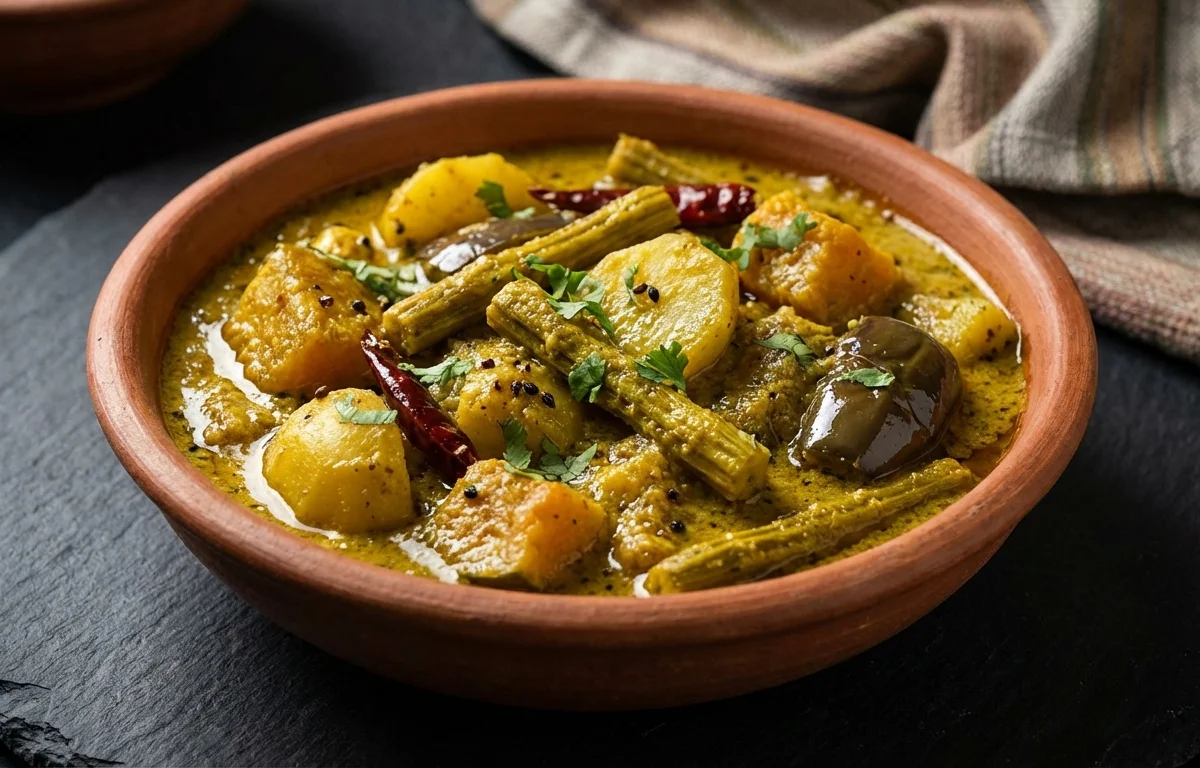
Besara Tarkari
A classic Odia mixed vegetable curry where the star is a pungent, tangy mustard and poppy seed paste. This simple, comforting dish is a staple in Odisha and pairs perfectly with steamed rice.
For 4 servings
Prepare the Besara Paste
- Rinse and soak the black mustard, yellow mustard, and poppy seeds in 1/2 cup of warm water for at least 30 minutes.
- Transfer the soaked seeds to a grinder jar. Add the garlic cloves, green chilies, and a pinch of salt (this helps prevent bitterness).
- Grind to a very smooth paste, adding a little of the soaking water as needed. Set aside.
Sauté the Vegetables
- Heat 2 tablespoons of mustard oil in a heavy-bottomed pan (kadai) over medium heat until it's slightly smoking.
- Carefully add the cubed mixed vegetables. Sauté for 5-7 minutes, stirring occasionally, until the vegetables are lightly browned on the edges.
- Add the chopped tomato and turmeric powder. Cook for another 2-3 minutes until the tomatoes soften.
Cook the Curry
- Pour in 1.5 cups of water, add the ambula (dried mango pieces), and salt to taste. Stir well.
- Bring the curry to a boil. Then, reduce the heat to medium-low, cover the pan, and let it simmer for 10-12 minutes, or until the vegetables are fork-tender.
Add the Mustard Paste
- Reduce the heat to the lowest setting. Stir the prepared besara (mustard) paste into the curry.
- Mix gently to combine everything. Allow it to simmer for just 2-3 minutes. Do not boil the curry vigorously after adding the paste, as it will turn bitter.
- Turn off the heat.
Prepare the Tempering (Phutana)
- In a small separate pan (tadka pan), heat the remaining 1 tablespoon of mustard oil over medium heat.
- Once hot, add the pancha phutana and let the seeds crackle and become fragrant, which takes about 30 seconds.
- Add the broken dried red chilies and sauté for a few more seconds until they darken slightly.
Finish and Serve
- Immediately pour the hot tempering over the prepared vegetable curry. You will hear a satisfying sizzle.
- Garnish with freshly chopped coriander leaves.
- Let the curry rest for 5 minutes for the flavors to meld, then serve hot with steamed rice.
What to keep in mind.
5 tips from the recipe — small details that make a real difference to the final dish.
- 1Use authentic cold-pressed mustard oil for the characteristic pungent flavor of Odia cuisine.
- 2Always grind the mustard paste with a pinch of salt to help prevent it from turning bitter.
- 3Never boil the curry for a long time after adding the mustard paste; a gentle simmer for 2-3 minutes is sufficient.
- 4Pancha phutana is a key ingredient; if you don't have it, you can make it by mixing equal parts of cumin, mustard, fenugreek, nigella, and fennel seeds.
- 5For a richer, milder gravy, you can add 2 tablespoons of grated fresh coconut to the grinder with the mustard seeds.
Adapt it for your goals.
Non-Vegetarian
Create 'Macha Besara' by adding pan-fried fish pieces (like Rohu or Catla) to the curry along with the mustard paste and simmering for a few minutes.
Creamier GravyCreamier Gravy
For a milder and creamier gravy, grind 2-3 tablespoons of fresh grated coconut along with the mustard seeds.
No Garlic VersionNo Garlic Version
For a 'satvik' version often prepared for religious occasions, simply omit the garlic from the paste. The flavor will be different but still delicious.
Why this is on our healthy list.
Rich in Phytonutrients
The use of diverse vegetables like pumpkin, brinjal, and drumsticks provides a wide range of vitamins, minerals, and antioxidants essential for overall health.
Anti-inflammatory Properties
Mustard seeds and turmeric powder are known for their powerful anti-inflammatory compounds, such as curcumin and glucosinolates, which can help reduce inflammation in the body.
Good for Digestion
The high fiber content from the mixed vegetables aids in digestion, promotes gut health, and helps maintain regular bowel movements.
Heart-Healthy Fats
Made with mustard oil, this dish contains a good amount of monounsaturated and polyunsaturated fats, including omega-3 fatty acids, which are beneficial for cardiovascular health.
Frequently asked questions
Bitterness usually comes from over-grinding the mustard seeds or boiling the curry for too long after adding the mustard paste. Grind the paste with a pinch of salt and only simmer for 2-3 minutes on low heat after adding it to the curry.