
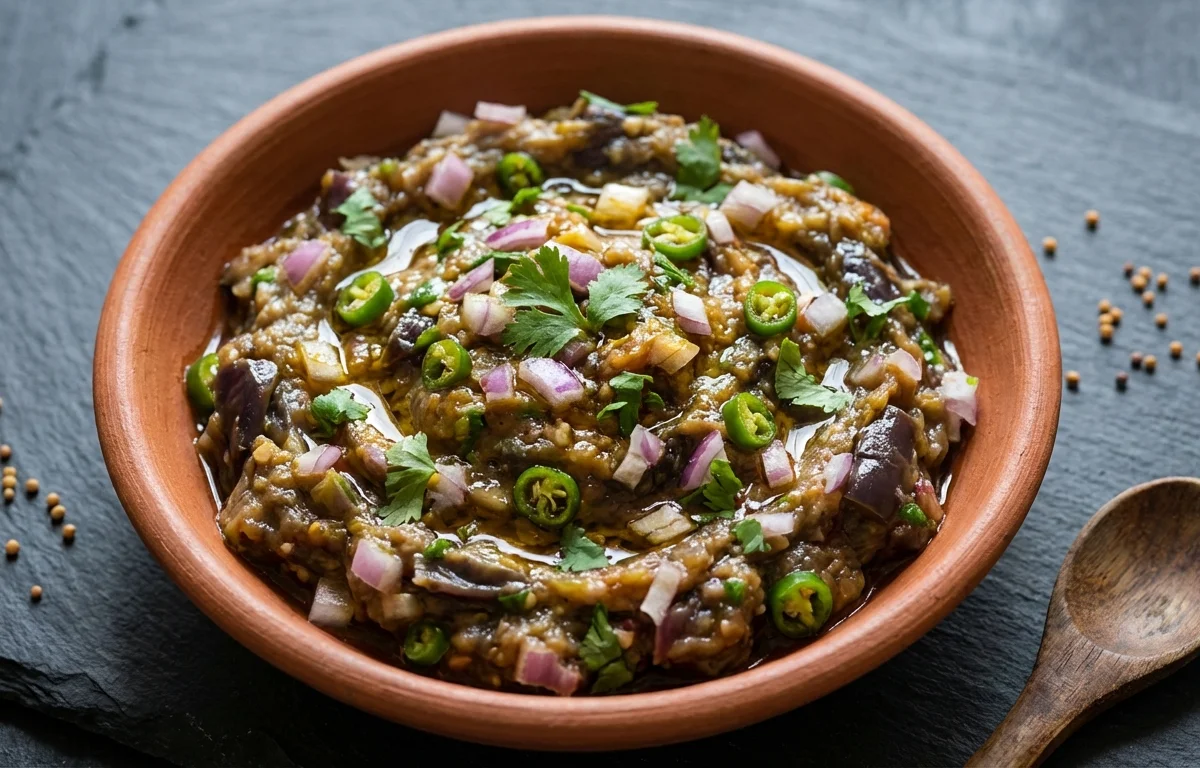
Bengenar Pitika
A rustic and smoky mashed eggplant dish from Assam, where fire-roasted eggplant is simply mixed with pungent mustard oil, sharp onions, and fresh chilies. This flavorful side dish is a perfect companion to steamed rice and dal.
For 4 servings
Roast the Eggplant
- Wash and thoroughly dry the large brinjal. Make a few slits across its surface with a knife.
- Optionally, you can rub a little mustard oil over the skin; this helps in peeling it later.
- Place the brinjal directly on a medium gas flame. Using tongs, turn it every 4-5 minutes to ensure it cooks evenly on all sides.
- Continue roasting for about 15-20 minutes. The skin will become completely charred and black, and the brinjal will feel soft, tender, and collapsed when poked with a knife.
Peel and Mash
- Once roasted, carefully remove the brinjal from the flame and place it in a bowl of water for a minute or two. This makes peeling easier.
- Transfer the brinjal to a plate and let it cool for 5-10 minutes until it's safe to handle.
- Gently peel off all the charred skin. The flesh inside should be soft and have a smoky aroma.
- Cut off and discard the stem. Slit the eggplant open to check for any insects (a common practice).
- Place the cooked pulp in a mixing bowl and mash it well with a fork or a potato masher to a coarse texture.
Combine Ingredients
- To the mashed eggplant, add the finely chopped onion, green chilies, and fresh coriander leaves.
- Pour in the pungent mustard oil and add salt to taste.
- Using a spoon or your hands (for the best traditional mix), combine all the ingredients thoroughly until everything is well incorporated.
Serve
- Taste and adjust the salt or chili level if needed.
- Serve the Bengenar Pitika immediately while the onions are still crunchy. It pairs wonderfully with hot steamed rice, dal, and a side of roti.
What to keep in mind.
6 tips from the recipe — small details that make a real difference to the final dish.
- 1For the most authentic smoky flavor (dhuwa), roasting over a direct flame (gas stove or charcoal) is highly recommended.
- 2The quality of mustard oil is crucial. Use a pungent, cold-pressed oil as its sharp flavor is a hallmark of this dish.
- 3Don't over-mash the eggplant. A slightly coarse, rustic texture is desirable.
- 4For extra flavor, you can roast a couple of garlic cloves and a green chili along with the eggplant and mash them in.
- 5If you prefer a milder taste, you can deseed the green chilies before chopping them.
- 6This dish is best served fresh to enjoy the crispness of the raw onions.
Adapt it for your goals.
Aloo Bengenar Pitika
Add one large boiled and mashed potato to the eggplant mash for a heartier and creamier version.
Tomato VariationTomato Variation
Roast one medium tomato along with the eggplant. Peel, mash, and mix it in for a tangy flavor profile.
Garlic InfusionGarlic Infusion
Roast 3-4 cloves of garlic with their skin on alongside the eggplant. Peel and mash them into the pitika for a pungent, aromatic kick.
Smoked ChiliSmoked Chili
Instead of adding raw green chilies, roast them on the open flame until blistered, then chop and add them for a deeper, smokier heat.
Why this is on our healthy list.
Rich in Fiber
Eggplant is an excellent source of dietary fiber, which aids in digestion, promotes satiety, and helps maintain stable blood sugar levels.
Packed with Antioxidants
The skin of the eggplant contains an antioxidant called nasunin, which helps protect brain cells from damage. The flesh also contains other beneficial plant compounds.
Contains Heart-Healthy Fats
The use of mustard oil provides monounsaturated and polyunsaturated fats, which are beneficial for cardiovascular health when consumed in moderation.
Frequently asked questions
Bengenar Pitika is a traditional Assamese dish made from fire-roasted eggplant (bengena) that is mashed (pitika) and mixed with raw onion, green chilies, coriander, and pungent mustard oil. It's a simple, rustic, and flavorful side dish.