
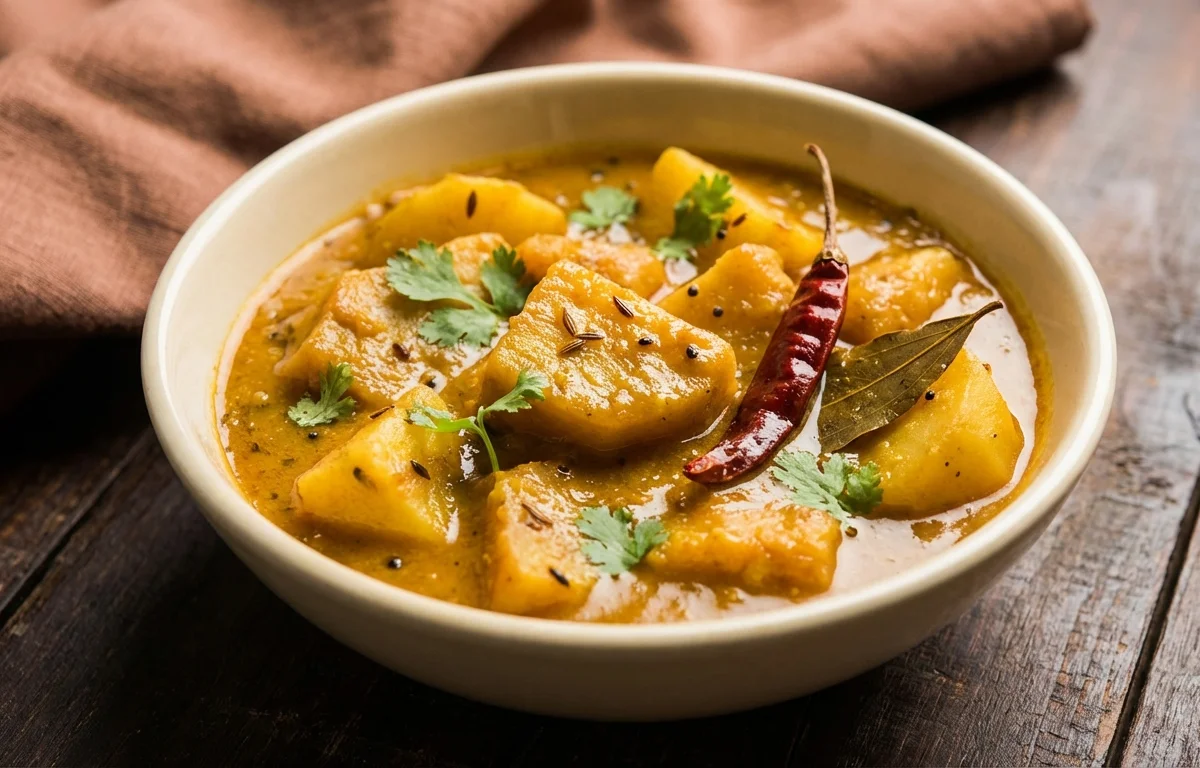
Bengali Yam Curry
A comforting and traditional Bengali curry, also known as 'Ol er Dalna', featuring earthy elephant foot yam and potatoes in a light, fragrant gravy. The distinct aroma of panch phoron and mustard oil makes this vegetarian dish a true classic, perfectly balanced with a hint of sweetness.
For 4 servings
Prepare the Yam
- In a medium pot, combine the cubed yam, enough water to cover, 1/2 tsp salt, and the tamarind paste.
- Bring to a boil over medium-high heat and cook for 10-12 minutes until the yam is fork-tender but still holds its shape. This step is crucial to neutralize the compounds that can cause throat irritation.
- Drain the yam completely using a colander and set aside.
Fry the Vegetables
- Heat 2 tbsp of mustard oil in a kadai or heavy-bottomed pan over medium-high heat until it is lightly smoking.
- Carefully add the boiled yam cubes and fry for 3-4 minutes, turning occasionally, until they are lightly golden on the edges. Remove with a slotted spoon and set aside.
- In the same oil, add the potato cubes. Fry for 5-7 minutes until golden brown and cooked through. Remove and set aside with the yam.
Temper the Spices (Tadka)
- Add the remaining 2 tbsp of mustard oil to the same pan and heat it over medium heat.
- Add the panch phoron, bay leaf, and dried red chilies. Allow them to splutter for about 30-45 seconds until fragrant. Be careful not to burn them.
Build the Curry Base
- Add the finely chopped onion to the pan and sauté for 3-4 minutes until it becomes soft and translucent.
- Stir in the ginger paste and cook for another minute until the raw aroma disappears.
- Add the chopped tomatoes and cook for 4-5 minutes, stirring occasionally, until they break down and become soft and pulpy.
Add Spices and Simmer
- Lower the heat and add the turmeric, cumin, coriander, and red chili powders, along with the remaining 0.75 tsp salt and sugar. Stir continuously for 30 seconds to cook the spices.
- Add the fried yam and potato cubes back to the pan. Gently mix to coat them thoroughly with the spice masala.
- Pour in 2.5 cups of warm water and stir well. Bring the curry to a rolling boil.
- Once boiling, reduce the heat to low, cover the pan, and let it simmer for 10-12 minutes. This allows the vegetables to absorb the flavors and the gravy to thicken slightly.
Finish and Garnish
- Turn off the heat. Stir in the garam masala powder and ghee for a rich aroma and flavor.
- Garnish with freshly chopped coriander leaves.
- Let the curry rest, covered, for at least 5 minutes before serving. This helps the flavors to meld together.
- Serve hot with steamed rice or luchi (puffed bread).
What to keep in mind.
5 tips from the recipe — small details that make a real difference to the final dish.
- 1The pre-boiling of yam with an acidic agent like tamarind is non-negotiable to prevent potential throat itchiness caused by calcium oxalate crystals.
- 2For an authentic Bengali taste, use mustard oil and heat it until it's lightly smoking before adding ingredients. This mellows its pungent flavor.
- 3The process of sautéing the spices and masala base until oil separates is called 'kashano'. Do this well for a deep, rich flavor.
- 4A small amount of sugar is characteristic of Bengali cooking; it enhances the other flavors without making the dish sweet.
- 5For a richer, smoother gravy, you can use a paste of onion and tomato instead of chopping them.
Adapt it for your goals.
Niramish (No Onion/Garlic)
For a sattvic or 'niramish' version, omit the onion and increase the amount of ginger paste slightly. You can also add a pinch of asafoetida (hing) to the tempering.
Add VegetablesAdd Vegetables
Incorporate other vegetables like green peas (add in the last 5 minutes of simmering) or cauliflower florets (fry them along with the potatoes).
Add Bori (Lentil Dumplings)Add Bori (Lentil Dumplings)
Fry some 'bori' (sun-dried lentil dumplings) until golden and add them to the curry during the last few minutes of simmering for extra texture and protein.
Creamier GravyCreamier Gravy
For a slightly creamier texture, you can add a tablespoon of cashew or poppy seed paste along with the powdered spices.
Why this is on our healthy list.
Rich in Dietary Fiber
Elephant foot yam is an excellent source of dietary fiber, which aids in digestion, promotes bowel regularity, and helps maintain a healthy gut.
Good Source of Complex Carbs
Both yam and potatoes provide complex carbohydrates, which are digested slowly, offering a steady release of energy and helping to keep you full for longer.
Anti-inflammatory Properties
The use of spices like turmeric (containing curcumin) and ginger lends anti-inflammatory benefits to the dish, which can help reduce inflammation in the body.
Packed with Minerals
This curry is a good source of essential minerals like potassium, which is vital for blood pressure control, and manganese, which supports bone health and metabolism.
Frequently asked questions
The itchiness is caused by tiny needle-like crystals of calcium oxalate present in the yam. Boiling the yam with an acidic ingredient like tamarind paste or lemon juice effectively breaks down these crystals, making it safe and comfortable to eat. Do not skip this step.