
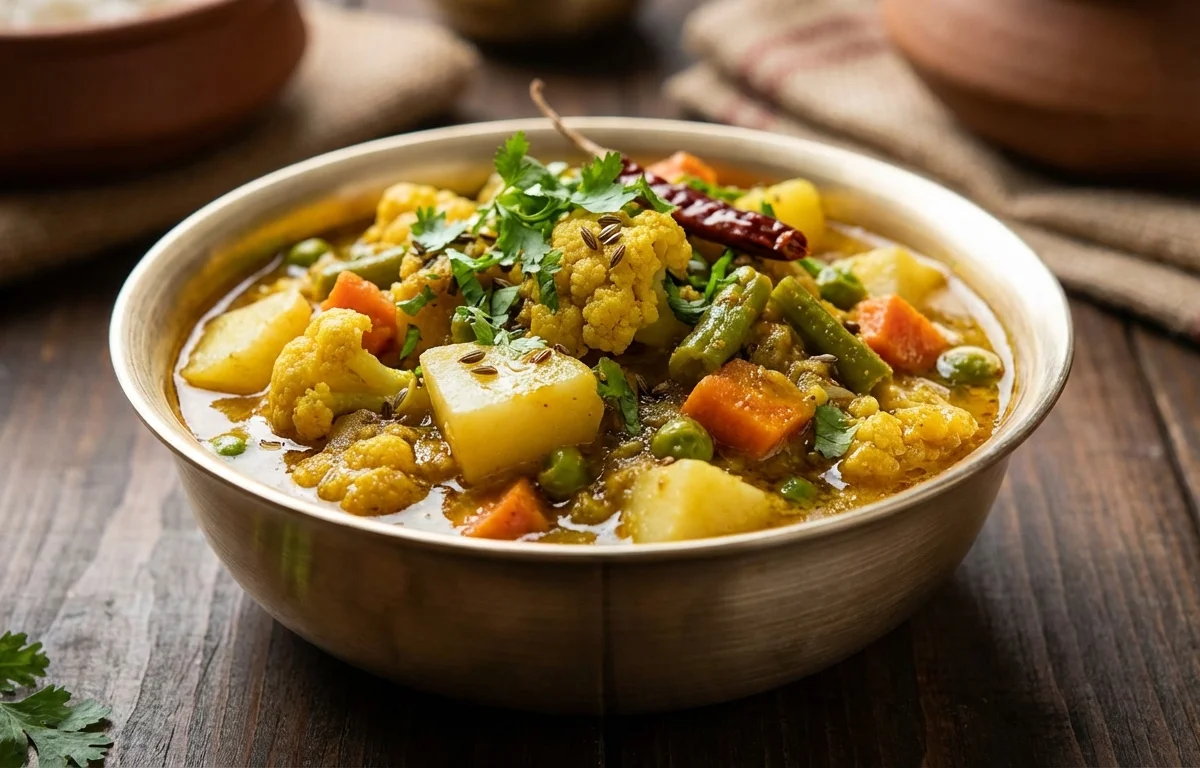
Sobji Torkari
A delightful Bengali mixed vegetable curry, fragrant with panch phoron and a hint of sweetness. This simple, comforting dish brings a medley of seasonal vegetables together in a light, flavorful gravy.
For 4 servings
11 steps. 25 minutes total.
- 1
Step 1
- a.Prepare all vegetables by washing, peeling, and chopping them into uniform, bite-sized pieces. Keep them ready.
- 2
Step 2
- a.Heat mustard oil in a kadai or heavy-bottomed pan over medium-high heat until it is fragrant and slightly smoking. This step is crucial to remove the oil's pungency.
- 3
Reduce the heat to medium-low
- a.Add the panch phoron, bay leaf, and dried red chillies. Allow the spices to splutter for about 30-40 seconds until aromatic. Be careful not to burn them.
- 4
Step 4
- a.Add the ginger paste and sauté for about a minute until the raw smell disappears.
- 5
Add the cubed potatoes and diced carrots
- a.Sauté for 4-5 minutes, stirring occasionally, until they are lightly golden at the edges.
- 6
Add the cauliflower florets and french beans
- a.Mix well and continue to sauté for another 3-4 minutes.
- 7
Step 7
- a.Stir in the turmeric powder, cumin powder, coriander powder, red chilli powder, and salt. Mix thoroughly to coat all the vegetables with the spices and cook for 1 minute.
- 8
Pour in 1 cup of warm water and bring the mixture to a boil
- a.Once boiling, reduce the heat to low, cover the pan, and let it simmer for 10-12 minutes, or until the potatoes are almost tender.
- 9
Step 9
- a.Add the green peas, stir gently, and cook covered for another 3-4 minutes until all vegetables are cooked through but still retain a slight bite.
- 10
Finish the dish by stirring in the sugar, ghee, and garam masala
- a.Mix well and cook for one final minute to allow the flavors to meld.
- 11
Step 11
- a.Turn off the heat, garnish with freshly chopped coriander leaves, and let it rest for 5 minutes before serving. Serve hot with steamed rice or rotis.
What to keep in mind.
5 tips from the recipe — small details that make a real difference to the final dish.
- 1For the most authentic Bengali flavor, use mustard oil and don't skip the panch phoron.
- 2Cutting all vegetables into roughly uniform sizes ensures they cook evenly.
- 3Don't overcook the vegetables; they should be tender but not mushy.
- 4The small amount of sugar is crucial for balancing the flavors, a signature of Bengali cuisine.
- 5If the curry becomes too dry while cooking, you can add a splash of warm water to adjust the consistency.
Adapt it for your goals.
Vegetable Addition
Incorporate other seasonal vegetables like pumpkin (kumro), sweet potato (ranga aloo), or drumsticks (shojne data) for more variety.
Protein BoostProtein Boost
Add cubed paneer or boiled chickpeas towards the end of the cooking process for a more substantial, protein-rich meal.
Spicier VersionSpicier Version
Add 1-2 slit green chillies along with the ginger paste for an extra kick of heat.
Vegan VersionVegan Version
To make this dish fully vegan, simply omit the final teaspoon of ghee or replace it with a neutral-flavored vegetable oil.
Why this is on our healthy list.
Rich in Fiber
The medley of vegetables like carrots, beans, and peas makes this dish high in dietary fiber, which aids digestion, promotes gut health, and helps in maintaining a healthy weight.
Packed with Vitamins & Minerals
Each vegetable contributes a unique profile of essential nutrients, including Vitamin A from carrots, Vitamin C from cauliflower, and iron from peas, supporting overall health and immunity.
Anti-inflammatory Properties
Spices like turmeric (containing curcumin) and ginger have natural anti-inflammatory and antioxidant properties that can help reduce inflammation in the body.
Frequently asked questions
Yes, Sobji Torkari is very healthy. It is packed with a variety of vegetables, providing essential vitamins, minerals, and dietary fiber. It uses minimal oil and spices, making it a light and nutritious everyday dish.