
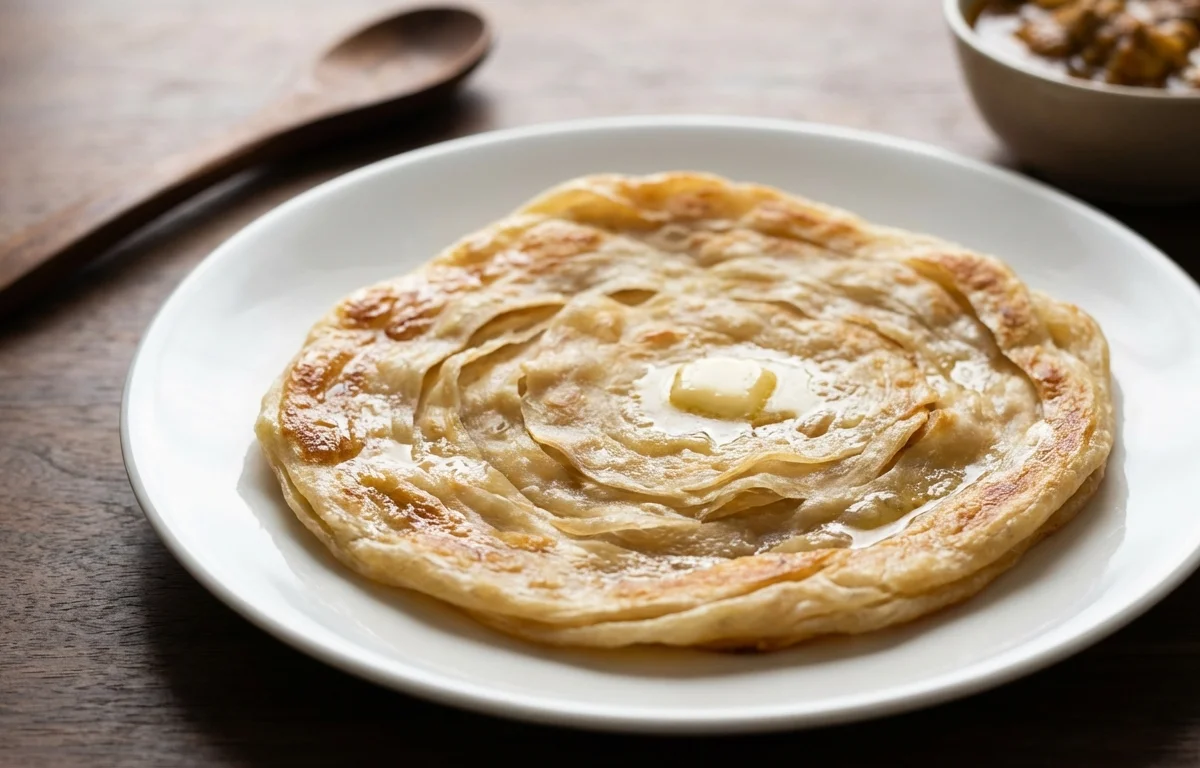
Bengali Porota
Crispy, flaky layers in a classic triangular shape make this Bengali flatbread a delight. Made with all-purpose flour and fried to golden perfection, it's the perfect partner for rich curries and gravies.
For 4 servings
4 steps. 25 minutes total.
- 1
Step 1
- a.Prepare the Dough
- b.In a large mixing bowl, combine 2 cups of maida, sugar, and salt. Whisk them together.
- c.Add 2 tbsp of melted ghee to the flour mixture. Use your fingertips to rub the ghee into the flour until it resembles coarse breadcrumbs. This step is key for a flaky texture.
- d.Gradually pour in the warm water while mixing to form a dough. Knead for 8-10 minutes on a lightly floured surface until the dough is soft, smooth, and elastic, but not sticky.
- e.Cover the dough with a damp cloth or plastic wrap and let it rest for a minimum of 30 minutes. This allows the gluten to relax, making the porotas softer.
- 2
Step 2
- a.Shape the Porotas
- b.After resting, knead the dough for another minute. Divide it into 8 equal portions and roll them into smooth balls.
- c.Take one dough ball and dust it with a little maida. Roll it out into a thin circle, about 5-6 inches in diameter.
- d.Brush about 1/2 tsp of melted ghee evenly over the surface of the circle. Lightly sprinkle some dry maida over the ghee.
- e.Fold the circle in half to create a semicircle. Brush the top surface of the semicircle with ghee and sprinkle with maida again.
- f.Fold the semicircle in half once more to form a triangle. Press the edges gently.
- g.Lightly dust the triangle with maida and carefully roll it out into a larger triangle, about 5-6 inches on its longest side and 1/4 inch thick. Be gentle to preserve the layers.
- 3
Step 3
- a.Fry the Porotas
- b.Heat a tawa or a non-stick skillet over medium heat. The tawa should be hot but not smoking.
- c.Place a rolled porota onto the hot tawa. Cook for about 30-45 seconds, until you see small bubbles forming on the surface.
- d.Flip the porota. Drizzle about 1 tsp of ghee on top and around the edges.
- e.Fry for 1-2 minutes, gently pressing with a spatula, until golden-brown spots appear. You will see the layers begin to separate.
- f.Flip again, add another 1/2 tsp of ghee if needed, and cook the other side until it's golden brown and crisp.
- g.Remove the cooked porota from the tawa and repeat the process for the remaining dough balls.
- 4
Step 4
- a.Serve
- b.Once a porota is off the heat, place it on a flat surface. Gently clap or crush it between your palms to fluff up and separate the layers.
- c.Serve immediately while hot and flaky with classic Bengali dishes like Aloo'r Dom, Kosha Mangsho, or Cholar Dal.
What to keep in mind.
6 tips from the recipe — small details that make a real difference to the final dish.
- 1Resting the dough for at least 30 minutes is crucial for soft, pliable porotas that are easy to roll.
- 2Using warm water helps to create a soft and supple dough.
- 3Be gentle when rolling the final triangle shape. Pressing too hard will cause the layers to merge, resulting in a less flaky porota.
- 4Fry on consistent medium heat. If the heat is too high, the porota will brown too quickly on the outside while remaining raw inside. If it's too low, it will become hard.
- 5For extra flaky layers, ensure you brush ghee and sprinkle flour evenly before each fold.
- 6Keep cooked porotas in a casserole or wrapped in a clean kitchen towel to keep them warm and soft until serving.
Adapt it for your goals.
Healthier Version
Replace half of the maida with atta (whole wheat flour) for a nuttier flavor and more fiber. You may need to add a little more water as atta absorbs more liquid.
Spiced VersionSpiced Version
Add 1/2 teaspoon of ajwain (carom seeds) or kalonji (nigella seeds) to the dough for a fragrant, savory twist.
Sweet VersionSweet Version
For a sweet treat, increase the sugar in the dough to 1 tablespoon. This version pairs wonderfully with a cup of tea.
Why this is on our healthy list.
Provides Quick Energy
Made from refined flour, porota is a rich source of simple carbohydrates, which the body can quickly convert into glucose for an immediate energy boost.
Comfort Food
As a beloved traditional dish, enjoying porota can provide psychological comfort and a sense of satisfaction, which contributes to overall well-being.
Carrier for Nutrients
Porota is an excellent vehicle for nutrient-dense side dishes. It's typically eaten with lentil dals or vegetable and meat curries, helping you consume a balanced meal with proteins, vitamins, and minerals.
Frequently asked questions
Bengali Porota, also known as 'Trikon Porota', is distinct for its triangular shape and its light, flaky layers created by folding ghee-layered dough. It is typically made with maida (all-purpose flour), making it softer and lighter than many North Indian parathas which are often made with atta (whole wheat flour) and can be round or stuffed.