
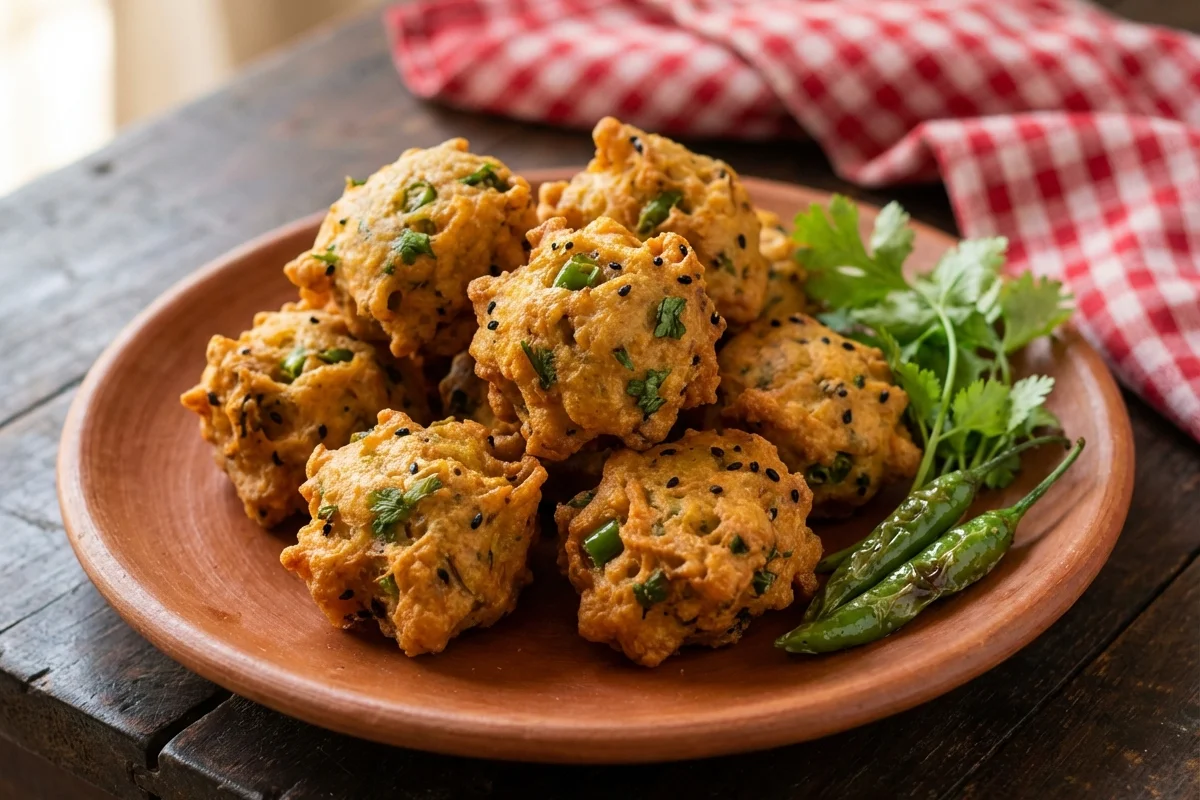
Bengali Piyaji
Crispy, crunchy onion fritters from Bengal, made with a flavorful paste of red lentils and fragrant nigella seeds. A perfect evening snack with a hot cup of chai, especially on a rainy day.
For 4 servings
Prepare the Lentil Paste
- Rinse the masoor dal thoroughly under running water until the water runs clear.
- Soak the dal in ample water for at least 2 hours. Soaking softens the lentils for grinding.
- Drain all the water completely. This is crucial to prevent a runny batter.
- Transfer the soaked dal to a grinder or food processor. Grind into a coarse, thick paste without adding any water initially. If needed, add 1-2 tablespoons of water, just enough to get the blades moving. The paste should not be smooth.
Mix the Piyaji Batter
- In a large mixing bowl, combine the thinly sliced onions, the coarse lentil paste, rice flour, finely chopped green chilies, kalonji (nigella seeds), and turmeric powder.
- Add salt and mix everything thoroughly with your hands, gently squeezing the onions as you mix. This helps the onions release their natural moisture.
- Let the mixture rest for 5-10 minutes. The salt will draw out more water from the onions, creating a batter with the perfect binding consistency without needing extra water.
Deep Fry the Fritters
- Heat vegetable oil in a kadai or deep pan over medium-high heat. The ideal temperature is around 175°C (350°F).
- To test the oil, drop a tiny speck of batter into it. If it sizzles and rises to the surface immediately, the oil is ready.
- Take small portions of the mixture (about a tablespoon), flatten them slightly into rough discs, and carefully slide them into the hot oil.
- Fry in batches of 5-6 at a time to avoid overcrowding the pan, which can lower the oil temperature and result in soggy piyaji.
- Fry for about 4-5 minutes, flipping them halfway through, until they are deep golden brown and uniformly crispy.
Drain and Serve Hot
- Once golden and crisp, use a slotted spoon to remove the piyaji from the oil.
- Place them on a wire rack or a plate lined with paper towels to drain any excess oil.
- Serve immediately while they are hot and at their crispiest, accompanied by kasundi (Bengali mustard sauce), tomato ketchup, or a steaming cup of masala chai.
What to keep in mind.
7 tips from the recipe — small details that make a real difference to the final dish.
- 1For the crispiest piyaji, slice your onions as thinly and evenly as possible.
- 2The key to the authentic texture is a coarse lentil paste. Over-grinding into a smooth paste will result in softer fritters.
- 3Do not add water to the batter. The moisture from the onions after adding salt is sufficient for binding.
- 4Maintain a consistent medium-high heat while frying. Oil that is too hot will burn the outside before the inside is cooked, and oil that isn't hot enough will make them greasy.
- 5Use red onions for a slightly sweeter and more traditional flavor.
- 6If the batter feels too loose, you can add an extra tablespoon of rice flour or besan (gram flour) to help bind it.
- 7To reheat and restore crispiness, place leftover piyaji in an air fryer or a preheated oven at 180°C (350°F) for 3-5 minutes.
Adapt it for your goals.
Healthier Version
For a lower-fat option, shape the mixture into small patties, spray with a little oil, and air fry at 180°C (350°F) for 12-15 minutes, flipping halfway, until golden and crisp.
Spicier KickSpicier Kick
Add 1/2 teaspoon of red chili powder or increase the number of green chilies in the mixture for extra heat.
Herbaceous TwistHerbaceous Twist
Incorporate 2 tablespoons of finely chopped fresh cilantro (coriander leaves) or mint leaves into the batter for a fresh, aromatic flavor.
Different LentilsDifferent Lentils
Create a different texture by using a mix of 50% masoor dal and 50% chana dal (split chickpeas). Ensure the chana dal is also soaked for at least 4 hours.
Why this is on our healthy list.
Rich in Plant-Based Protein
Masoor dal (red lentils) is an excellent source of plant-based protein, which is essential for building and repairing tissues, muscle growth, and overall body function.
Good Source of Dietary Fiber
Both lentils and onions are high in dietary fiber. Fiber aids in digestion, promotes a healthy gut microbiome, helps maintain stable blood sugar levels, and contributes to a feeling of fullness.
Provides Essential Minerals
Lentils are packed with important minerals like iron, which is vital for oxygen transport and preventing anemia, and folate, which is crucial for cell growth and metabolism.
Frequently asked questions
A single serving of approximately 4-5 pieces of Bengali Piyaji contains around 350-400 calories, primarily from the lentils and the oil absorbed during deep-frying.