
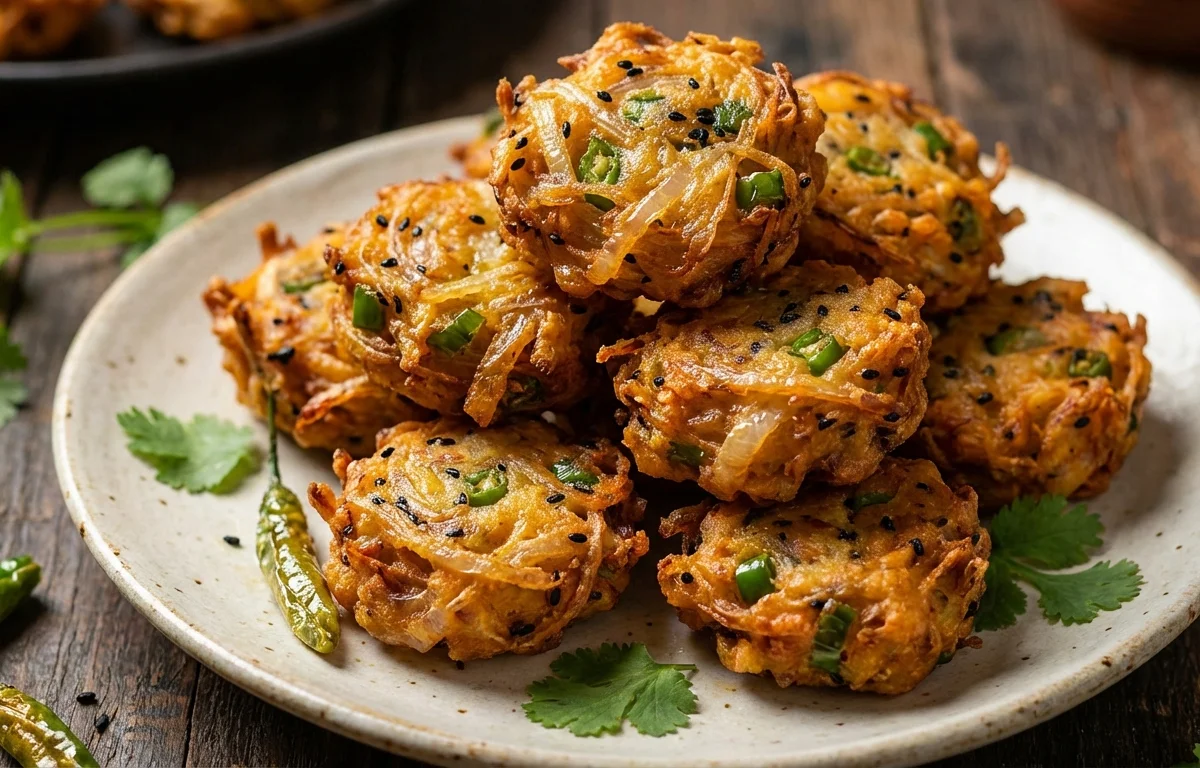
Bengali Peyaji
A quintessential Bengali monsoon snack, Peyaji are crispy onion fritters that are dangerously addictive. Thinly sliced onions are bound with a spiced chickpea flour batter and deep-fried to a glorious golden-brown. Served hot with a side of puffed rice (muri) and a cup of chai, they capture the essence of a rainy day in Kolkata.
For 4 servings
Prepare the Onions
- Slice the onions as thinly as possible using a knife or a mandoline slicer.
- Place the sliced onions in a large mixing bowl. Add the salt and mix thoroughly with your hands, gently rubbing the salt into the onions.
- Set aside for 10-15 minutes. This process, called maceration, will draw out the natural moisture from the onions, which is key to forming the batter without adding water.
Form the Batter
- After 10-15 minutes, you will see water collected at the bottom of the bowl. Do not drain it.
- To the onions, add the besan, rice flour, finely chopped green chillies, kalonji, turmeric powder, and optional red chilli powder.
- Mix everything vigorously with your hands, squeezing the onions as you go. The moisture from the onions should be sufficient to bind the flours and create a thick, coarse, and sticky batter.
- Resist the temptation to add water. If the mixture feels exceptionally dry, add water just one teaspoon at a time, but this is rarely needed.
Heat the Oil
- Pour the mustard oil into a kadai or deep, heavy-bottomed pan. Heat it over a medium-high flame.
- To check if the oil is at the perfect temperature (around 175°C or 350°F), drop a tiny speck of the batter into it. If it sizzles instantly and floats to the surface, the oil is ready for frying.
Fry the Peyaji
- Carefully take small, rustic portions of the batter (about 1-2 tablespoons) and gently drop them into the hot oil. You can flatten them slightly with your fingers before dropping to ensure even cooking.
- Do not overcrowd the pan; fry in 2-3 batches to maintain the oil temperature.
- Fry for 3-4 minutes on the first side, or until it's golden brown and crisp.
Finish Frying and Serve
- Flip the peyaji using a slotted spoon and fry the other side for another 3-4 minutes until they are a deep golden brown and crispy all over.
- Once cooked, remove them from the oil and place them on a wire rack or a plate lined with paper towels to drain any excess oil.
- Serve immediately while they are hot and at their crispiest, with kasundi (Bengali mustard sauce), puffed rice (muri), or a cup of hot tea.
What to keep in mind.
6 tips from the recipe — small details that make a real difference to the final dish.
- 1The key to crispy peyaji is slicing the onions as thinly as possible. A mandoline slicer is highly recommended for uniform slices.
- 2Use minimal besan. It's a binder, not the main component. The fritter should be dominated by the flavor and texture of the onions.
- 3Do not add water to the batter. The salt will draw out sufficient moisture from the onions to bind the mixture. This is crucial for crispiness.
- 4For the most authentic Bengali taste and aroma, fry in mustard oil. Heat it until it's almost smoking to reduce its pungency before frying.
- 5Maintain a steady medium-high heat. Oil that is too hot will burn the outside while the inside remains raw. Oil that isn't hot enough will result in greasy, soggy fritters.
- 6Peyaji are best enjoyed immediately after frying. They lose their signature crunch as they cool down.
Adapt it for your goals.
Herb Addition
Add 2 tablespoons of finely chopped fresh coriander leaves or mint leaves to the batter for a fresh, herby flavor.
Spice MixSpice Mix
Incorporate 1/2 teaspoon of ajwain (carom seeds) for a distinct flavor and to aid digestion.
Vegetable MixVegetable Mix
Add 1/4 cup of thinly shredded cabbage or grated carrots along with the onions for a mixed vegetable version.
Lentil CrunchLentil Crunch
For extra crunch, add 1 tablespoon of coarse masoor dal (red lentils) that has been soaked for 30 minutes and drained.
Why this is on our healthy list.
Rich in Antioxidants
Onions are an excellent source of antioxidants, particularly quercetin, which helps combat inflammation and protect against chronic diseases.
Good Source of Fiber
Both onions and besan (chickpea flour) provide dietary fiber, which is essential for good digestion and maintaining gut health.
Plant-Based Protein
Besan is a gluten-free flour made from chickpeas, offering a decent amount of plant-based protein, which is vital for muscle repair and growth.
Frequently asked questions
The most common reasons are: onions were not sliced thinly enough, too much besan was used, or extra water was added to the batter. Also, ensure the oil is at the correct medium-high temperature. Frying at a low temperature will make them oily and soft.