
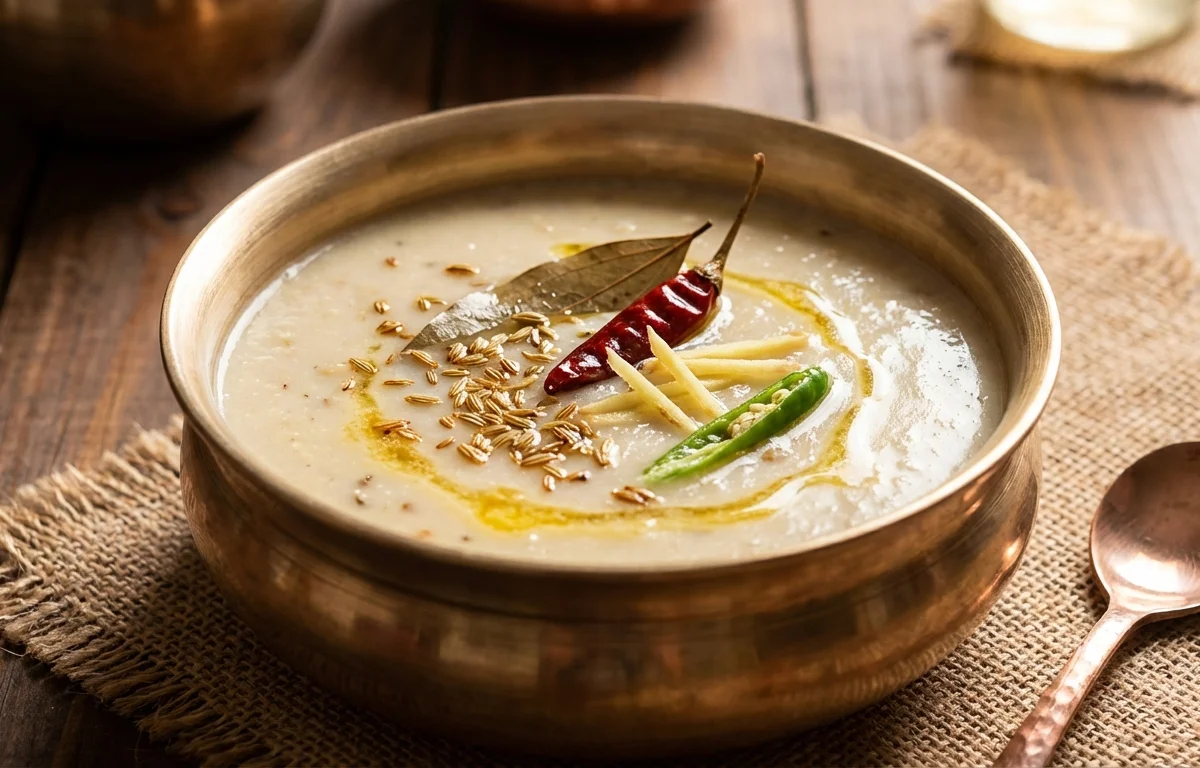
Bengali Kolai Dal
A light and fragrant Bengali lentil soup made with split urad dal. It's subtly flavored with fennel seeds and ginger, offering a comforting and unique taste that pairs perfectly with steamed rice.
For 4 servings
4 steps. 20 minutes total.
- 1
Step 1
- a.Cook the Dal
- b.Rinse the kolai dal under cold running water until the water runs clear. Soaking for 30 minutes is optional but can speed up cooking.
- c.Transfer the washed dal to a pressure cooker. Add 4 cups of water, salt, and turmeric powder.
- d.Secure the lid and cook on medium-high heat for 3-4 whistles, approximately 15 minutes, until the dal is soft but not completely mushy.
- e.Allow the pressure to release naturally. Open the lid and gently whisk the dal with a wire whisk or spoon to achieve a smooth, creamy consistency. If it's too thick, add some hot water to adjust.
- 2
Step 2
- a.Prepare the Tempering (Phoron)
- b.Heat ghee or mustard oil in a small pan (tadka pan) over medium heat.
- c.Once the ghee is hot, add the bay leaf, dried red chilies, and fennel seeds. Sauté for about 30-40 seconds until the fennel seeds splutter and become fragrant.
- d.Add the asafoetida, followed immediately by the ginger juliennes and slit green chilies.
- e.Stir and cook for another minute until the raw aroma of the ginger dissipates.
- 3
Step 3
- a.Combine and Simmer
- b.Carefully pour the hot tempering into the cooked dal. It will sizzle, so stand back.
- c.Add the sugar and stir well to combine all the flavors.
- d.Bring the dal to a gentle simmer over low heat and cook for 2-3 minutes to allow the flavors to meld together.
- e.Taste and adjust the salt if necessary.
- 4
Step 4
- a.Serve
- b.Serve the Bengali Kolai Dal hot with steamed white rice (bhaat) and a side of fried vegetables (bhaja) for a classic, comforting meal.
What to keep in mind.
4 tips from the recipe — small details that make a real difference to the final dish.
- 1For the most authentic Bengali flavor, use mustard oil for tempering. However, ghee provides a rich, nutty flavor.
- 2Do not overcook the dal. The lentils should be soft but retain a slight texture, not turn into a complete paste.
- 3The signature flavor of this dal comes from fennel seeds (mouri) and ginger; do not skip them.
- 4This dal has a characteristically thin, soupy consistency. If it thickens upon standing, add a splash of hot water before reheating.
Adapt it for your goals.
Add Bori (Vadi)
For extra texture and flavor, fry a few sun-dried lentil dumplings (bori/vadi) until golden and add them to the dal during the final simmer.
Richer FlavorRicher Flavor
Add a pinch of Bengali garam masala (containing cinnamon, cardamom, and cloves) at the end for a warmer, more complex aroma.
No Onion/Garlic VersionNo Onion/Garlic Version
This recipe is naturally free of onion and garlic, making it suitable for 'niramish' or vegetarian days in Bengali households.
Why this is on our healthy list.
Rich in Plant-Based Protein
Kolai dal (Urad dal) is a fantastic source of protein, essential for muscle building, tissue repair, and overall body function.
Aids Digestion
The combination of fiber from the lentils, along with digestive spices like ginger, fennel, and asafoetida, helps promote healthy digestion and prevent bloating.
Boosts Energy Levels
Being a good source of iron, this dal helps in preventing anemia and boosting energy levels by improving hemoglobin production in the blood.
Good for Bone Health
This lentil is packed with essential minerals like magnesium, iron, potassium, and calcium, which play a crucial role in improving bone mineral density.
Frequently asked questions
Kolai Dal is the Bengali name for split and skinned urad dal (black gram lentils). It is white in color and known for its creamy texture and mild flavor when cooked.