
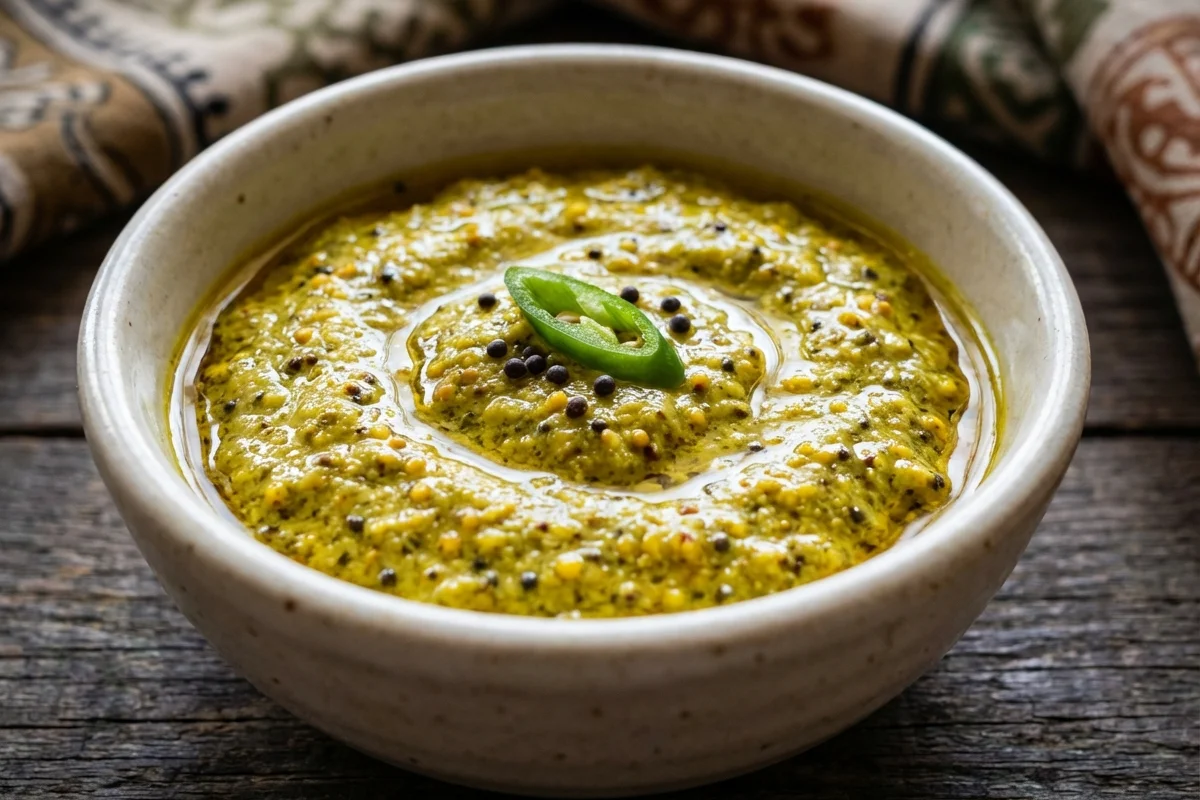
Bengali Kasundi
A fiery and pungent mustard sauce from Bengal, made by grinding mustard seeds with green chilies and spices. This iconic condiment adds a sharp, tangy kick to snacks, sandwiches, and fish preparations.
For 8 servings
4 steps.
- 1
Step 1
- a.Soak the Mustard Seeds
- b.Combine the black and yellow mustard seeds in a bowl. Rinse them under cold running water 2-3 times.
- c.Cover the seeds with 2 cups of water and let them soak for at least 4-6 hours, or overnight. This step is crucial for a smooth paste and reduces bitterness.
- d.Once soaked, drain the water completely using a fine-mesh sieve. Do not use the soaking water for grinding.
- 2
Step 2
- a.Grind the Kasundi Paste
- b.Transfer the drained mustard seeds to a high-powered blender or wet grinder.
- c.Add the green chilies (stems removed), turmeric powder, and salt.
- d.Add a few tablespoons of cold water to begin grinding. Grind in short pulses of 15-20 seconds each to prevent the mixture from heating up, which can cause bitterness.
- e.Scrape down the sides of the jar periodically. Add more cold water, a little at a time, until you achieve a very smooth, thick, and creamy paste. The entire grinding process should take about 5-7 minutes.
- 3
Step 3
- a.Mature the Kasundi
- b.Transfer the ground paste into a clean, dry, and sterilized glass jar.
- c.Pour the mustard oil and white vinegar over the paste.
- d.Using a clean, dry spoon, mix vigorously until the oil and vinegar are fully incorporated and the kasundi has a uniform consistency.
- e.Seal the jar tightly and let it sit in a cool, dark place at room temperature for 24-48 hours. This allows the flavors to meld and the characteristic pungency to develop.
- 4
Step 4
- a.Store and Serve
- b.After the maturation period, the kasundi is ready to be enjoyed.
- c.Store the jar in the refrigerator to maintain its freshness and pungency. It will keep well for up to 2-3 months.
- d.Always use a clean, dry spoon to scoop out the kasundi to prevent contamination.
- e.Serve as a dipping sauce for fried snacks like fish fry, telebhaja, or pakoras, or use it as a spread in sandwiches.
What to keep in mind.
6 tips from the recipe — small details that make a real difference to the final dish.
- 1For the smoothest paste, use a high-powered blender or a traditional 'shil nora' (grinding stone).
- 2Always use cold water for grinding. Warm water can make the mustard paste bitter.
- 3Grinding in short pulses is key. Over-grinding generates heat and ruins the flavor.
- 4Ensure your storage jar is completely dry and sterilized to prevent spoilage.
- 5For a more traditional flavor, you can place the sealed jar in the sun for 2-3 days to mature instead of keeping it at room temperature.
- 6The pungency of kasundi is at its peak in the first few weeks and will mellow slightly over time.
Adapt it for your goals.
Aam Kasundi (Mango Mustard)
Add 1/4 cup of grated raw green mango to the blender along with the mustard seeds for a tangy, fruity twist.
Garlic KasundiGarlic Kasundi
Incorporate 4-5 cloves of garlic during the grinding process for a pungent, garlicky flavor profile.
Jhal Mishti Kasundi (Sweet & Spicy)Jhal Mishti Kasundi (Sweet & Spicy)
Add 1-2 tablespoons of sugar or jaggery powder while mixing in the oil and vinegar to balance the heat with a touch of sweetness.
Why this is on our healthy list.
Anti-inflammatory Properties
Mustard seeds contain selenium and magnesium, which are known for their anti-inflammatory and heat-producing properties, potentially helping to soothe muscle aches.
Rich in Antioxidants
Both mustard seeds and turmeric are packed with antioxidants that help combat cellular damage caused by free radicals in the body.
Boosts Metabolism
The pungent compounds in mustard, like capsaicin in the chilies, can give a temporary boost to your metabolic rate.
Supports Digestive Health
The short fermentation process during maturation can encourage the growth of beneficial bacteria, which may aid in digestion and gut health.
Frequently asked questions
Bitterness in kasundi can be caused by a few factors: over-grinding the seeds which generates heat, using warm water for grinding, or using old, poor-quality mustard seeds. Grinding in short pulses with cold water is essential.