
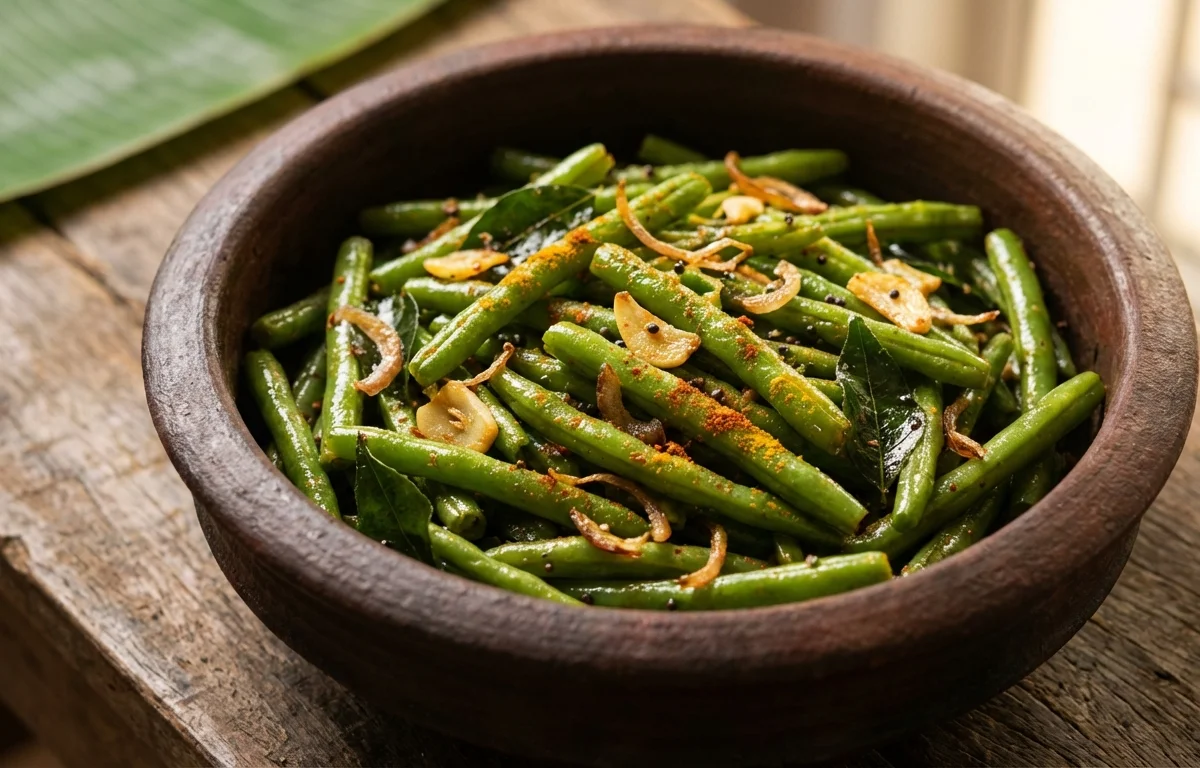
Beans Mezhukkupuratti
A classic Kerala stir-fry where tender green beans are slow-cooked with shallots, garlic, and simple spices in fragrant coconut oil. This simple side dish, known for its rich flavor, pairs perfectly with rice and sambar.
For 4 servings
5 steps. 20 minutes total.
- 1
Step 1
- a.Prepare Vegetables
- b.Wash the green beans thoroughly under running water.
- c.Trim the ends and chop them into uniform 1-inch long pieces.
- d.Thinly slice the shallots and lightly crush the garlic cloves with the side of a knife or in a mortar and pestle.
- 2
Step 2
- a.Temper and Sauté Aromatics
- b.Heat coconut oil in a heavy-bottomed pan (kadai) or skillet over medium heat.
- c.Once the oil is hot, add the mustard seeds and wait for them to splutter completely, which should take about 30 seconds.
- d.Immediately add the sliced shallots, crushed garlic, and curry leaves. Sauté for 3-4 minutes, stirring frequently, until the shallots soften and turn a light golden brown.
- 3
Step 3
- a.Add Beans and Spices
- b.Add the chopped green beans to the pan.
- c.Sprinkle the turmeric powder, red chilli powder, and salt over the beans.
- d.Mix everything thoroughly for about 2 minutes, ensuring the beans are evenly coated with the oil and spices.
- 4
Step 4
- a.Slow-Cook the Beans
- b.Reduce the heat to the lowest setting. Cover the pan with a tight-fitting lid and let the beans cook for 12-15 minutes.
- c.The beans will cook in their own steam. Stir every 4-5 minutes to prevent them from sticking to the bottom.
- d.Only if the pan looks completely dry and spices might burn, sprinkle 1-2 tablespoons of water.
- 5
Step 5
- a.Roast and Serve
- b.Once the beans are tender but still have a slight bite, remove the lid.
- c.Increase the heat to medium and stir-fry for another 2-3 minutes. This step helps to evaporate any remaining moisture and gives the beans a slightly roasted, glossy finish.
- d.Turn off the heat. Serve the Beans Mezhukkupuratti hot as a side dish with steamed rice and sambar or rasam.
What to keep in mind.
5 tips from the recipe — small details that make a real difference to the final dish.
- 1For the most authentic flavor, use high-quality virgin coconut oil and fresh curry leaves.
- 2Shallots (chuvannulli) are crucial for the unique sweet and savory taste. If unavailable, you can substitute with one small red onion, finely chopped.
- 3The key to a perfect mezhukkupuratti is slow cooking on low heat without adding much water. This allows the vegetables to cook in their own juices and the oil, intensifying the flavor.
- 4Do not overcrowd the pan. Use a wide pan to ensure the beans cook evenly and get a chance to roast slightly rather than just steam.
- 5The final 2-3 minute roast on medium heat is essential for the characteristic texture and glossy appearance of the dish.
Adapt it for your goals.
Vegetable Swap
Replace green beans with other vegetables like long beans (payar), carrots, unripe plantains (kaya), or elephant foot yam (chena). Adjust the cooking time accordingly.
Spice it UpSpice it Up
Add 1/4 tsp of freshly ground black pepper along with the red chilli powder for an extra layer of heat and aroma.
Coconut GarnishCoconut Garnish
For a different texture, add 2 tablespoons of freshly grated coconut at the very end and stir for one minute. This makes it similar to a 'thoran' but is a delicious variation.
Why this is on our healthy list.
High in Dietary Fiber
Green beans are an excellent source of fiber, which aids digestion, promotes gut health, and helps in maintaining stable blood sugar levels.
Rich in Vitamins and Minerals
This dish is a good source of Vitamin K, Vitamin C, and manganese from green beans, which are essential for bone health, immunity, and metabolism.
Contains Healthy Fats
Made with coconut oil, this dish provides medium-chain triglycerides (MCTs), which are easily digestible fats that can provide a quick source of energy.
Anti-inflammatory Properties
The inclusion of turmeric (with its active compound curcumin) and garlic lends anti-inflammatory and antioxidant benefits to the dish, helping to combat oxidative stress.
Frequently asked questions
It's a traditional Kerala stir-fry style where vegetables are slow-cooked (sautéed and steamed) in oil with minimal spices, resulting in a semi-dry, glossy dish. The name translates to 'coated with oil'.