
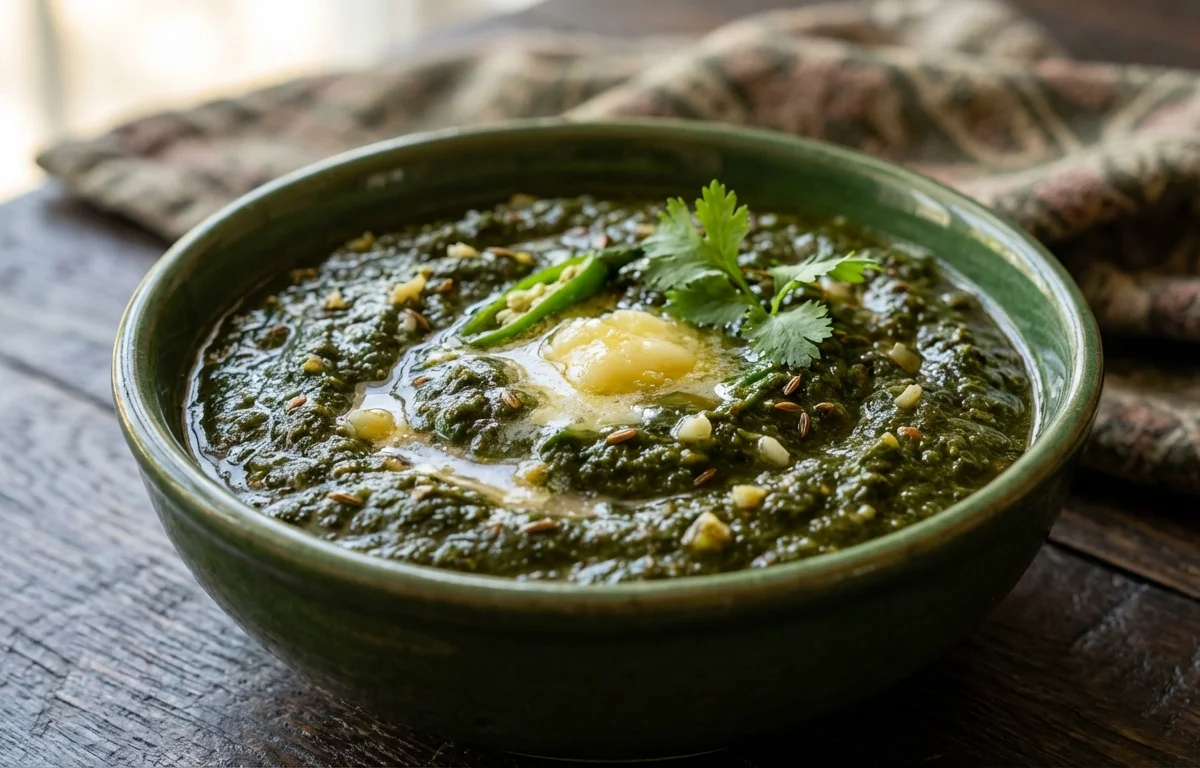
Bathua Saag
A rustic and nutritious North Indian winter green curry made from tender bathua leaves. Gently spiced with garlic and ginger, this comforting dish is traditionally served with makki ki roti.
For 4 servings
6 steps. 25 minutes total.
- 1
Step 1
- a.Clean and Prepare Bathua
- b.Pluck the tender bathua leaves and soft stems, discarding the thick, tough stalks.
- c.Place the leaves in a large bowl of water. Swish them around and let the dirt settle for a minute. Lift the leaves out, discard the gritty water, and repeat this process 2-3 times until the water is clear.
- d.Roughly chop the cleaned leaves.
- 2
Step 2
- a.Cook the Greens
- b.Transfer the chopped bathua leaves to a pressure cooker. Add 1/2 cup of water and 1/2 teaspoon of salt.
- c.Secure the lid and pressure cook on medium heat for 2-3 whistles, or for about 10 minutes, until the leaves are very soft.
- d.Allow the pressure to release naturally. If not using a pressure cooker, boil the leaves in a covered pot for 15-20 minutes until tender.
- 3
Step 3
- a.Mash the Saag
- b.Once the pressure has released, open the cooker. Use an immersion blender to coarsely blend the cooked leaves directly in the cooker. Do not make a smooth puree; a rustic, slightly coarse texture is desired.
- c.Alternatively, you can use a traditional wooden masher (ghotni) or a potato masher. Set the mashed saag aside.
- 4
Step 4
- a.Prepare the Tempering (Tadka)
- b.Heat ghee in a heavy-bottomed pan (kadai) over medium heat.
- c.Add the cumin seeds and let them sizzle and become fragrant, for about 30 seconds.
- d.Add the asafoetida, followed by the chopped garlic, grated ginger, and green chilies. Sauté for about a minute until the raw smell disappears and the garlic is lightly golden.
- e.Add the finely chopped onions and cook for 5-6 minutes, stirring occasionally, until they are soft and translucent.
- 5
Step 5
- a.Combine and Simmer
- b.Reduce the heat to low and add the besan (gram flour). Roast for 1-2 minutes, stirring continuously, until it releases a nutty aroma. This step is crucial to avoid a raw taste.
- c.Add the turmeric powder and red chili powder. Stir for 30 seconds.
- d.Pour the mashed bathua saag into the pan. Mix everything thoroughly to combine.
- e.Add the remaining salt to taste. Let the saag simmer on low heat for 5-7 minutes, allowing the flavors to meld together. Stir occasionally to prevent sticking.
- 6
Step 6
- a.Serve
- b.Turn off the heat. Your authentic Bathua Saag is ready.
- c.Serve hot, traditionally topped with a dollop of white butter (makhan) or a little extra ghee. It pairs perfectly with Makki ki Roti (cornmeal flatbread), bajra roti, or regular chapati.
What to keep in mind.
6 tips from the recipe — small details that make a real difference to the final dish.
- 1Thoroughly cleaning the bathua leaves is the most critical step to ensure your saag is not gritty.
- 2For an authentic rustic texture, avoid over-blending the saag. A coarse consistency is key.
- 3Roasting the besan well before adding the greens is essential to remove its raw flavor and thicken the saag perfectly.
- 4For a richer flavor, add a final 'tadka' of 1 tbsp ghee, 2-3 sliced garlic cloves, and 1 dried red chili just before serving.
- 5Using mustard oil instead of ghee will impart a more pungent, traditional North Indian flavor.
- 6A pinch of sugar or a tiny piece of jaggery can help balance the slight natural bitterness of the bathua leaves.
Adapt it for your goals.
Creamy Version
Stir in 2-3 tablespoons of fresh cream (malai) or full-fat yogurt at the end of cooking for a richer, creamier texture. If using yogurt, whisk it first and add it off the heat to prevent curdling.
With Spinach (Palak)With Spinach (Palak)
For a milder flavor and different nutritional profile, prepare the saag using a mix of 250g bathua and 250g spinach (palak).
Punjabi StylePunjabi Style
Add 1 finely chopped tomato along with the onions and a pinch of garam masala at the end for a classic Punjabi twist.
With PaneerWith Paneer
Add 100g of small paneer cubes to the saag during the last 5 minutes of simmering for a protein-rich variation.
Why this is on our healthy list.
Rich in Vitamins and Minerals
Bathua (Chenopodium album) is an excellent source of Vitamin A, C, and B-complex vitamins, as well as essential minerals like iron, calcium, potassium, and phosphorus, which are vital for bone health, vision, and preventing anemia.
High in Dietary Fiber
This saag is packed with dietary fiber, which promotes healthy digestion, prevents constipation, and helps maintain a balanced gut microbiome. The fiber also contributes to a feeling of fullness, aiding in weight management.
Boosts Immunity
The high content of Vitamin C in bathua, combined with the antioxidant and anti-inflammatory properties of garlic, ginger, and turmeric, helps strengthen the immune system and protect the body against common infections.
Natural Blood Purifier
In traditional Ayurvedic medicine, bathua is renowned for its blood-purifying properties. Regular consumption is believed to help detoxify the body, improve circulation, and contribute to clearer, healthier skin.
Frequently asked questions
A single serving of Bathua Saag (approximately 175g) contains around 150-180 kcal. The calorie count can vary depending on the amount of ghee or oil used in the preparation.