
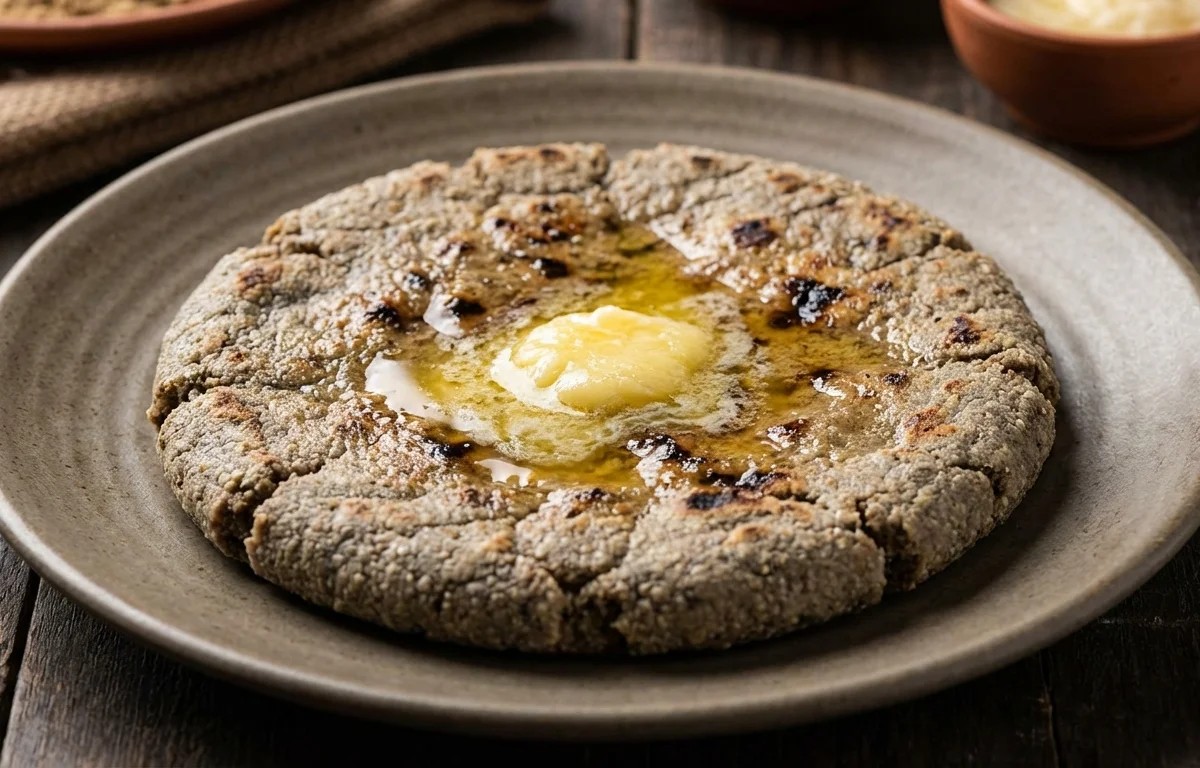
Bajra Sogra
A rustic, gluten-free flatbread from Rajasthan made with pearl millet flour. This hearty bread has a nutty, earthy flavor and pairs perfectly with garlic chutney and traditional Rajasthani curries.
For 4 servings
Prepare the Dough
- In a large mixing bowl or 'parat', combine 2 cups of bajra flour and salt. Mix them well.
- Gradually add hot water, a little at a time, and mix with a spoon or spatula as the water will be hot.
- Once the mixture is cool enough to handle, begin to knead. Use the heel of your palm to press and knead the dough for a good 7-8 minutes.
- The final dough should be smooth, soft, and pliable, similar to chapati dough. It should not be sticky or too stiff. Cover with a damp cloth and let it rest for 5 minutes.
Divide and Shape the Sogra
- Divide the dough into 8 equal portions and roll them into smooth, crack-free balls.
- Take one dough ball and knead it for another 30 seconds to make it extra smooth.
- Dust your palms with a little dry bajra flour. Flatten the ball between your palms.
- Gently pat and press the dough, rotating it continuously, to form a round disc about 4-5 inches in diameter and about 1/4 inch thick. If you find this difficult, place the dough ball between two sheets of parchment paper and roll gently with a rolling pin.
Cook the Sogra
- Heat a cast iron or non-stick tawa (griddle) over medium heat. The tawa should be hot but not smoking.
- Carefully lift the shaped sogra and place it on the hot tawa.
- Cook for 1-2 minutes on the first side, until it's partially cooked and you can easily lift it.
- Flip the sogra and cook the other side for another 1-2 minutes.
- Flip it again. Now, using a folded kitchen towel or a flat spatula, gently press down on the edges of the sogra. This will help it puff up beautifully.
- Cook until golden-brown spots appear on both sides. The sogra should be cooked through.
Serve Hot
- Remove the cooked sogra from the tawa and place it on a plate or in a roti basket.
- Generously smear the top with ghee while it's still hot.
- Repeat the shaping and cooking process for all the remaining dough balls.
- Serve immediately with Rajasthani specialties like Lehsun ki Chutney (garlic chutney), Gatte ki Sabzi, or any dal.
What to keep in mind.
5 tips from the recipe — small details that make a real difference to the final dish.
- 1Using hot water is the key to a soft and manageable bajra dough.
- 2Knead the dough exceptionally well. The more you knead, the smoother the sogra will be, preventing cracks.
- 3Always make sogras from freshly prepared dough. Bajra dough tends to dry out and become difficult to work with if left for too long.
- 4Cook on a consistent medium flame. High heat will cook the outside quickly, leaving the inside raw, while low heat will make the sogra hard.
- 5For an authentic touch, you can also puff the sogra directly on a low open flame using tongs after cooking it on the tawa.
Adapt it for your goals.
Spiced Sogra
Add 1 teaspoon of ajwain (carom seeds), 1/2 teaspoon of crushed black pepper, or 1 finely chopped green chili to the dough for a spicy kick.
Herbed SograHerbed Sogra
Mix in 1/2 cup of finely chopped fresh methi (fenugreek leaves) or spinach into the dough. You may need to adjust the amount of water slightly.
Enriched SograEnriched Sogra
Add 1 tablespoon of white sesame seeds (til) to the dough for extra crunch and nutty flavor.
Why this is on our healthy list.
Naturally Gluten-Free
Bajra (pearl millet) is an excellent grain for those with celiac disease or gluten intolerance, providing a nutritious alternative to wheat-based breads.
Rich in Dietary Fiber
The high fiber content promotes digestive health, prevents constipation, and provides a feeling of fullness, which can aid in weight management.
Supports Heart Health
Bajra is a good source of magnesium, which is crucial for maintaining a healthy heart rhythm and regulating blood pressure. Its fiber also helps in lowering cholesterol.
Manages Blood Sugar
With a low glycemic index, bajra releases glucose into the bloodstream slowly, preventing sharp spikes in blood sugar levels, making it beneficial for diabetics.
Frequently asked questions
Cracking is usually a sign that the dough is too dry or hasn't been kneaded enough. Add a teaspoon of warm water, knead it again for a couple of minutes until it's smooth and pliable, and then try shaping it again.