
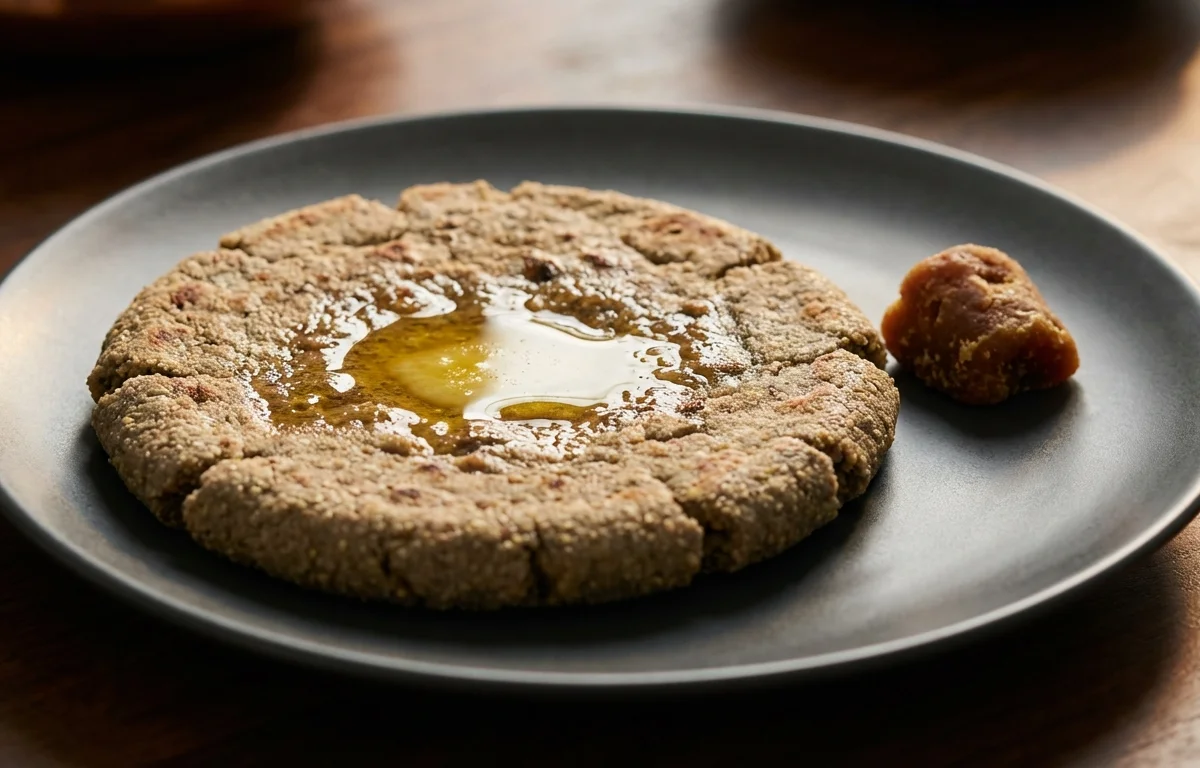
Bajra Rotla
A rustic, gluten-free flatbread from Gujarat made with pearl millet flour. Traditionally patted by hand, its earthy, nutty flavor pairs wonderfully with a dollop of white butter, jaggery, or spicy vegetable curries.
For 8 servings
Prepare the Dough
- In a wide bowl or parat, combine 2 cups of bajra flour and salt. Mix well.
- Gradually add warm water, a little at a time, and mix with your fingers. The water should be warm to the touch, not boiling hot.
- Gather the flour to form a shaggy dough. Do not knead the entire dough at once. It should be soft and pliable, but not sticky. This initial mixing should take about 3-4 minutes.
Knead and Shape the Rotla
- Divide the dough into 8 equal portions. Keep the remaining dough covered with a damp cloth.
- Take one portion and add a few drops of water. Knead it with the heel of your palm for 1-2 minutes until it becomes very smooth, soft, and crack-free. This individual kneading is the most crucial step for a soft rotla.
- Roll the kneaded portion into a smooth ball. Dust your work surface and palms with a little dry bajra flour.
- Gently flatten the ball and begin patting it between your palms, rotating it continuously to form an even circle about 5-6 inches in diameter and 1/4 inch thick. Alternatively, place the dough ball between two sheets of parchment paper and roll gently with a rolling pin.
Cook the Rotla
- Heat a tawa (a traditional clay tavdi or a cast-iron skillet works best) over medium-high heat. The tawa should be hot but not smoking.
- Carefully lift the shaped rotla and place it on the hot tawa.
- Cook the first side for about 45-60 seconds, or until you see small bubbles appear and the color changes slightly.
- Using a spatula, flip the rotla. Cook the second side for 1-2 minutes, until light brown spots appear all over.
Puff and Serve
- Flip the rotla one more time. Gently press down on the edges with a folded kitchen towel or a flat spatula. This helps trap steam and encourages the rotla to puff up.
- For a fully puffed rotla, carefully lift it with tongs and hold it directly over a medium flame for 10-15 seconds, turning it quickly, until it inflates like a balloon.
- Remove the rotla from the heat and immediately smear a generous amount of ghee on top.
- Repeat the kneading, shaping, and cooking process for the remaining dough portions. Serve immediately while hot.
What to keep in mind.
5 tips from the recipe — small details that make a real difference to the final dish.
- 1Always use warm water to knead bajra dough. It helps activate the gluten-like properties, making the dough more pliable and easier to handle.
- 2The secret to a perfect rotla is to knead each dough ball individually just before shaping it. This prevents the dough from drying out and cracking.
- 3If you are a beginner, rolling the rotla between two sheets of parchment paper or a zip-top bag is a foolproof way to get an even circle without it breaking.
- 4Ensure your tawa is properly heated. A tawa that is too cold will make the rotla hard, while one that is too hot will burn it before it cooks through.
- 5Bajra rotla is best enjoyed fresh off the tawa. It tends to become dense and chewy as it cools down.
Adapt it for your goals.
Herbed Rotla
Add 1/4 cup of finely chopped fresh fenugreek leaves (methi), 1 finely chopped green chili, and 1/2 teaspoon of garlic paste to the flour before kneading for a flavorful twist.
Spiced RotlaSpiced Rotla
Incorporate 1/2 teaspoon of carom seeds (ajwain) and a pinch of turmeric powder into the dough for added flavor and digestive benefits.
Mixed Flour RotlaMixed Flour Rotla
For a softer texture that's easier for beginners to handle, mix 1/4 cup of whole wheat flour (atta) with the bajra flour.
Why this is on our healthy list.
Excellent for Diabetics
Bajra has a low glycemic index and is a complex carbohydrate, which means it releases glucose into the bloodstream slowly. This helps in managing blood sugar levels effectively.
Promotes Heart Health
Rich in magnesium and potassium, bajra helps in maintaining healthy blood pressure. The high fiber content also aids in lowering cholesterol levels, reducing the risk of heart disease.
Naturally Gluten-Free
As a gluten-free grain, bajra is an excellent food choice for individuals with celiac disease or gluten intolerance, providing a nutritious alternative to wheat-based breads.
Aids in Digestion
The high content of insoluble fiber in bajra promotes regular bowel movements, prevents constipation, and supports a healthy digestive system.
Frequently asked questions
This usually happens for two reasons: the dough is too dry, or it hasn't been kneaded enough. Add a few drops of water and knead the individual dough ball with the heel of your palm until it's completely smooth and free of cracks before you start patting.