
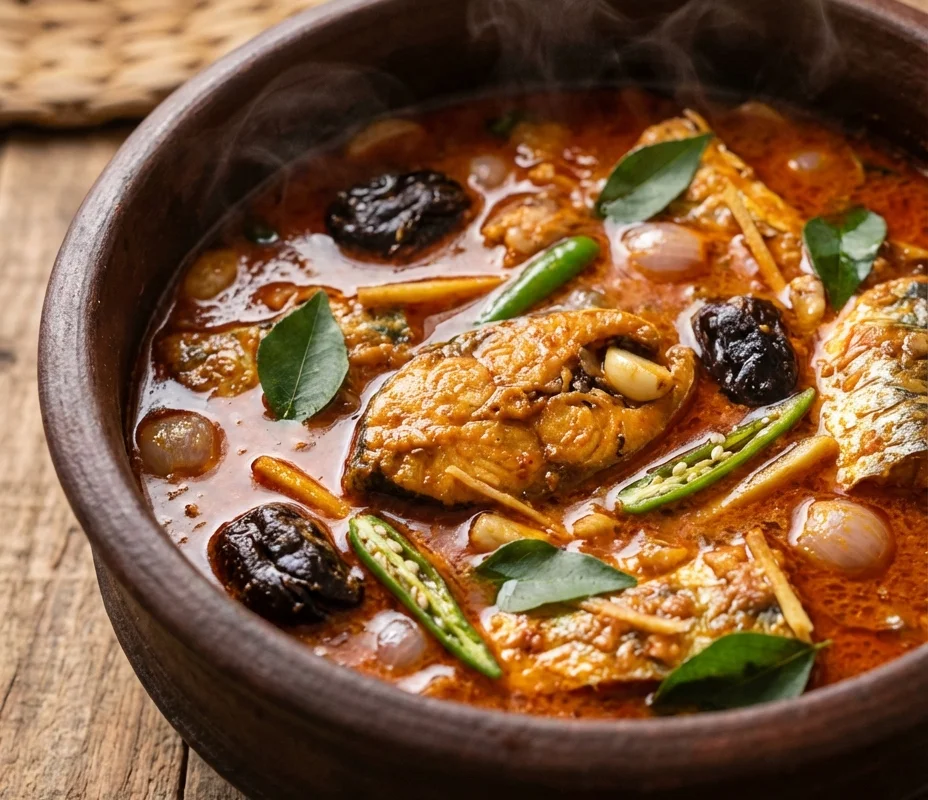
Ayala Curry
A classic Kerala fish curry featuring tender mackerel simmered in a tangy, spicy coconut milk gravy. Flavored with kudampuli (Malabar tamarind) and fragrant spices, it's a coastal delight best served with steamed rice or appam.
For 4 servings
Preparation
- Clean the mackerel pieces thoroughly, pat them dry, and set aside.
- Rinse the kudampuli pieces and soak them in 1/2 cup of warm water for at least 15 minutes. This helps soften them and release their flavor.
Sauté Aromatics
- Heat coconut oil in a traditional clay pot (manchatti) or a wide, heavy-bottomed pan over medium heat.
- Add the mustard seeds. Once they begin to splutter, add the fenugreek seeds and sauté for about 10 seconds until fragrant.
- Add the sliced shallots, chopped ginger, garlic, slit green chilies, and about 10 curry leaves. Sauté for 5-7 minutes until the shallots are soft and translucent.
Cook the Spices
- Reduce the heat to low to prevent the spices from burning.
- Add the turmeric powder, Kashmiri red chili powder, and coriander powder to the pan.
- Stir continuously for about 1 minute until the raw aroma of the spices disappears and the oil begins to separate from the mixture.
Build and Simmer the Gravy
- Pour the soaked kudampuli along with its water into the pan. Add the thin coconut milk and salt.
- Stir everything together well and increase the heat to medium. Bring the gravy to a gentle boil and let it simmer for 3-4 minutes to allow the flavors to meld.
Cook the Fish
- Carefully slide the mackerel pieces into the simmering gravy, ensuring each piece is submerged.
- Cover the pan and cook on low to medium heat for 10-12 minutes, or until the fish is cooked through and flaky.
- Avoid using a spoon to stir. Instead, gently hold the pan by its handles and swirl it occasionally to prevent the delicate fish from breaking.
Finish the Curry
- Once the fish is cooked, reduce the heat to the lowest possible setting.
- Pour in the thick coconut milk and add the remaining curry leaves.
- Gently swirl the pan again to combine. Allow it to heat through for just 1-2 minutes. Do not let the curry boil, as this can cause the thick coconut milk to curdle.
- Turn off the heat, cover the pan, and let the curry rest for at least 30 minutes before serving. The flavors will deepen significantly during this time.
What to keep in mind.
5 tips from the recipe — small details that make a real difference to the final dish.
- 1For the most authentic taste, use a traditional clay pot (manchatti) and fresh coconut oil.
- 2The flavor of this curry improves immensely the next day, making it perfect for meal prep.
- 3Never stir the curry vigorously after adding the fish. Swirl the pan gently to mix.
- 4Do not boil the curry after adding the thick coconut milk, as it can split and ruin the texture.
- 5The tanginess of kudampuli can vary. You can remove the pieces from the curry after cooking if you prefer a milder tangy flavor.
Adapt it for your goals.
Different Fish
This curry works beautifully with other oily fish like sardines (mathi), kingfish (neymeen), or pomfret. Adjust cooking time based on the thickness of the fish.
No Coconut Milk Version (Meen Vattichathu)No Coconut Milk Version (Meen Vattichathu)
For a spicier, thinner curry, omit both thin and thick coconut milk. Use about 2 cups of water instead and increase the chili powder for a fiery red fish curry.
With Ground Coconut PasteWith Ground Coconut Paste
Instead of coconut milk, use a freshly ground paste of 1 cup grated coconut, 4-5 shallots, 1/2 tsp turmeric powder, and 2 tsp chili powder for a thicker, more rustic gravy.
Why this is on our healthy list.
Rich in Omega-3 Fatty Acids
Mackerel is one of the best dietary sources of Omega-3s, which are crucial for reducing inflammation, supporting brain function, and promoting cardiovascular health.
Anti-inflammatory Properties
The combination of turmeric (containing curcumin), ginger, garlic, and Omega-3s from the fish gives this curry potent anti-inflammatory benefits.
Source of Healthy Fats
Coconut milk contains medium-chain triglycerides (MCTs), a type of fat that is easily digested and can provide a quick source of energy.
Boosts Metabolism
Spices used in the curry, such as chili powder and fenugreek seeds, are known to have properties that can help boost metabolism and aid in digestion.
Frequently asked questions
One serving of Ayala Curry contains approximately 500-550 calories, depending on the fat content of the mackerel and the amount of coconut milk used.