
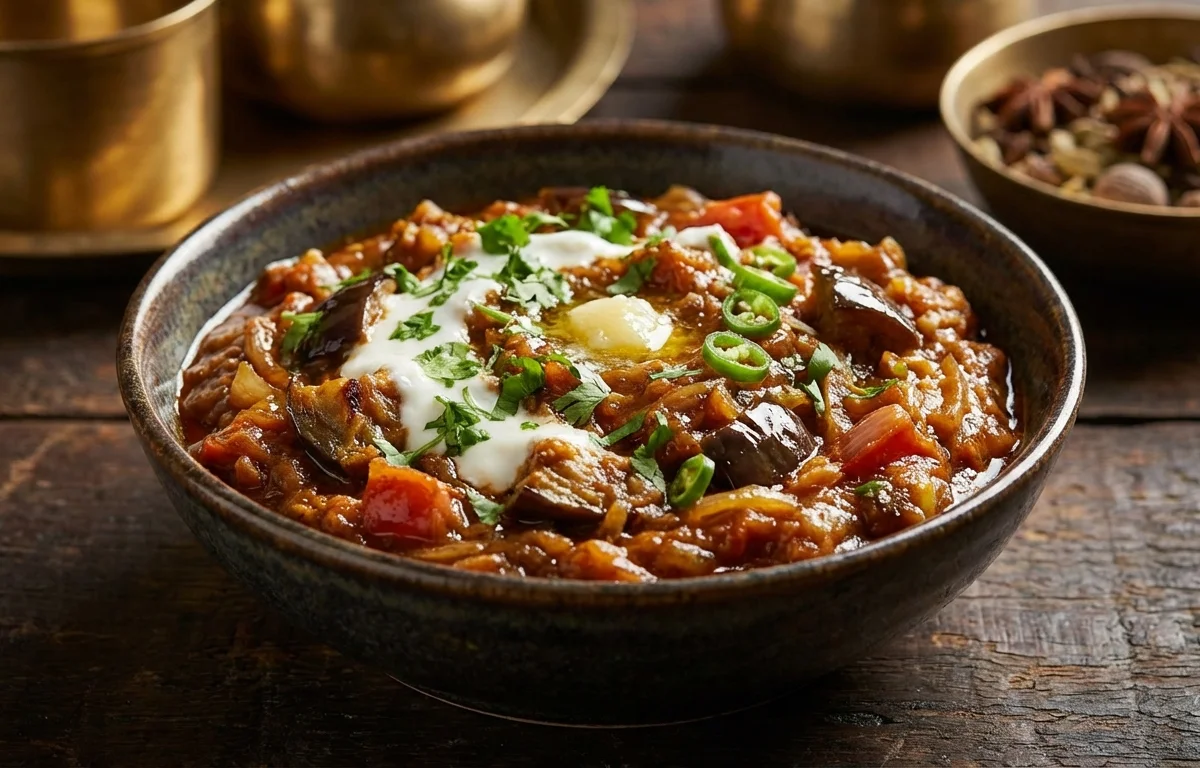
Awadhi Baingan Bharta
A smoky, creamy eggplant mash from the royal kitchens of Awadh. This version is richer and milder than its Punjabi counterpart, using ghee and yogurt for a luscious texture that pairs perfectly with rotis.
For 4 servings
7 steps. 40 minutes total.
- 1
Roast the Brinjal: Wash, dry, and make a few slits in the brinjal
- a.Brush with a little ghee. Roast over a direct gas flame, turning frequently for 15-20 minutes, until the skin is charred all over and the flesh feels completely soft when poked.
- 2
Step 2
- a.Prepare the Brinjal Pulp: Once the roasted brinjal is cool enough to handle, carefully peel off all the charred skin. Discard the stem. Place the roasted flesh in a bowl and mash it thoroughly with a fork or potato masher. Set aside.
- 3
Step 3
- a.Sauté the Aromatics: Heat the remaining ghee in a heavy-bottomed pan over medium heat. Add the cumin seeds and let them splutter. Add the finely chopped onions and sauté for 8-10 minutes until they are deep golden brown. This caramelization is key to the authentic Awadhi flavor.
- 4
Cook the Masala Base: Add the ginger-garlic paste and slit green chillies
- a.Sauté for one minute until the raw aroma disappears. Add the finely chopped tomatoes and cook for 5-7 minutes, until they turn soft and mushy, and the ghee begins to separate from the masala.
- 5
Step 5
- a.Add Spices and Brinjal: Stir in the turmeric powder, coriander powder, red chilli powder, and salt. Cook for 30 seconds to toast the spices. Add the mashed brinjal to the pan, mix everything well, and cook for 4-5 minutes, allowing the brinjal to absorb all the flavors of the masala.
- 6
Incorporate Curd: Reduce the heat to the lowest setting
- a.Add the whisked curd and stir continuously and briskly for 2-3 minutes to prevent it from curdling. Cook until the bharta is heated through and has a creamy, luscious consistency.
- 7
Garnish and Serve: Turn off the heat
- a.Sprinkle with garam masala and fresh coriander leaves. Give it a final gentle mix. Let it rest for 5 minutes before serving hot with roti, paratha, or naan.
What to keep in mind.
5 tips from the recipe — small details that make a real difference to the final dish.
- 1Choosing the right eggplant is key. Look for a large, firm, and glossy one with fewer seeds for a fleshier bharta.
- 2Roasting over a direct flame gives the best smoky flavor, but a broiler or grill works too.
- 3Don't skip browning the onions well; it adds a deep, sweet flavor base that is characteristic of Awadhi cuisine.
- 4Always use full-fat, whisked yogurt and add it on low heat, stirring continuously to ensure a smooth, creamy texture without curdling.
- 5For an even smokier flavor, use the 'dhungar' method: place a small steel bowl in the center of the cooked bharta, add a piece of red-hot charcoal, pour a little ghee over it, and immediately cover the pan for 2-3 minutes.
Adapt it for your goals.
Vegan Version
Replace ghee with a neutral oil like sunflower or canola oil, and use a plant-based yogurt (like cashew or almond yogurt) instead of dairy curd.
Richer FlavorRicher Flavor
For an even richer, more decadent version, add 2 tablespoons of cashew paste along with the tomatoes.
Added VegetablesAdded Vegetables
Incorporate 1/4 cup of green peas (matar) along with the tomatoes for added texture and sweetness.
Why this is on our healthy list.
Rich in Fiber
Eggplant is an excellent source of dietary fiber, which aids digestion, promotes satiety, and helps maintain stable blood sugar levels.
Source of Antioxidants
Eggplants contain antioxidants like nasunin, found in their purple skin, which helps protect cells from free radical damage.
Gut-Friendly Probiotics
The use of yogurt (curd) introduces beneficial probiotics to the dish, which support a healthy gut microbiome and improve digestion.
Provides Healthy Fats
Ghee is a source of healthy saturated fats and fat-soluble vitamins like A, E, and D, which are essential for various bodily functions.
Frequently asked questions
One serving (approximately 180g) contains around 210-240 calories, primarily from the ghee, yogurt, and vegetables. It's a relatively low-calorie main dish.