
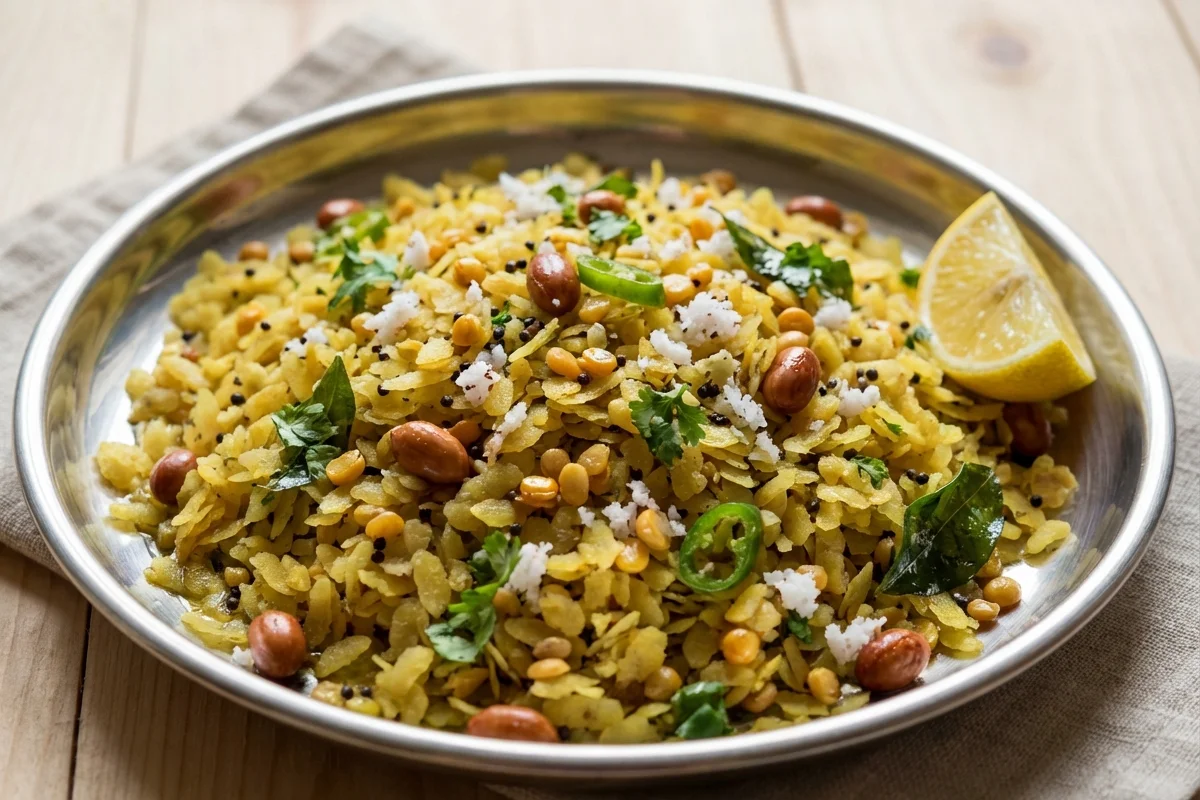
Avalakki Oggarane
A light and tangy Karnataka-style tempered poha, perfect for a quick breakfast or evening snack. Made with flattened rice, crunchy peanuts, and a simple spice tempering, it's ready in under 20 minutes.
For 4 servings
7 steps. 10 minutes total.
- 1
Prepare the Poha: Place the medium poha in a large colander or strainer
- a.Rinse it under cold running water for about 30-40 seconds, gently tossing with your fingers until it becomes soft but not mushy. It's crucial not to over-soak. Shake the colander well to drain all excess water. Let it rest for 5-10 minutes to absorb the residual moisture. Once rested, add salt and sugar to the poha and fluff it gently with a fork to combine.
- 2
Step 2
- a.Prepare the Tempering (Oggarane): Heat oil in a wide, heavy-bottomed pan or kadai over medium heat. Once the oil is hot, add the mustard seeds and allow them to splutter completely. This should take about 30 seconds.
- 3
Step 3
- a.Sauté Dals and Peanuts: Immediately after the mustard seeds splutter, lower the heat slightly and add the urad dal, chana dal, and raw peanuts. Sauté for 1-2 minutes, stirring continuously, until the dals turn a light golden brown and the peanuts are crunchy.
- 4
Add Aromatics: Add the slit green chilies, curry leaves, and hing to the pan
- a.Sauté for another 30-40 seconds until the curry leaves turn crisp and fragrant. Be careful as the leaves may splutter.
- 5
Step 5
- a.Combine and Cook: Add the turmeric powder and give it a quick stir for 5 seconds. Immediately add the prepared poha to the pan. Mix gently but thoroughly, ensuring you don't mash or break the poha flakes. Continue to toss until the poha is evenly coated with the spices and has a uniform yellow color.
- 6
Steam and Finish: Cover the pan with a lid and reduce the heat to low
- a.Let the poha steam for 2-3 minutes. This step is essential for making the poha soft and allowing it to absorb all the flavors. Turn off the heat.
- 7
Garnish and Serve: Remove the lid and fluff the poha with a fork
- a.Squeeze the fresh lemon juice over the top, then add the grated coconut and finely chopped coriander leaves. Give it one final, gentle mix. Serve hot immediately.
What to keep in mind.
6 tips from the recipe — small details that make a real difference to the final dish.
- 1Use medium or thick poha for the best non-sticky texture. Thin poha will disintegrate and become mushy.
- 2The key to perfect poha is rinsing, not soaking. Rinse just until soft, then drain completely.
- 3Use a wide pan or kadai. This provides more surface area, making it easier to mix the poha without breaking the flakes.
- 4For a perfect balance of flavors, don't skip the sugar and lemon juice; they create the characteristic sweet, tangy, and savory taste of Karnataka-style poha.
- 5Always add lemon juice after turning off the heat to preserve its fresh flavor and nutrients.
- 6Serve immediately, as poha tends to become dry and less flavorful as it cools down.
Adapt it for your goals.
Add Onions
For a variation similar to Kanda Poha, add one finely chopped onion to the tempering after the peanuts are roasted. Sauté until the onions are translucent before adding the turmeric and poha.
Add VegetablesAdd Vegetables
Incorporate finely chopped vegetables like carrots, peas, or bell peppers. Add them along with the onions (if using) or after the peanuts, and sauté until they are tender-crisp.
Nimmekai AvalakkiNimmekai Avalakki
For a more lemon-forward version, increase the lemon juice to 3-4 tablespoons and reduce or omit the sugar. This variation is known as Nimmekai Avalakki (Lemon Poha).
Add PotatoesAdd Potatoes
Add one small potato, finely diced. Sauté it in the tempering until it's cooked through before adding the poha. This makes the dish more filling.
Why this is on our healthy list.
Good Source of Energy
Poha is rich in healthy carbohydrates, providing a steady release of energy, making it an excellent choice for breakfast to kickstart your day.
Easy to Digest
Flattened rice is light on the digestive system and is often recommended as a comfort food. It's also a good source of probiotics from the fermentation process it undergoes.
Rich in Iron
The process of making poha involves passing it through iron rollers, which fortifies it with iron. The addition of lemon juice helps in the absorption of this iron, aiding in preventing anemia.
Frequently asked questions
Yes, it is a relatively healthy breakfast option. Poha is light on the stomach, gluten-free, and a good source of carbohydrates for energy. The addition of peanuts and dals provides protein and healthy fats. It's low in calories when prepared with minimal oil.