
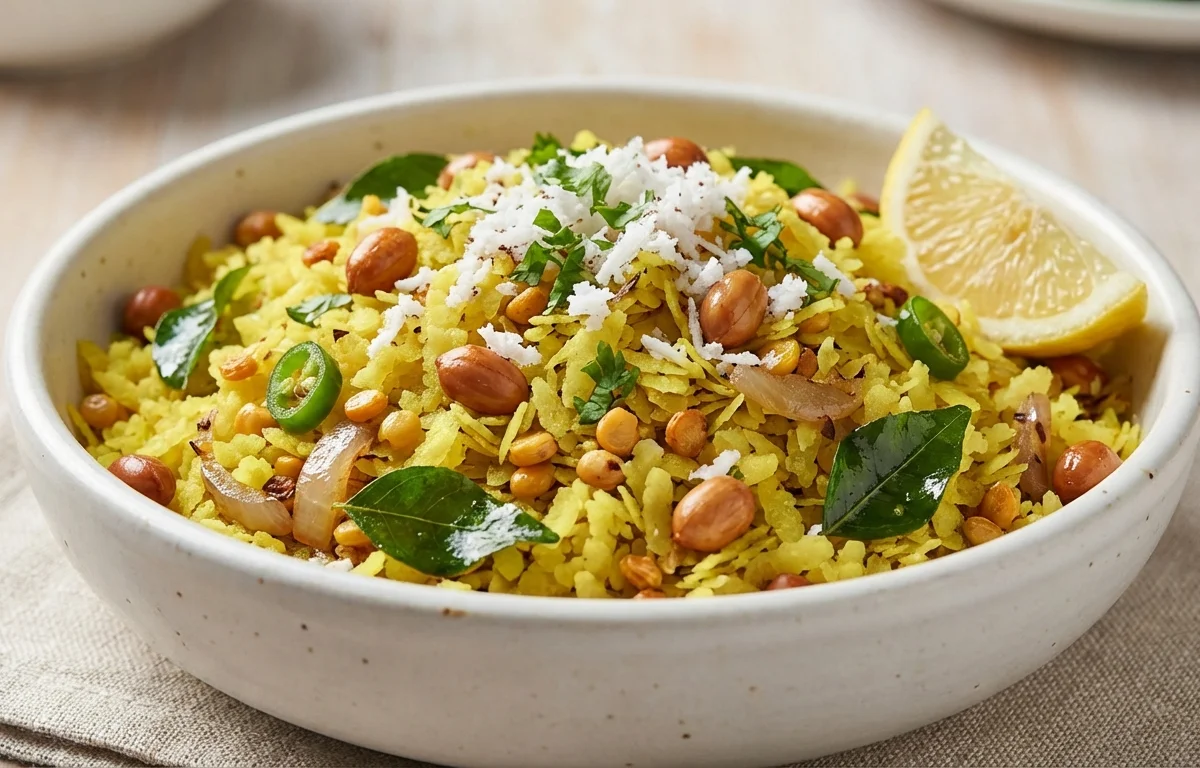
Aval Upma
A quick and wholesome South Indian breakfast made from flattened rice, tempered with spices, and finished with a squeeze of lemon. This light yet filling dish is ready in under 20 minutes and is perfect for busy mornings.
For 4 servings
Prepare the Poha: Place the thick poha in a colander or large sieve. Rinse under cold running water for about 30-45 seconds, tossing gently with your fingers to ensure all flakes are moistened. Do not over-rinse or soak. Let it drain completely in the colander for 5-10 minutes. The poha will absorb the residual moisture and become soft and fluffy.
Start the Tempering: Heat coconut oil in a wide, heavy-bottomed pan or kadai over medium heat. Once the oil is hot, add the mustard seeds and allow them to splutter completely, which should take about 30 seconds.
Sauté Dals and Peanuts: Add the urad dal, chana dal, and raw peanuts to the pan. Sauté for 1-2 minutes, stirring continuously, until the dals turn a light golden brown and the peanuts are crisp.
Sauté Aromatics: Add the slit green chilies, curry leaves, and asafoetida. Sauté for another 30 seconds until the curry leaves turn crisp and fragrant. Then, add the finely chopped onion and sauté for 3-4 minutes until it becomes soft and translucent.
Combine and Cook: Reduce the heat to low. Add the turmeric powder and mix for 10 seconds. Add the drained poha, salt, and sugar to the pan. Gently toss everything together until the poha is evenly coated with the spices and turns a uniform yellow color. Be careful not to break or mash the flakes.
Steam the Upma: Cover the pan with a lid and let the upma steam on the lowest heat for 2-3 minutes. This step is crucial for making the poha soft and allowing it to absorb all the flavors.
Garnish and Serve: Turn off the heat. Uncover the pan, drizzle the fresh lemon juice, and sprinkle the grated coconut and chopped coriander leaves over the top. Give it a final gentle mix and serve immediately while hot.
What to keep in mind.
6 tips from the recipe — small details that make a real difference to the final dish.
- 1Always use thick poha (get'ti aval) for a fluffy, non-sticky texture. Thin poha will disintegrate and become mushy.
- 2The key to perfect poha is rinsing, not soaking. A quick wash is all it needs to soften.
- 3For extra crunch, you can fry the peanuts separately until golden brown and add them at the end as a garnish.
- 4Don't overcrowd the pan. Use a wide pan to ensure the poha cooks evenly without getting mashed.
- 5A pinch of sugar is highly recommended as it balances the tangy, spicy, and salty flavors beautifully.
- 6Serve immediately. Aval upma tends to dry out if left to sit for too long.
Adapt it for your goals.
Vegetable Aval Upma
Add 1/2 cup of finely chopped vegetables like carrots, green peas, or bell peppers along with the onions for a more nutritious and colorful dish.
Kanda Batata PohaKanda Batata Poha
For a Maharashtrian twist, add 1 small potato, finely chopped, and cook it along with the onions until tender before adding the poha.
Lemon Aval UpmaLemon Aval Upma
For a tangier version, increase the lemon juice to 2 tablespoons and omit the grated coconut. This is also known as 'Chitranna Avalakki' in Karnataka.
Coconut Aval UpmaCoconut Aval Upma
Increase the amount of grated coconut to 1/4 cup and mix it in along with the poha to infuse a richer coconut flavor throughout the dish.
Why this is on our healthy list.
Excellent Source of Energy
Poha is rich in healthy carbohydrates (about 76% of its composition), providing a sustained release of energy to keep you active throughout the morning.
Easily Digestible
As a light and easily digestible food, Aval Upma is gentle on the stomach, making it an ideal choice for breakfast or a light snack, preventing bloating and sluggishness.
Good Source of Iron
The process of making flattened rice involves passing it through iron rollers, which fortifies it with iron. This helps in preventing iron deficiency and anemia.
Naturally Gluten-Free
Made from rice, poha is naturally gluten-free, making it a safe and delicious option for individuals with celiac disease or gluten intolerance.
Frequently asked questions
Yes, Aval Upma is considered a very healthy breakfast. It is light on the stomach, easily digestible, and provides a good source of carbohydrates for energy. It's also naturally gluten-free and low in calories. The addition of peanuts and dals adds protein and healthy fats.