
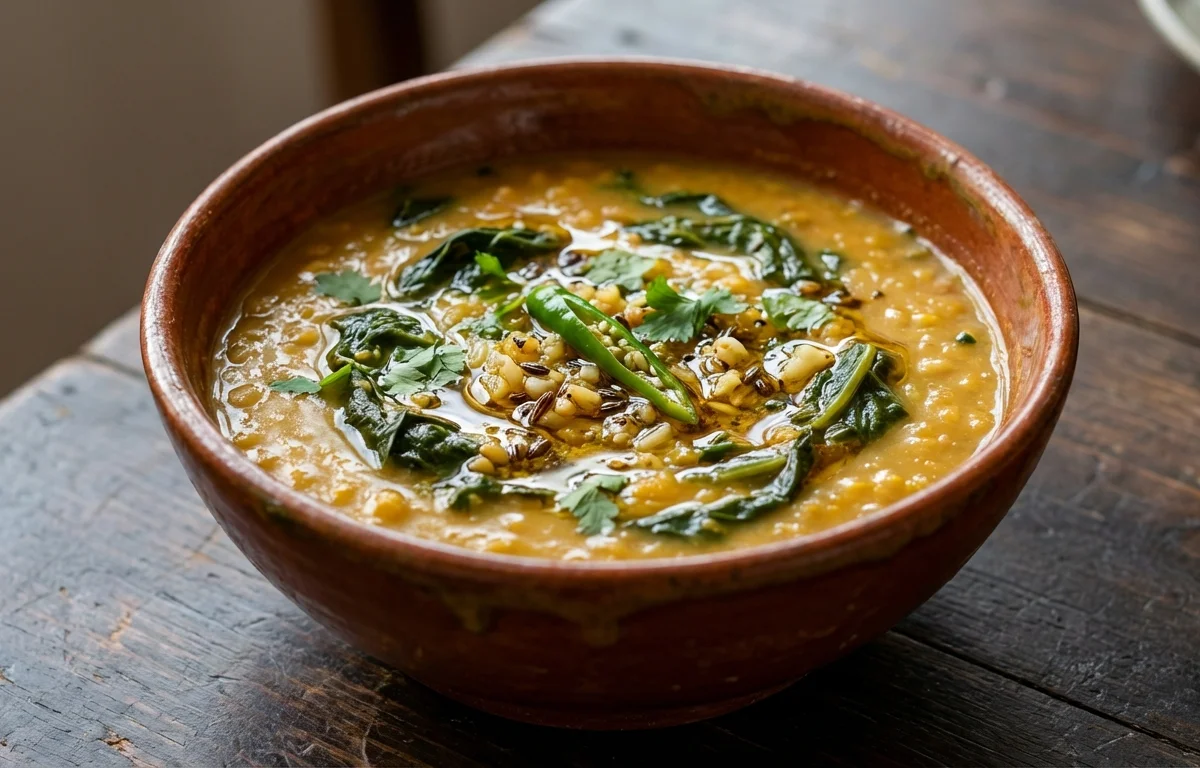
Assamese Dal
A light and comforting lentil soup from Assam, made with red lentils and leafy greens. Its unique, subtle alkaline flavor comes from 'khar', making it a truly distinct regional classic.
For 4 servings
Prepare and Cook the Dal
- Rinse the masoor dal under cold running water until the water runs clear. Soaking for 15-20 minutes is optional but can speed up cooking.
- In a pressure cooker, combine the rinsed dal, 4 cups of water, turmeric powder, salt, and khar.
- Secure the lid and pressure cook on medium heat for 3-4 whistles, or for about 12-15 minutes until the dal is completely soft and mushy.
- Allow the pressure to release naturally before opening the cooker.
Add Greens and Simmer
- Open the pressure cooker and gently whisk or mash the dal with a spoon to create a smooth consistency.
- Place the cooker back on the stove over medium heat. Add the chopped mustard greens.
- Stir well and let it simmer for 3-4 minutes, just until the greens are wilted but still retain a slight bite. Add a splash of hot water if the dal seems too thick.
Prepare the Tempering (Phoron)
- While the dal simmers, heat the mustard oil in a small tempering pan (tadka pan) over medium-high heat until it's lightly smoking.
- Reduce the heat to medium, add the panch phoron seeds, and let them crackle and splutter for about 30 seconds.
- Add the grated ginger, minced garlic, and slit green chilies. Sauté for another 45-60 seconds until fragrant and the raw smell disappears.
Combine and Serve
- Carefully pour the hot tempering over the simmering dal. Be cautious as it will sizzle.
- Stir everything together and let it cook for one more minute to allow the flavors to meld.
- Garnish with fresh coriander leaves and serve hot with steamed rice for a classic Assamese meal.
What to keep in mind.
5 tips from the recipe — small details that make a real difference to the final dish.
- 1For the most authentic flavor, use mustard oil for the tempering. Its pungent aroma is characteristic of Assamese cuisine.
- 2If you cannot find 'khar', you can substitute it with 1/4 teaspoon of baking soda. Add it with the dal before pressure cooking.
- 3Do not overcook the greens. They should be just wilted to maintain their texture, color, and nutritional value.
- 4Ensure the panch phoron splutters completely in the hot oil. This step is crucial for releasing the aromatic oils from the spices.
- 5This dal is traditionally thin and soupy. Feel free to adjust the consistency by adding more or less hot water.
Adapt it for your goals.
Greens
Instead of mustard greens, you can use other leafy greens like spinach (palak), amaranth leaves (lai xaak), or fenugreek leaves (methi).
Vegetable AdditionVegetable Addition
Add diced vegetables like bottle gourd (lauki), papaya, or pumpkin along with the dal in the pressure cooker for a more wholesome version.
LentilLentil
While masoor dal is traditional, you can also make this recipe with a mix of masoor and moong dal for a slightly different texture.
TemperingTempering
For a simpler tempering, you can use just panch phoron or just black mustard seeds and dried red chilies.
Why this is on our healthy list.
Rich in Plant-Based Protein
Masoor dal (red lentils) is an excellent source of plant-based protein, which is essential for muscle repair, growth, and overall body function.
High in Dietary Fiber
The combination of lentils and mustard greens provides a significant amount of dietary fiber, which aids digestion, promotes gut health, and helps in maintaining stable blood sugar levels.
Boosts Immunity
Mustard greens, ginger, and garlic are rich in vitamins (like Vitamin C and K) and antioxidants that help strengthen the immune system and fight off infections.
Supports Heart Health
This dal is low in saturated fat and cholesterol. The fiber from lentils can help lower cholesterol levels, contributing to better cardiovascular health.
Frequently asked questions
Khar is a unique alkaline ingredient from Assam, traditionally made by filtering water through the ashes of a dried banana peel. It gives the dal its signature flavor. While you can make the dal without it, it won't be authentic. A common substitute is a small pinch (about 1/4 tsp) of baking soda to mimic the alkaline property.