
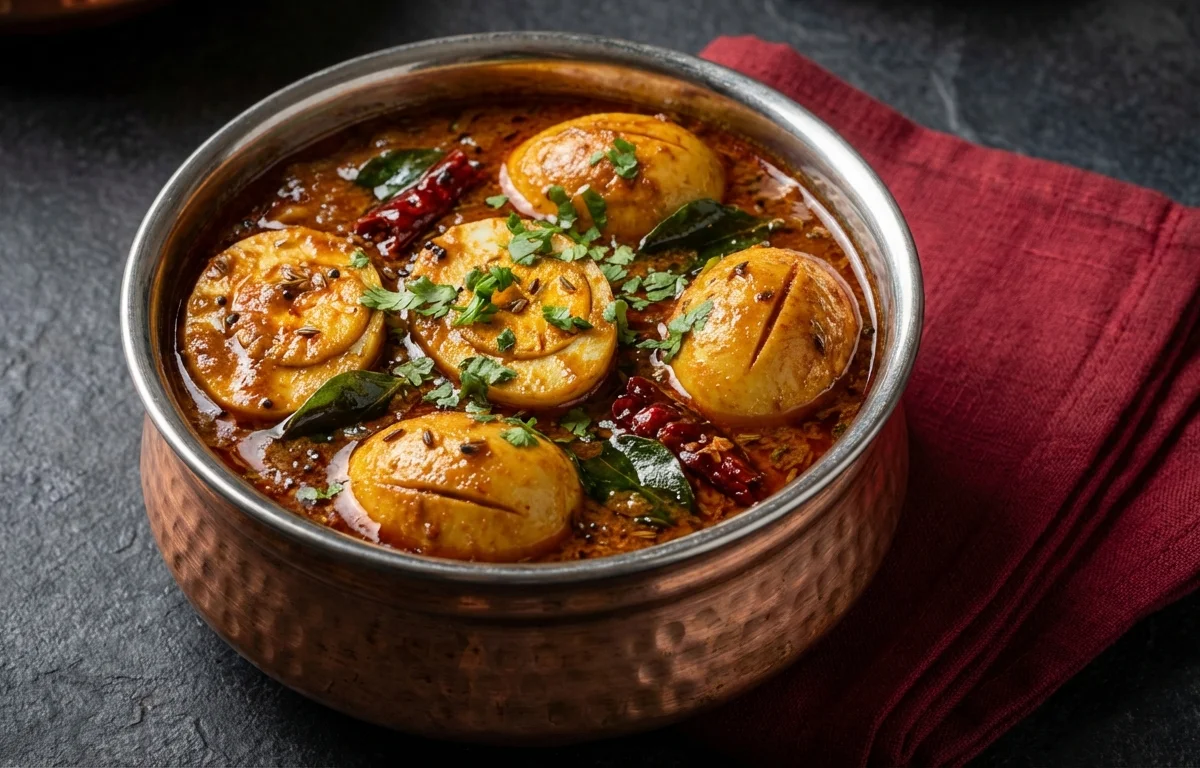
Andhra Kodi Guddu Pulusu
A classic Andhra egg curry featuring hard-boiled eggs simmered in a tangy and spicy tamarind gravy. This flavorful dish, balanced with a hint of jaggery, is a staple in South Indian homes and pairs perfectly with hot rice.
For 4 servings
Prepare Tamarind and Eggs
- Soak the tamarind in 1.5 cups of warm water for 15 minutes. Squeeze well to extract the juice, then strain and discard the pulp. Set the tamarind extract aside.
- Make 2-3 shallow slits on each hard-boiled egg. This helps them absorb the gravy's flavor.
Temper the Spices (Tadka)
- Heat oil in a wide pan or kadai over medium heat. Add mustard seeds, cumin seeds, and fenugreek seeds. Allow them to splutter for about 30 seconds.
- Add the broken dried red chilies and curry leaves. Sauté for another 30 seconds until fragrant.
Sauté Aromatics
- Add the finely chopped onions and slit green chilies. Sauté for 6-7 minutes until the onions turn soft and golden brown.
- Add the ginger-garlic paste and cook for 1-2 minutes until its raw aroma disappears.
Build the Gravy Base
- Add the chopped tomatoes and cook for 5-6 minutes until they become soft and mushy.
- Stir in the turmeric powder, red chili powder, and coriander powder. Cook the masala for 1 minute until oil begins to separate from the sides.
Simmer the Pulusu
- Pour in the prepared tamarind extract. Add the jaggery, salt, and 1 cup of water. Stir everything together.
- Bring the gravy to a boil, then reduce the heat to low. Cover the pan and let it simmer for 8-10 minutes. This allows the gravy to thicken and the raw tamarind flavor to mellow.
Add Eggs and Finish
- Gently place the slit hard-boiled eggs into the simmering gravy.
- Cover and cook for another 4-5 minutes, allowing the eggs to absorb the flavors of the pulusu.
- Turn off the heat and garnish with freshly chopped coriander leaves.
Rest and Serve
- Let the curry rest for at least 10 minutes before serving. This enhances the flavor.
- Serve hot with steamed rice or ragi sangati.
What to keep in mind.
5 tips from the recipe — small details that make a real difference to the final dish.
- 1For a richer flavor and firmer texture, lightly pan-fry the boiled eggs in 1 teaspoon of oil until they are golden brown before adding them to the gravy.
- 2The balance of tangy, spicy, and sweet is key. Adjust the tamarind, chili powder, and jaggery to suit your personal preference.
- 3Do not boil the pulusu on high heat for too long, as it can turn bitter. A gentle simmer is ideal.
- 4For a thicker gravy, mix 1 teaspoon of rice flour with 2 tablespoons of water to create a slurry. Stir it into the simmering gravy and cook for 2-3 minutes.
- 5This curry tastes even better the next day as the flavors meld and deepen overnight.
Adapt it for your goals.
Creamier Version
Add 1/4 cup of thick coconut milk at the end of cooking for a richer, creamier gravy. Reduce the heat to low and simmer for 2-3 minutes, but do not boil after adding it.
Vegetable PulusuVegetable Pulusu
Incorporate vegetables like drumsticks, brinjal (eggplant), or shallots. Add them along with the onions and cook until tender before adding the tamarind water.
Spicier KickSpicier Kick
For extra heat and a thicker base, grind a paste of 1 tsp poppy seeds, 4-5 cashews, and 1-2 extra dried red chilies. Add this paste along with the powdered spices.
Why this is on our healthy list.
Rich in High-Quality Protein
Eggs are an excellent source of complete protein, containing all nine essential amino acids necessary for muscle repair, growth, and overall body function.
Boosts Immunity
The spices used, such as turmeric (with curcumin) and cumin, contain powerful antioxidants and anti-inflammatory compounds that can help strengthen the immune system.
Aids Digestion
Tamarind is known to have mild laxative properties and can aid digestion. Spices like fenugreek and cumin also support gut health and can help alleviate indigestion.
Frequently asked questions
One serving (approximately 2 eggs with gravy) contains around 350-400 calories, depending on the amount of oil used. It's a balanced meal component when served with rice.