
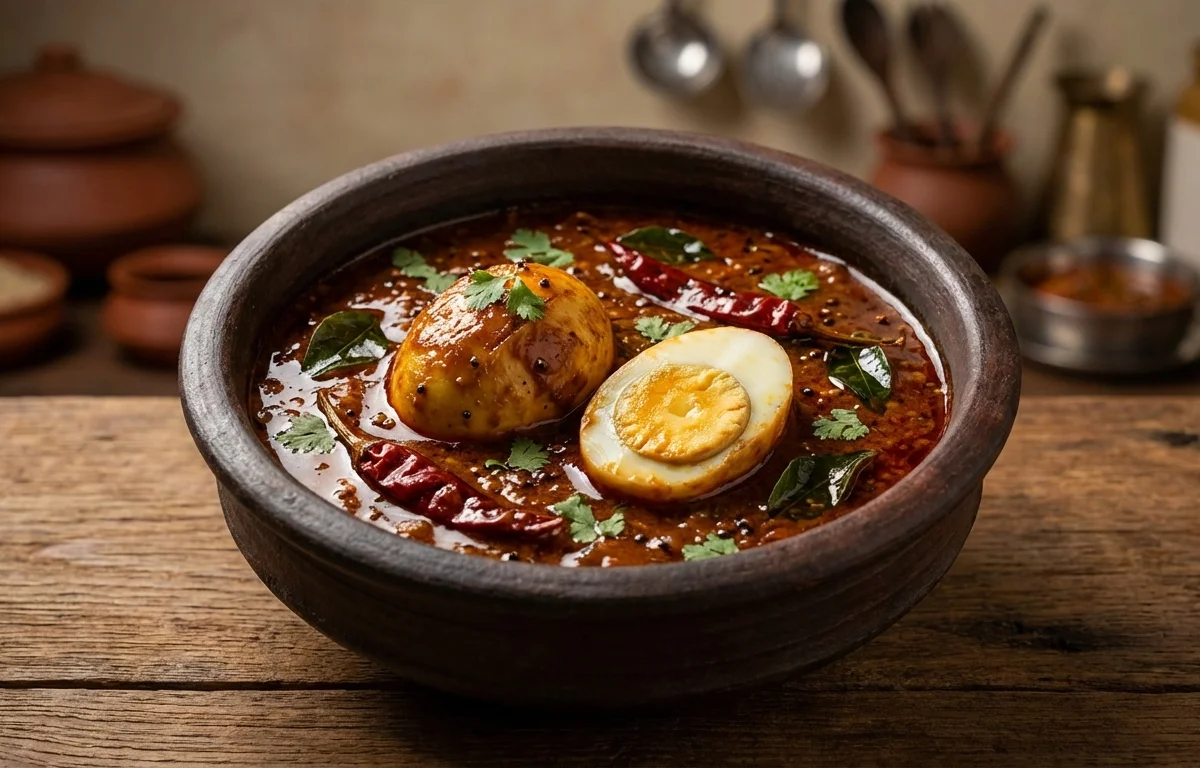
Andhra Egg Pulusu
A classic Andhra-style egg curry featuring hard-boiled eggs simmered in a tangy and spicy tamarind gravy. The perfect balance of sweet, sour, and spicy flavors makes this a delightful main course to serve with steamed rice.
For 4 servings
Prepare Eggs & Tamarind Extract
- If not already done, hard-boil the eggs for 10-12 minutes. Cool them in cold water, peel, and make 2-3 shallow slits on each egg. Set aside.
- Soak the tamarind in 1 cup of warm water for 15 minutes. Squeeze the pulp thoroughly to extract all the juice. Strain the liquid and discard the solids. You should have about 1 cup of tamarind extract.
Prepare the Tempering (Tadka)
- Heat oil in a wide, heavy-bottomed pan or kadai over medium heat.
- Add mustard seeds and allow them to splutter. Follow with cumin seeds and fenugreek seeds, and sauté for 30 seconds until fragrant.
- Add the broken dried red chillies and curry leaves. Sauté for another 30 seconds, being careful as they will splutter.
Sauté Aromatics & Build Masala
- Add the finely chopped onions and sauté for 6-8 minutes until they turn golden brown.
- Add the ginger-garlic paste and slit green chillies. Cook for 1-2 minutes until the raw aroma disappears.
- Stir in the chopped tomatoes and cook for about 5 minutes until they become soft and mushy.
- Lower the heat and add the spice powders: turmeric, red chilli powder, and coriander powder. Mix well and cook for 1 minute until the oil begins to separate from the masala.
Simmer the Pulusu
- Pour in the prepared tamarind extract, add 1.5 cups of plain water, salt, and grated jaggery. Stir everything together.
- Bring the gravy to a rolling boil, then reduce the heat to low. Cover the pan and let it simmer for 10-12 minutes. This step is crucial for the gravy to thicken and for the raw taste of tamarind to cook off.
Add Eggs and Finish
- Gently place the slit hard-boiled eggs into the simmering pulusu.
- Cover the pan again and cook for another 5 minutes, allowing the eggs to absorb the flavors of the tangy gravy.
- Turn off the heat and garnish with freshly chopped coriander leaves.
Rest and Serve
- Let the curry rest for at least 10-15 minutes before serving to allow the flavors to meld. Serve hot with steamed rice or ragi mudde.
What to keep in mind.
5 tips from the recipe — small details that make a real difference to the final dish.
- 1Making slits in the boiled eggs is crucial for them to absorb the gravy's flavor.
- 2For extra flavor, lightly fry the slit boiled eggs in 1 tsp of oil with a pinch of turmeric and chili powder until golden before adding them to the gravy.
- 3Do not skip the fenugreek seeds (methi); they provide a unique, slightly bitter note that is characteristic of a good pulusu.
- 4Adjust the amount of jaggery and tamarind to achieve your preferred balance of sweet and sour.
- 5The pulusu tastes even better the next day as the flavors have more time to meld together.
Adapt it for your goals.
Vegetarian Version
Replace eggs with boiled vegetables like drumsticks, brinjal (eggplant), or bottle gourd for a delicious vegetable pulusu.
Creamier GravyCreamier Gravy
For a milder, creamier taste, add 2-3 tablespoons of thick coconut milk at the very end of cooking. Note that this is not the traditional Andhra style.
With Lentil DumplingsWith Lentil Dumplings
Add pre-fried sun-dried lentil dumplings (vadiyalu) to the simmering gravy for the last 5-7 minutes of cooking for extra texture and flavor.
Why this is on our healthy list.
Rich in Protein
Eggs are an excellent source of high-quality protein, which is essential for muscle repair, growth, and overall body function.
Boosts Immunity
The spices used, such as turmeric and cumin, along with antioxidant-rich tamarind, have anti-inflammatory properties that help strengthen the immune system.
Aids Digestion
Tamarind is known to have mild laxative properties, while spices like cumin and fenugreek can aid in digestion and improve overall gut health.
Frequently asked questions
One serving of Andhra Egg Pulusu contains approximately 280-320 calories. This is an estimate and can vary based on the size of the eggs and the amount of oil used.