
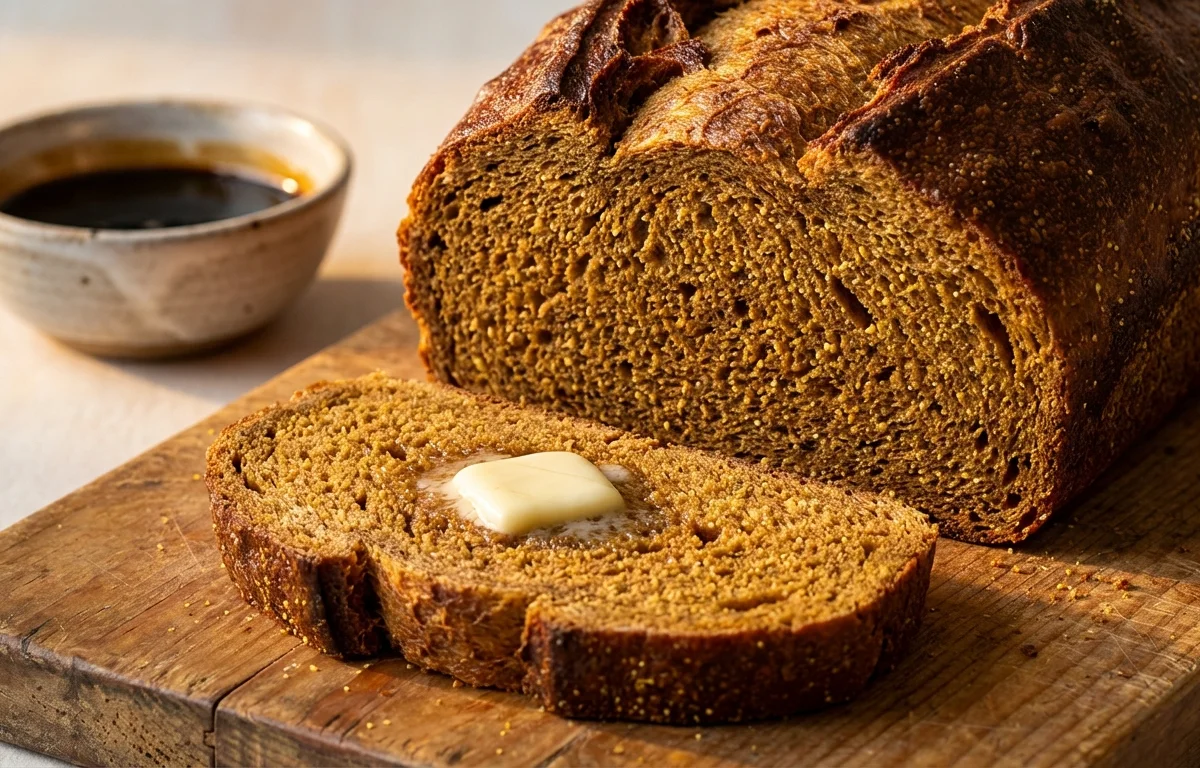
Anadama Bread
A classic bread from New England, this loaf has a wonderfully soft, chewy crumb and a slightly sweet, earthy flavor from molasses. The cornmeal adds a hearty, rustic texture, making it perfect for toast, sandwiches, or served alongside a warm bowl of chowder.
For 12 servings
7 steps. 150 minutes total.
- 1
Step 1
- a.Prepare the Cornmeal Mush
- b.In a medium saucepan, bring 1 cup of water to a simmer over medium heat.
- c.Gradually whisk in the yellow cornmeal until the mixture is smooth and free of lumps.
- d.Reduce the heat to low and cook, stirring constantly with a spatula or wooden spoon, for 5-7 minutes until the mixture thickens into a porridge-like mush.
- e.Remove the saucepan from the heat. Stir in the molasses, butter, and salt until the butter is fully melted and everything is well combined.
- f.Set the mush aside to cool to lukewarm, between 105-115°F (40-46°C). This is crucial; if it's too hot, it will kill the yeast.
- 2
Step 2
- a.Activate the Yeast
- b.While the mush cools, pour the 1/2 cup of warm water into a small bowl.
- c.Sprinkle the active dry yeast over the water. Let it stand for 5-10 minutes without stirring, until the yeast dissolves and becomes foamy.
- 3
Step 3
- a.Mix and Knead the Dough
- b.In the bowl of a stand mixer fitted with the dough hook, combine the cooled cornmeal mush and the activated yeast mixture.
- c.Add 2.5 cups of the bread flour and mix on low speed until a shaggy dough forms.
- d.Increase the speed to medium-low and knead for 8-10 minutes. Gradually add the remaining 1/2 cup of flour, 1 tablespoon at a time, only if needed to prevent sticking. The dough should be smooth, elastic, and slightly tacky.
- e.Alternatively, knead by hand on a lightly floured surface for 10-15 minutes.
- 4
Step 4
- a.First Rise
- b.Form the dough into a ball and place it in a large, lightly oiled bowl, turning it over to coat the entire surface with oil.
- c.Cover the bowl with plastic wrap or a damp kitchen towel.
- d.Let the dough rise in a warm, draft-free place for 60-90 minutes, or until it has doubled in size.
- 5
Step 5
- a.Shape and Second Rise
- b.Gently punch down the risen dough to release the air. Transfer it to a lightly floured surface.
- c.Pat the dough into a rectangle approximately 8 inches wide. Roll it up tightly into a log and pinch the seam to seal.
- d.Place the loaf, seam-side down, into a greased 9x5 inch loaf pan.
- e.Cover the pan loosely with oiled plastic wrap and let it rise for another 45-60 minutes, or until the dough has crowned about 1 inch above the rim of the pan.
- 6
Step 6
- a.Bake the Bread
- b.About 15 minutes before the second rise is complete, preheat your oven to 375°F (190°C).
- c.Uncover the loaf and bake for 30-35 minutes, until the top is deep golden brown and the loaf sounds hollow when tapped on the bottom.
- d.For a precise check, the internal temperature should register 190-200°F (88-93°C) on an instant-read thermometer.
- 7
Step 7
- a.Cool and Serve
- b.Remove the bread from the oven and let it cool in the pan for 10 minutes.
- c.Carefully turn the loaf out onto a wire rack to cool completely.
- d.Wait until the bread is fully cooled before slicing to ensure a clean cut and prevent a gummy texture. Enjoy!
What to keep in mind.
5 tips from the recipe — small details that make a real difference to the final dish.
- 1Ensure the cornmeal mush has cooled to lukewarm before adding the yeast. If it's too hot, it will kill the yeast and your bread won't rise.
- 2Bread flour has a higher protein content which creates a chewier loaf. You can use all-purpose flour, but the texture will be slightly softer.
- 3To check for doneness, tap the bottom of the loaf. A hollow sound indicates it's fully baked. An instant-read thermometer is the most accurate method.
- 4For a softer crust, you can brush the top of the warm loaf with melted butter as soon as it comes out of the oven.
- 5If your kitchen is cool, create a warm spot for the dough to rise by placing the bowl in an oven with the light on (but the oven turned off).
Adapt it for your goals.
Whole Wheat Anadama
Replace 1 cup of the bread flour with 1 cup of whole wheat flour for a nuttier flavor and denser texture.
Sweetener SwapSweetener Swap
For a different flavor profile, substitute the molasses with an equal amount of maple syrup or dark honey.
Rye AnadamaRye Anadama
Substitute 1/2 cup of the bread flour with rye flour for a more complex, earthy taste reminiscent of traditional brown bread.
Seeded LoafSeeded Loaf
Add 1/4 cup of sunflower seeds or pumpkin seeds to the dough during the last few minutes of kneading for extra crunch and nutrition.
Why this is on our healthy list.
Provides Sustained Energy
The complex carbohydrates from bread flour and cornmeal are broken down slowly by the body, providing a steady release of energy to fuel your day.
Source of Dietary Fiber
Cornmeal is a good source of dietary fiber, which is important for digestive health, helping to promote regularity and maintain a healthy gut.
Contains Essential Minerals
Unsulphured molasses is a natural sweetener that retains some minerals from the sugarcane plant, including iron, which is vital for blood production, and magnesium, important for muscle and nerve function.
Frequently asked questions
Anadama bread is a traditional yeast bread of New England in the United States. It's made with wheat flour, cornmeal, and molasses. Folklore suggests it originated in Rockport, Massachusetts, with a story about a frustrated fisherman whose wife, Anna, only left him cornmeal and molasses for dinner, leading him to exclaim 'Anna, damn her!' as he created the bread.