
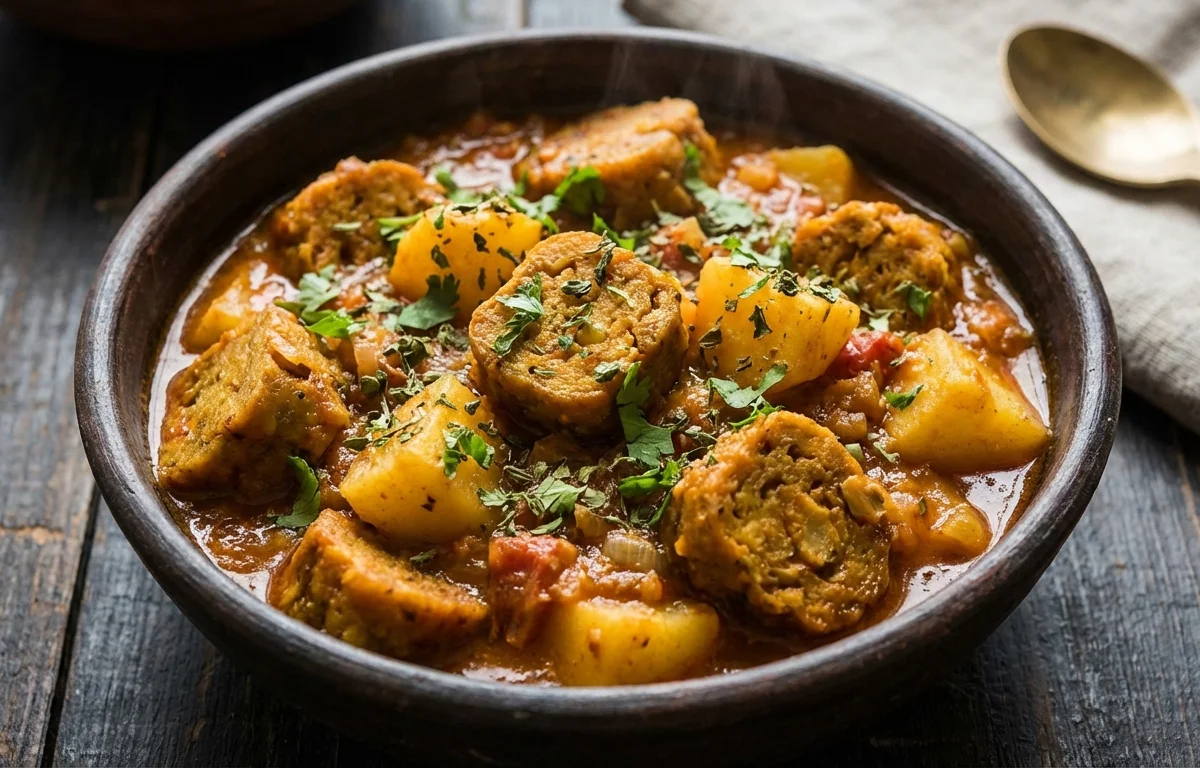
Aloo Wadi Sabzi
A hearty Punjabi curry featuring crispy fried lentil dumplings (wadi) and tender potatoes simmered in a spicy tomato-onion gravy. A rustic and flavorful dish that's perfect with roti or rice.
For 4 servings
Preparation
- If the wadis are large, break them into smaller, 1-inch pieces.
- Peel the potatoes, cut them into 1-inch cubes, and keep them submerged in water to prevent browning.
- Finely chop the onions and puree the tomatoes. Slit the green chilies.
Fry the Wadis
- Heat oil in a 3-liter pressure cooker over medium heat.
- Add the broken wadi pieces and shallow-fry for 2-3 minutes, stirring constantly, until they turn golden brown and aromatic.
- Using a slotted spoon, remove the fried wadis and set them aside.
Sauté the Aromatics
- In the same hot oil, add the cumin seeds and let them splutter for about 30 seconds.
- Add the finely chopped onions and sauté for 6-8 minutes until they are soft and golden brown.
- Add the ginger-garlic paste and slit green chilies. Cook for another minute until the raw aroma disappears.
Build the Gravy
- Pour in the tomato puree. Cook for 5-7 minutes, stirring occasionally, until the mixture thickens and you see oil separating at the edges of the masala.
- Add the turmeric powder, red chili powder, coriander powder, and salt. Mix well and cook for 1 minute until the spices are fragrant.
Pressure Cook the Curry
- Add the cubed potatoes and the fried wadis to the cooker. Stir gently for 1-2 minutes to coat them thoroughly with the masala.
- Pour in 2.5 cups of hot water and give it a good stir.
- Secure the lid of the pressure cooker. Cook on high heat for 2 whistles (or about 8-10 minutes).
- Turn off the heat and allow the pressure to release naturally. This prevents the wadis from breaking apart.
Finish and Garnish
- Once the pressure has fully released, open the lid. Gently mash a few potato cubes against the side of the cooker with your spoon to naturally thicken the gravy.
- Stir in the garam masala and crushed kasuri methi. Simmer for 2-3 minutes on low heat without the lid to allow the flavors to meld.
- Garnish with freshly chopped coriander leaves. Serve hot with roti, naan, or steamed rice.
What to keep in mind.
5 tips from the recipe — small details that make a real difference to the final dish.
- 1Frying the wadis is a crucial step. It enhances their flavor and prevents them from becoming mushy in the gravy.
- 2Always use hot water when making the gravy. It helps maintain the cooking temperature and improves the final texture.
- 3Wadis absorb a lot of liquid, so the gravy might seem thin at first but will thicken as it cools. Adjust water accordingly.
- 4Letting the pressure release naturally is key to keeping the wadis intact.
- 5For a richer, creamier gravy, you can add 2 tablespoons of cashew paste or fresh cream along with the water before pressure cooking.
Adapt it for your goals.
Creamier Version
Add 2 tablespoons of full-fat yogurt (whisked) or fresh cream at the end of cooking. Simmer for a minute but do not boil vigorously.
With Other VegetablesWith Other Vegetables
Add 1/2 cup of green peas or diced carrots along with the potatoes for extra nutrition and texture.
No Onion No GarlicNo Onion No Garlic
For a satvik version, skip the onions and ginger-garlic paste. Increase the amount of tomato puree and add a pinch of asafoetida (hing) with the cumin seeds.
Instant Pot MethodInstant Pot Method
Use the 'Sauté' mode for steps 2-4. Then add potatoes, wadis, and water. Secure the lid, set the valve to 'Sealing', and pressure cook on 'High' for 5 minutes. Allow a 10-minute natural pressure release before quick releasing the rest.
Why this is on our healthy list.
Good Source of Plant-Based Protein
The lentil-based wadis are an excellent source of protein, which is essential for muscle repair, growth, and overall body function, making it a great option for vegetarians.
Provides Sustained Energy
Potatoes are rich in complex carbohydrates, which provide a steady release of energy, keeping you full and energized for longer periods.
Rich in Dietary Fiber
Both lentils in the wadis and potatoes contribute to the high fiber content, which aids digestion, promotes gut health, and helps regulate blood sugar levels.
Contains Beneficial Spices
Spices like turmeric, cumin, and ginger have anti-inflammatory and antioxidant properties that can help boost immunity and improve digestion.
Frequently asked questions
One serving of Aloo Wadi Sabzi (approximately 1 cup or 345g) contains around 320-350 calories, depending on the amount of oil used and the size of the wadis.