
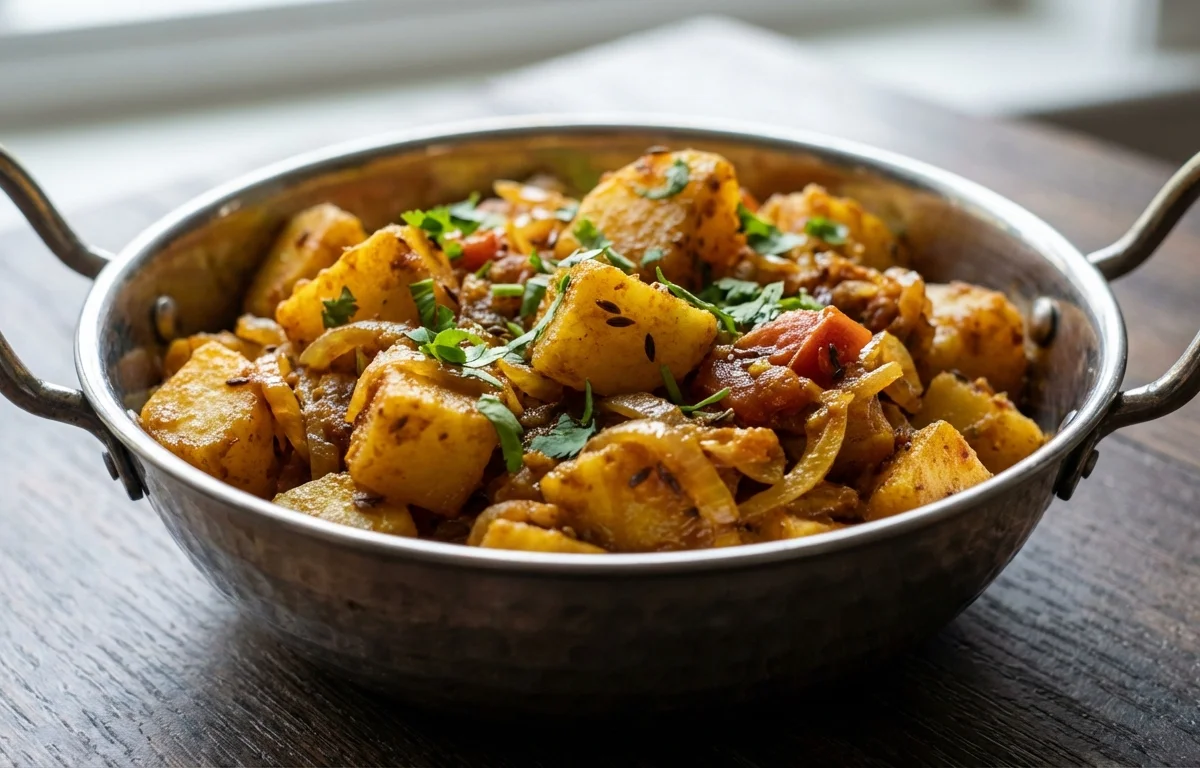
Aloo Pyaaz ki Sabzi
A rustic and comforting North Indian stir-fry featuring tender potatoes and sweet, caramelized onions in a blend of everyday spices. This simple, one-pan dish comes together quickly and is perfect for a weeknight meal with hot rotis or parathas.
For 4 servings
9 steps. 25 minutes total.
- 1
Heat oil in a heavy-bottomed pan or kadai over medium heat
- a.Add the cumin seeds and let them splutter. Immediately add the asafoetida (hing) and sauté for a few seconds until fragrant.
- 2
Add the sliced onions and sauté on medium-low heat, stirring frequently
- a.Cook for 8-10 minutes until they are deeply golden brown and caramelized. This step is crucial for developing the sweet, rich flavor of the dish.
- 3
Add the ginger-garlic paste and slit green chilies
- a.Sauté for 1 minute until the raw aroma disappears.
- 4
Stir in the chopped tomatoes
- a.Cook for 4-5 minutes until they break down, become soft, and are well-integrated into the onion base.
- 5
Step 5
- a.Add the dry spice powders: turmeric powder, red chili powder, coriander powder, and salt. Mix well and cook the masala for 1-2 minutes, stirring continuously, until you see oil separating from the mixture.
- 6
Step 6
- a.Add the cubed potatoes and mix gently for a minute to ensure they are thoroughly coated with the spice masala.
- 7
Pour in 1/4 cup of hot water, stir, and bring the mixture to a gentle simmer
- a.Cover the pan with a tight-fitting lid, reduce the heat to low, and cook for 12-15 minutes. Stir once or twice in between to prevent sticking. The potatoes are done when they are tender and can be easily pierced with a fork.
- 8
Once the potatoes are cooked, remove the lid
- a.Sprinkle the garam masala and amchur powder over the sabzi. Gently mix and cook for another 2 minutes on low heat, allowing the final flavors to meld.
- 9
Turn off the heat and garnish with freshly chopped coriander leaves
- a.Let the sabzi rest for 5 minutes before serving hot with roti, paratha, or as a side dish with dal and rice.
What to keep in mind.
5 tips from the recipe — small details that make a real difference to the final dish.
- 1For a deeper flavor, let the onions caramelize slowly on low heat until they are a rich brown color.
- 2Ensure the potatoes are cut into uniform-sized cubes for even cooking.
- 3Always use hot water when adding it to the sabzi; this helps maintain the cooking temperature and prevents the potatoes from becoming hard.
- 4If you don't have amchur (dry mango powder), you can squeeze in a teaspoon of lemon juice at the end for a similar tangy taste.
- 5This sabzi tastes even better the next day, making it great for meal prep. Store in an airtight container in the refrigerator for up to 3 days.
Adapt it for your goals.
With Peas
Add 1/2 cup of green peas (fresh or frozen) along with the potatoes for added sweetness and texture.
No Tomato VersionNo Tomato Version
For a more traditional 'sukhi' (dry) version, you can omit the tomatoes. The flavor will be more focused on the caramelized onions and spices.
With Kasuri MethiWith Kasuri Methi
Crush 1 tablespoon of dried fenugreek leaves (kasuri methi) between your palms and add it along with the garam masala for a unique, earthy aroma.
Spicier VersionSpicier Version
Increase the amount of green chilies and red chili powder, or add a pinch of black pepper powder at the end for extra heat.
Why this is on our healthy list.
Rich in Potassium
Potatoes are an excellent source of potassium, an essential mineral that helps regulate blood pressure, fluid balance, and nerve signals.
Source of Antioxidants
Onions contain quercetin, a powerful antioxidant that helps fight inflammation and may reduce the risk of chronic diseases. Spices like turmeric add further antioxidant benefits.
Good for Digestion
The fiber from potatoes and onions supports a healthy digestive system. The addition of spices like cumin and asafoetida (hing) are traditionally known to aid digestion and reduce bloating.
Frequently asked questions
One serving (approximately 250g) contains around 250-300 calories, primarily from the potatoes and oil. The exact count can vary based on the amount of oil used and the size of the vegetables.