
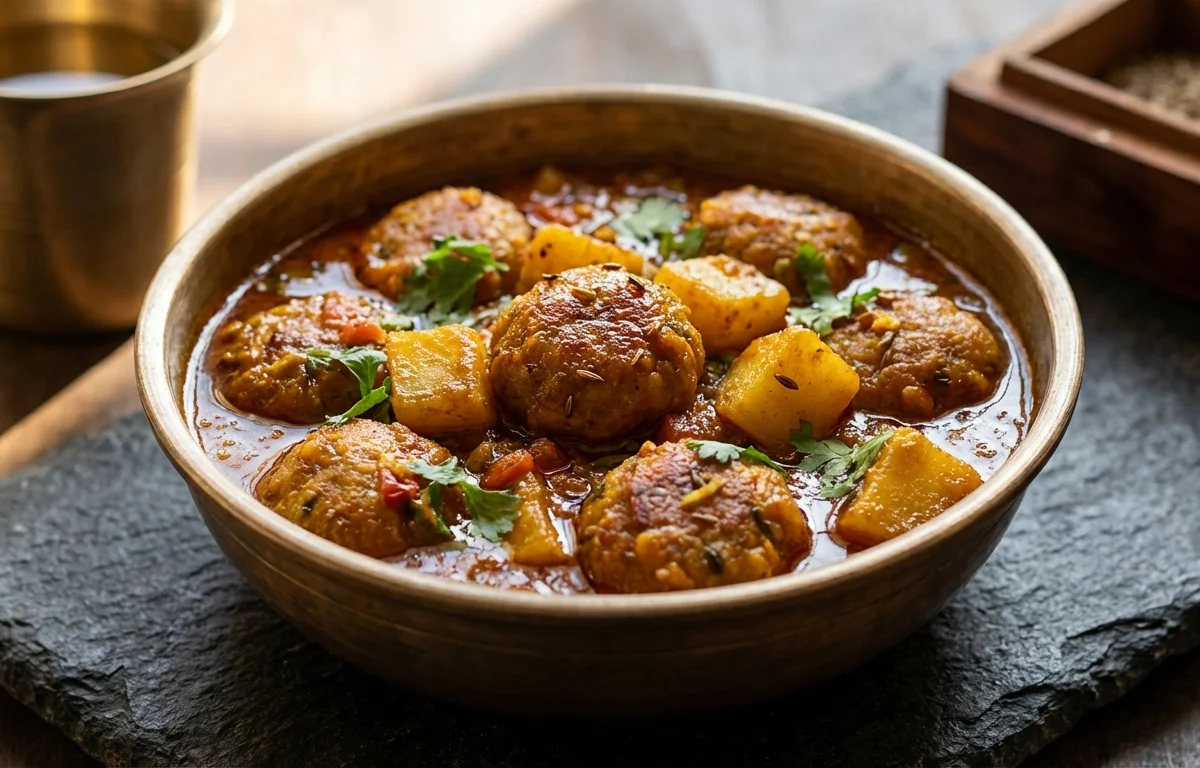
Aloo Mangodi Sabzi
A classic Rajasthani curry featuring sun-dried lentil dumplings (mangodi) and potatoes simmered in a tangy tomato-based gravy. It's a rustic, flavorful, and protein-rich dish perfect with rotis.
For 4 servings
4 steps. 25 minutes total.
- 1
Step 1
- a.Fry the Mangodi
- b.Heat 2 tablespoons of oil in a pressure cooker over medium heat.
- c.Add the mangodi and sauté for 3-4 minutes, stirring continuously, until they turn golden brown and release a nutty aroma.
- d.Using a slotted spoon, remove the fried mangodi and set them aside on a plate.
- 2
Step 2
- a.Prepare the Curry Base (Masala)
- b.In the same pressure cooker, add the remaining 1 tablespoon of oil.
- c.Once the oil is hot, add the cumin seeds. When they begin to splutter, add the asafoetida.
- d.Immediately add the finely chopped onions and sauté for 4-5 minutes until they become soft and translucent.
- e.Stir in the ginger-garlic paste and slit green chilies. Cook for 1 minute until the raw aroma disappears.
- f.Add the tomato puree along with turmeric powder, Kashmiri red chili powder, coriander powder, and salt. Mix well.
- g.Cook the masala for 6-7 minutes, stirring occasionally, until it thickens and you see oil separating from the sides.
- 3
Step 3
- a.Pressure Cook the Sabzi
- b.Add the cubed potatoes and the fried mangodi to the cooked masala. Gently stir for 1 minute to coat everything well.
- c.Pour in 2.5 cups of hot water and give the curry a final stir.
- d.Secure the lid of the pressure cooker. Cook on medium-high heat for 3 whistles (approximately 10-12 minutes).
- e.Turn off the heat and let the pressure release naturally. This prevents the mangodi from breaking apart.
- 4
Step 4
- a.Garnish and Serve
- b.Once the pressure has settled, carefully open the lid.
- c.Gently mash a few potato cubes against the side of the cooker with the back of a spoon to naturally thicken the gravy.
- d.Sprinkle the garam masala and fresh chopped coriander leaves over the curry. Stir gently to combine.
- e.Let the sabzi rest for 5 minutes before serving to allow the flavors to meld.
- f.Serve hot with chapati, bajra roti, or steamed rice.
What to keep in mind.
5 tips from the recipe — small details that make a real difference to the final dish.
- 1Roasting the mangodi is a crucial step. It prevents them from becoming mushy and deepens their flavor.
- 2Using hot water for the gravy helps maintain the cooking temperature and results in a better texture.
- 3Do not force open the pressure cooker; letting the pressure release naturally ensures the mangodi are cooked perfectly without disintegrating.
- 4If the gravy seems too thin after cooking, simmer the curry without the lid for 3-5 minutes until it reaches your desired consistency.
- 5This curry tastes even better the next day as the mangodi fully absorb the flavors of the gravy.
Adapt it for your goals.
Creamier Gravy
For a richer, creamier gravy, whisk 2 tablespoons of plain yogurt (curd) and add it to the masala after the tomatoes have cooked down. Cook for another 2-3 minutes before adding potatoes and mangodi.
With Other VegetablesWith Other Vegetables
You can add 1/2 cup of green peas or diced carrots along with the potatoes for added nutrition and texture.
No Onion No Garlic VersionNo Onion No Garlic Version
To make a Satvik version, skip the onions and ginger-garlic paste. Increase the amount of tomato puree slightly and add a pinch of dried fenugreek leaves (kasuri methi) at the end for extra flavor.
Why this is on our healthy list.
Excellent Source of Plant-Based Protein
The moong dal mangodi are packed with protein, making this dish a great option for vegetarians and vegans to meet their daily protein needs, which is essential for muscle repair and growth.
Provides Sustained Energy
Potatoes are a rich source of complex carbohydrates, which provide a steady release of energy, keeping you full and energized for longer periods.
Aids in Digestion
The use of traditional Indian spices like cumin, asafoetida (hing), and ginger helps stimulate digestive enzymes, preventing bloating and improving overall gut health.
Rich in Dietary Fiber
Both lentils (in mangodi) and potatoes contribute to the high fiber content of this dish, which aids in digestion, promotes satiety, and helps regulate blood sugar levels.
Frequently asked questions
Mangodi, also known as 'badi' or 'vadi', are sun-dried dumplings made from ground moong dal (split yellow lentils). They are a staple in Rajasthani and North Indian cuisine, used to add protein and texture to curries.