
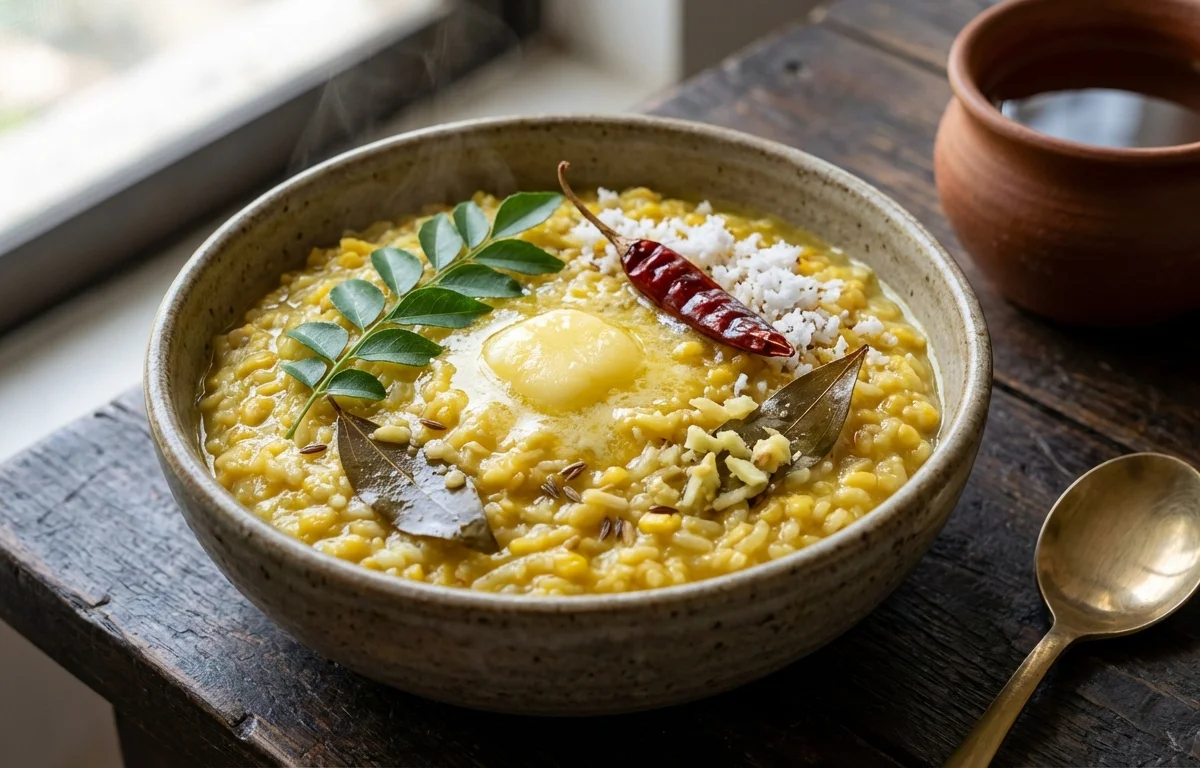
Ada Henga Khechedi
A fragrant and comforting one-pot meal from Odisha, this simple khichdi gets its unique flavor from generous amounts of ginger and asafoetida. Traditionally offered as temple prasad, it's a soulful dish perfect for any day.
For 4 servings
6 steps. 20 minutes total.
- 1
Prepare the Rice and Dal: In a bowl, combine the Gobindobhog rice and moong dal
- a.Rinse them together under cold running water 3-4 times, until the water runs clear. Drain all the water completely and set aside. Soaking is not required for this recipe.
- 2
Step 2
- a.Temper Spices and Sauté Aromatics: Place a 3-liter or larger pressure cooker on medium heat. Add the ghee and let it melt and heat up. Add the bay leaves and cumin seeds. Allow the cumin seeds to sizzle and become fragrant, which should take about 30-40 seconds.
- 3
Step 3
- a.Roast the Grains: Lower the heat, then add the asafoetida, followed immediately by the grated ginger. Sauté for 30 seconds until the raw smell of ginger dissipates. Add the drained rice and dal mixture to the cooker. Stir gently and roast for 2-3 minutes until the grains are lightly toasted and you can smell a nutty aroma.
- 4
Step 4
- a.Pressure Cook the Khechedi: Add the turmeric powder, salt, and sugar to the cooker. Mix everything well for about 20 seconds. Pour in 4 cups of water and give it a final stir to combine. Secure the lid of the pressure cooker.
- 5
Step 5
- a.Cook and Rest: Cook on medium-high heat for 3 to 4 whistles (approximately 10-12 minutes). After the last whistle, turn off the heat and let the pressure release naturally. This step is crucial for perfectly cooked, soft grains.
- 6
Step 6
- a.Garnish and Serve: Once the pressure has fully subsided, carefully open the cooker. The khechedi will be soft. Gently fluff it with a spoon or fork. Garnish with fresh grated coconut and an extra drizzle of ghee. Serve hot.
What to keep in mind.
5 tips from the recipe — small details that make a real difference to the final dish.
- 1For the most authentic flavor, use Gobindobhog rice. Its unique aroma is key to the dish.
- 2Roasting the dal and rice in ghee is a crucial step that enhances the nutty aroma and overall taste. Do not skip it.
- 3The consistency is personal. Use the recommended 4 cups of water for a traditional semi-dry texture. For a more porridge-like consistency, use up to 5 cups.
- 4Use a good quality, pungent asafoetida (hengu) as it is the star ingredient that gives this dish its unique name and flavor.
- 5Always let the pressure release naturally from the cooker. This allows the steam to finish cooking the grains to a soft, perfect texture.
Adapt it for your goals.
Add Vegetables
For a more wholesome meal, add 1 cup of mixed vegetables like diced potatoes, carrots, and green peas along with the rice and dal.
Spicier VersionSpicier Version
Add 1-2 slit green chilies along with the ginger for a mild heat. You can also add a pinch of black pepper at the end.
Different DalDifferent Dal
While moong dal is traditional, you can make this with a mix of moong dal and toor dal (split pigeon peas) for a slightly different texture and flavor.
Why this is on our healthy list.
Excellent for Digestion
This dish is renowned for being easy on the digestive system. Moong dal is one of the most easily digestible lentils, while ginger (Ada) and asafoetida (Hengu) are powerful carminatives that help prevent gas, bloating, and indigestion.
Balanced Nutrition
The combination of rice (carbohydrates) and dal (protein) provides a complete amino acid profile, making it a balanced vegetarian meal. It offers sustained energy release, keeping you full and energized for longer.
Comforting and Sattvic
In Ayurveda, Khechedi is considered a 'Sattvic' food, meaning it is pure, calming, and nourishing for the body and mind. Its warm, soft texture and mild spices make it a perfect comfort food, especially when feeling unwell or seeking a light meal.
Frequently asked questions
Ada Henga Khechedi is a traditional one-pot rice and lentil dish from Odisha, India. Its name comes from its two star ingredients: 'Ada' (ginger) and 'Hengu' (asafoetida). It is a simple, aromatic, and comforting meal often served as 'prasad' (a religious offering) in temples.