
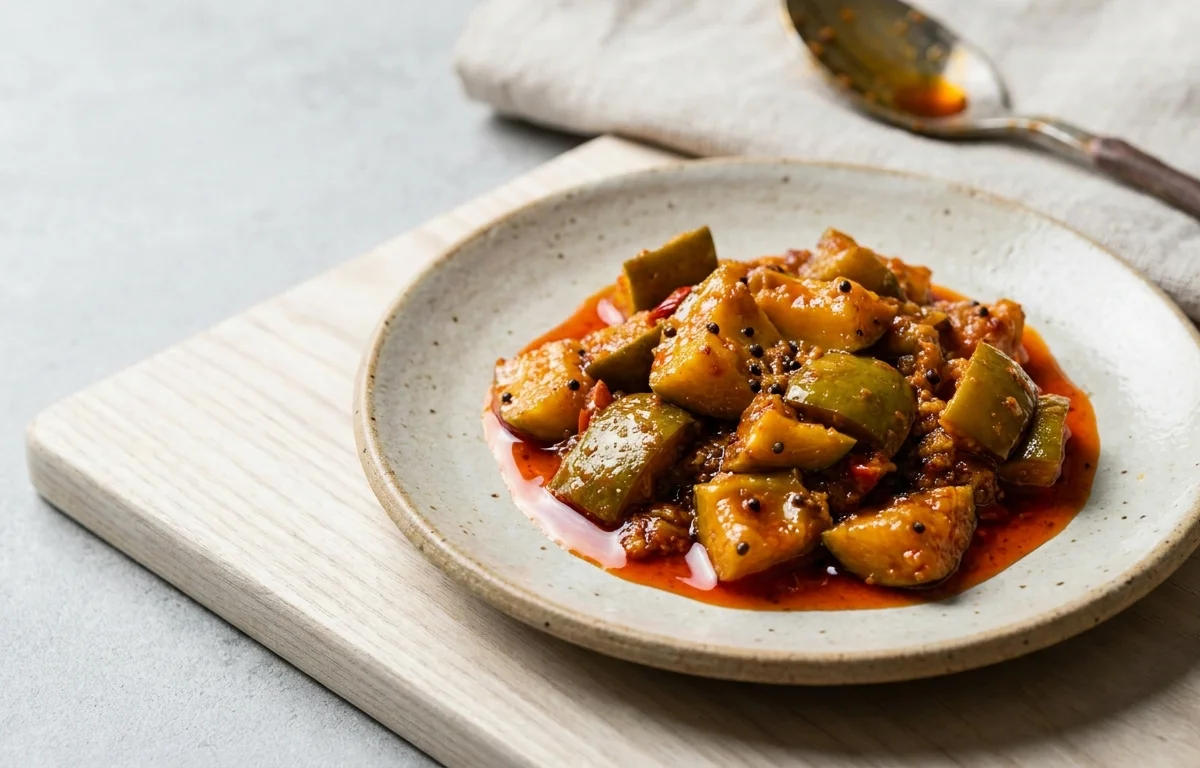
Aavakai
A classic Andhra-style raw mango pickle. Tangy, spicy, and pungent, this aavakai is made with a bold blend of mustard powder, red chili, and sesame oil, perfect for pairing with curd rice or dal.
For 48 servings
Prepare the mangoes.
Wash the raw mangoes thoroughly and pat them completely dry with a clean cloth. There should be no moisture. Cut them into 1-inch cubes, retaining the hard inner shell of the seed.
TIPEnsuring everything is bone-dry is the most critical step to prevent the pickle from spoiling.Mix the dry spices.
In a large, dry mixing bowl, combine the mustard powder, red chili powder, salt, fenugreek seeds, and turmeric powder. Mix well to ensure an even blend.
Coat the mangoes and garlic.
Add the dried mango cubes and peeled garlic cloves to the spice mixture. Use a dry spoon or clean, dry hands to toss everything together until each piece of mango is thoroughly coated with the spices.
Prepare the tempered oil.
Heat the sesame oil in a small pan over medium heat until it is hot but not smoking. Turn off the flame, add the asafoetida, and give it a quick stir. Allow this oil to cool down completely to room temperature.
Combine oil with the mango mixture.
Once the oil has cooled completely, pour it over the spice-coated mangoes. Mix everything thoroughly with a dry spoon until well combined.
Jar and ferment the pickle.
- Carefully transfer the pickle mixture into a clean, dry, airtight glass or ceramic jar (known as a 'jaadi').
- Press the mixture down lightly.
- Cover the jar with a lid and set it aside in a cool, dark place for 3 to 5 days.
- Gently shake or stir the jar with a dry spoon once every day to mix the contents.
TIPThe mangoes will release their juices and the spices will meld together during this time, creating the characteristic thick gravy.Serve and enjoy.
After 3-5 days, the pickle is ready to be served. The mango pieces will have softened slightly and the oil will float to the top. Serve as a condiment with curd rice, dal rice, or idli.
What to keep in mind.
4 tips from the recipe — small details that make a real difference to the final dish.
- 1Use firm, sour, and fibrous raw mangoes specifically meant for pickling for the best texture.
- 2Always use a clean, dry spoon to serve the pickle to prevent contamination and spoilage.
- 3The salt and oil act as natural preservatives. Ensure the top layer of the pickle is always submerged in oil for a longer shelf life.
- 4Freshly grinding mustard seeds will give a much more pungent and authentic flavor compared to store-bought powder.
Adapt it for your goals.
Healthy
To reduce sodium, you can slightly decrease the amount of salt, but this may affect the shelf life. Consume it sooner if you do.
quickQuick
For a faster pickle, sun-dry the mango pieces for a few hours after cutting them to draw out excess moisture before mixing with spices.
kid friendlyKid friendly
For a much milder version, use Kashmiri red chili powder which gives color without intense heat, and reduce the quantity by half.
Why this is on our healthy list.
Source of Vitamin C
Raw mangoes are an excellent source of Vitamin C, an antioxidant that helps boost the immune system.
Contains Healthy Fats
Sesame oil provides monounsaturated and polyunsaturated fats, which are beneficial for heart health when consumed in moderation.
Aids Digestion
The spices used, like asafoetida and fenugreek, are traditionally known to help with digestion and reduce bloating.
Frequently asked questions
One tablespoon of Aavakai contains approximately 30 calories. The majority of the calories come from the sesame oil used in its preparation.