
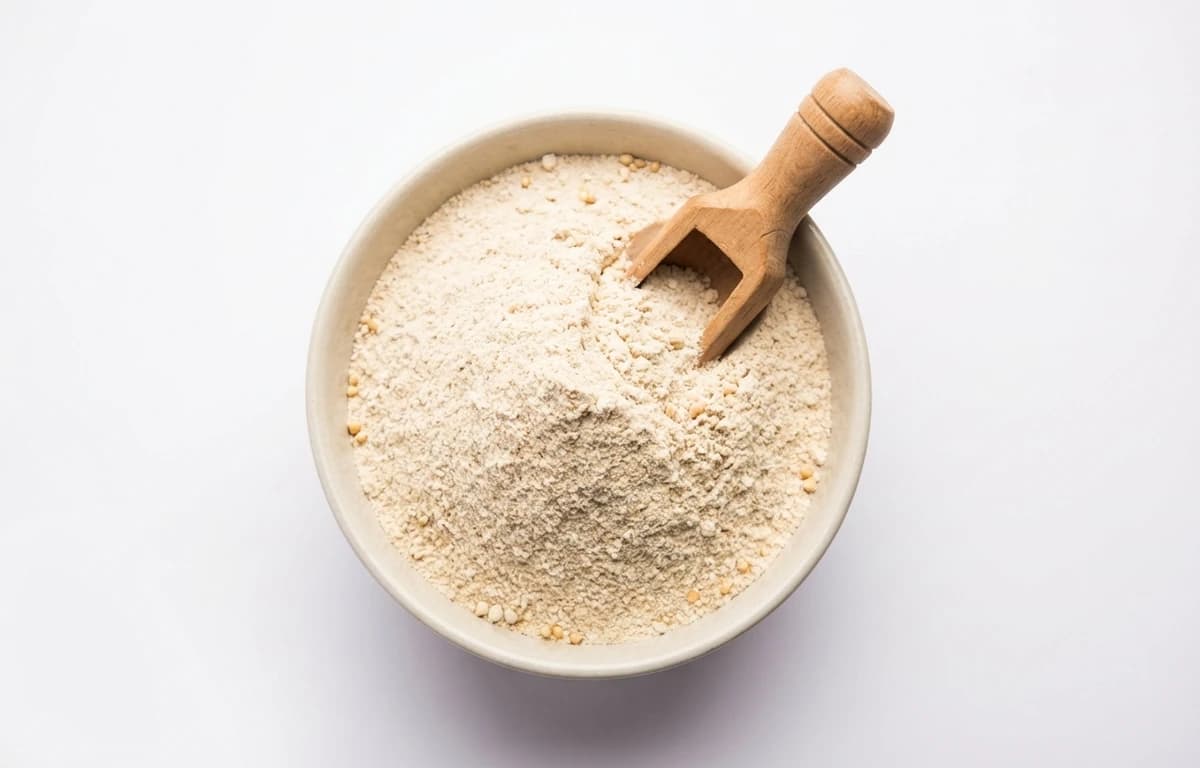
Rajgira Atta
Also known as: Amaranth Flour, Ramdana Atta, Rajgira Flour, Amaranthus Flour, Cholai Flour, Chua Flour
Loading...
Also known as: Amaranth Flour, Ramdana Atta, Rajgira Flour, Amaranthus Flour, Cholai Flour, Chua Flour
Per 100g
Nutrition data source: USDA FoodData Central
Common measurement equivalents in grams
Yes, Rajgira Atta (Amaranth flour) is naturally gluten-free and safe for those with gluten intolerance.
It is considered a 'pseudo-grain' or seed, not a cereal grain, making it permissible for consumption during religious fasts like Navratri.
It typically lasts 3 months at room temperature in an airtight container, or up to 6 months if refrigerated.
Buckwheat flour (Kuttu ka atta) or Water Chestnut flour (Singhare ka atta) are the best substitutes, especially during fasting.
Look for a pale ivory to light brown color and ensure it has a fresh, nutty aroma. Avoid flour that smells musty or bitter.
Yes, but because it lacks gluten, the dough is fragile. Adding mashed potatoes or warm water helps in binding the dough.
Yes, its high fiber and protein content help you feel full for longer, which can assist in weight management.
Common dishes include Rajgira Paratha, Puri, Halwa, and Kadhi (thickened with the flour).
Yes, Rajgira generally contains about 14-15% protein, which is higher than the 10-12% typically found in wheat.
Rajgira Atta is a versatile ingredient found in cuisines around the world. With 374 calories per 100g and 14.5 grams of protein, it's a nutritious addition to many dishes.
Explore more ingredients in the grain category with complete nutrition information.
View all grain →Discover 1 recipes featuring rajgira atta with step-by-step instructions.
Browse recipes →