Oil10 recipes
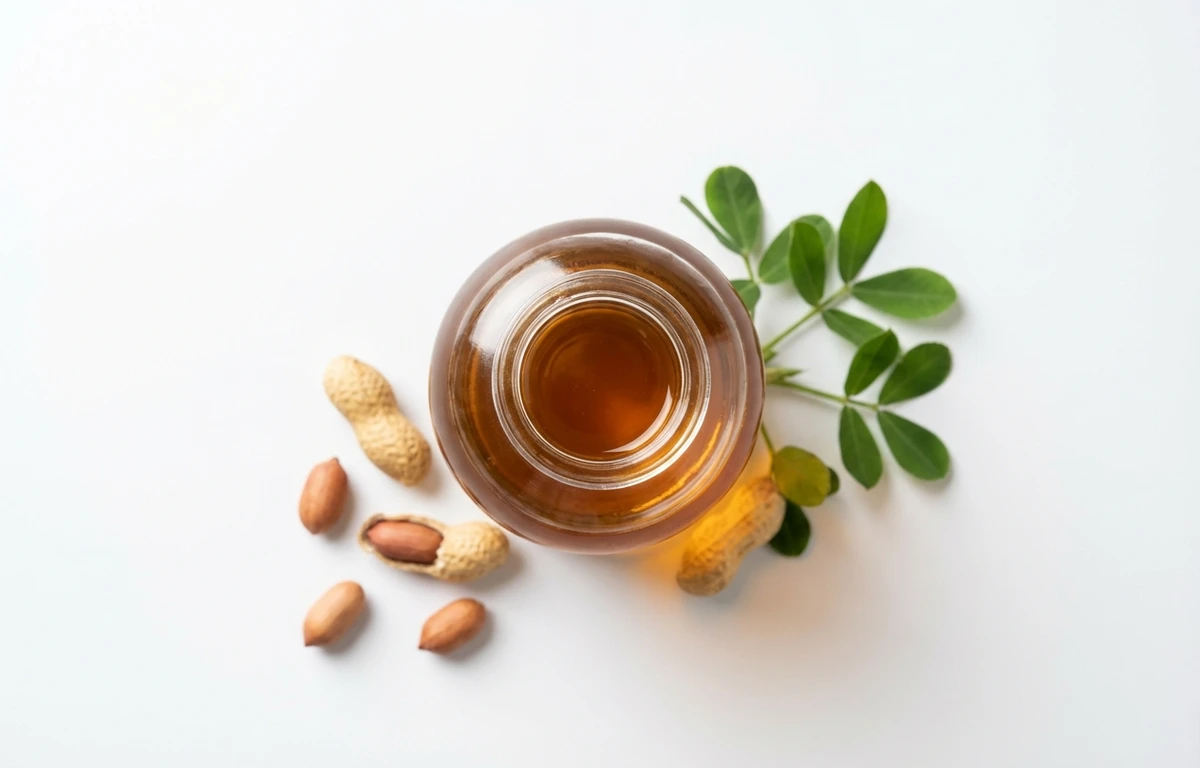
peanut oil.
VegetarianVeganGluten-freeDairy-freeNut-freePeanut-freeSoy-freeEgg-freeShellfish-freeHoney-freeAlcohol-free
ALSO KNOWN AS
groundnut oilarachis oilमूंगफली का तेलpeanut oil
SERVING
CALORIES
884
PROTEIN
0g
CARBS
0g
FAT
100g
FIBER
0g
NUTRITION PROFILE · per 100 g
Everything in this ingredient.
MACRONUTRIENTS
Calories884kcal—
Protein0g0%
Carbohydrates0g0%
Fiber0g0%
Sugar0g0%
Total fat100g128%
Saturated fat16.9g85%
Trans fat0.17g—
Cholesterol0mg0%
Water0g—
MINERALS
Sodium0mg0%
Potassium0mg0%
Calcium0mg0%
Iron0mg0%
VITAMINS
Vitamin A0µg0%
Vitamin C0mg0%
Vitamin D0µg0%
Vitamin E15.2mg102%
Vitamin K4.3µg4%
%DV based on a 2,000 cal diet. Source: USDA FoodData Central. A dash in the %DV column means there’s no established Daily Value for that nutrient.
MEASUREMENT CONVERSIONS
How much is what.
1 cup215g
1 tablespoon13.5g
1 teaspoon4.5g
1 ml0.9g
1 liter900g
HEALTH BENEFITS
Why eat it.
- ✓Rich in monounsaturated fats, particularly oleic acid, which helps lower bad (LDL) cholesterol and raise good (HDL) cholesterol, supporting heart health.
- ✓A good source of Vitamin E, a fat-soluble antioxidant that helps protect the body's cells from damage by free radicals.
- ✓Contains phytosterols, plant compounds that can help reduce cholesterol absorption from the diet.
- ✓The high smoke point of refined peanut oil makes it stable for high-temperature cooking, reducing the formation of harmful compounds.
COOKING TIPS
In the kitchen.
- 1Use refined peanut oil for high-heat cooking methods like deep-frying, stir-frying, and searing due to its high smoke point (around 450°F or 232°C).
- 2Choose unrefined or roasted peanut oil for its strong, nutty flavor in dressings, marinades, or as a finishing oil, but avoid using it for high-heat cooking.
- 3The neutral flavor of refined peanut oil makes it a versatile all-purpose cooking oil that won't overpower the taste of your ingredients.
- 4It is a traditional and popular choice for many Asian cuisines, lending an authentic flavor to dishes.
STORAGE
Keep it fresh.
- Store in a cool, dark place like a pantry, away from direct sunlight and heat sources, to prevent it from becoming rancid.
- Keep the bottle tightly sealed after each use to minimize exposure to oxygen, which can degrade the oil's quality.
- For extended shelf life, it can be refrigerated, though it may become cloudy and solidify. This is normal and will reverse at room temperature.
FAQ
Frequently asked questions.
Is peanut oil healthy?
Peanut oil is primarily composed of fats, with 100g containing 100g of fat and 884 calories. It is rich in monounsaturated fats, particularly oleic acid, which can support heart health by improving cholesterol levels. It also provides Vitamin E, an antioxidant.
What are the nutritional benefits of peanut oil?
Peanut oil is a good source of monounsaturated fats, which are known to help lower 'bad' LDL cholesterol and raise 'good' HDL cholesterol. It also contains Vitamin E, a powerful antioxidant that protects cells from damage, and phytosterols, which can help reduce dietary cholesterol absorption.
How many calories and how much fat are in peanut oil?
Per 100 grams, peanut oil contains approximately 884 calories and 100 grams of fat. It has no protein or carbohydrates. As with all oils, it is a concentrated source of energy.
Is peanut oil safe for people with peanut allergies?
Highly refined peanut oil is generally considered safe for most individuals with peanut allergies because the refining process removes the allergenic proteins. However, unrefined or cold-pressed peanut oil still contains these proteins and should be strictly avoided by those with allergies. Always check labels and consult with a doctor if unsure.
Is peanut oil vegan or gluten-free?
Yes, peanut oil is both vegan and gluten-free. It is derived solely from peanuts, a plant source, and contains no animal products or gluten-containing grains.
What is peanut oil best used for in cooking?
Peanut oil, especially refined varieties, is excellent for high-heat cooking methods like deep-frying, stir-frying, and sautéing due to its high smoke point. Its neutral flavor also makes it versatile for various cuisines without overpowering other ingredients.
What does peanut oil taste like?
Refined peanut oil has a very mild, neutral flavor, making it suitable for dishes where you don't want the oil to impart a strong taste. Unrefined or cold-pressed peanut oil, however, has a more distinct, nutty, and slightly sweet peanut flavor, which is often preferred for dressings or finishing dishes.
How should I store peanut oil?
Peanut oil should be stored in a cool, dark place away from direct sunlight and heat, such as a pantry or cupboard. Proper storage helps prevent rancidity and preserves its quality and shelf life. Ensure the cap is tightly sealed after each use.
What is the smoke point of peanut oil?
Refined peanut oil has a high smoke point, typically around 450°F (232°C), making it ideal for high-temperature cooking. Unrefined peanut oil has a lower smoke point, usually around 320°F (160°C), and is better suited for lower-heat applications or dressings.
Can peanut oil be reused after frying?
Yes, peanut oil can often be reused after frying, provided it hasn't been overheated, discolored, or developed an off-odor. Strain the oil through a fine-mesh sieve or cheesecloth to remove food particles, then store it in a sealed container in a cool, dark place. It's generally recommended to reuse it only a few times.
RECIPES
Cook with peanut oil.
10 recipes · sorted by what’s quick