Dairy2 recipes
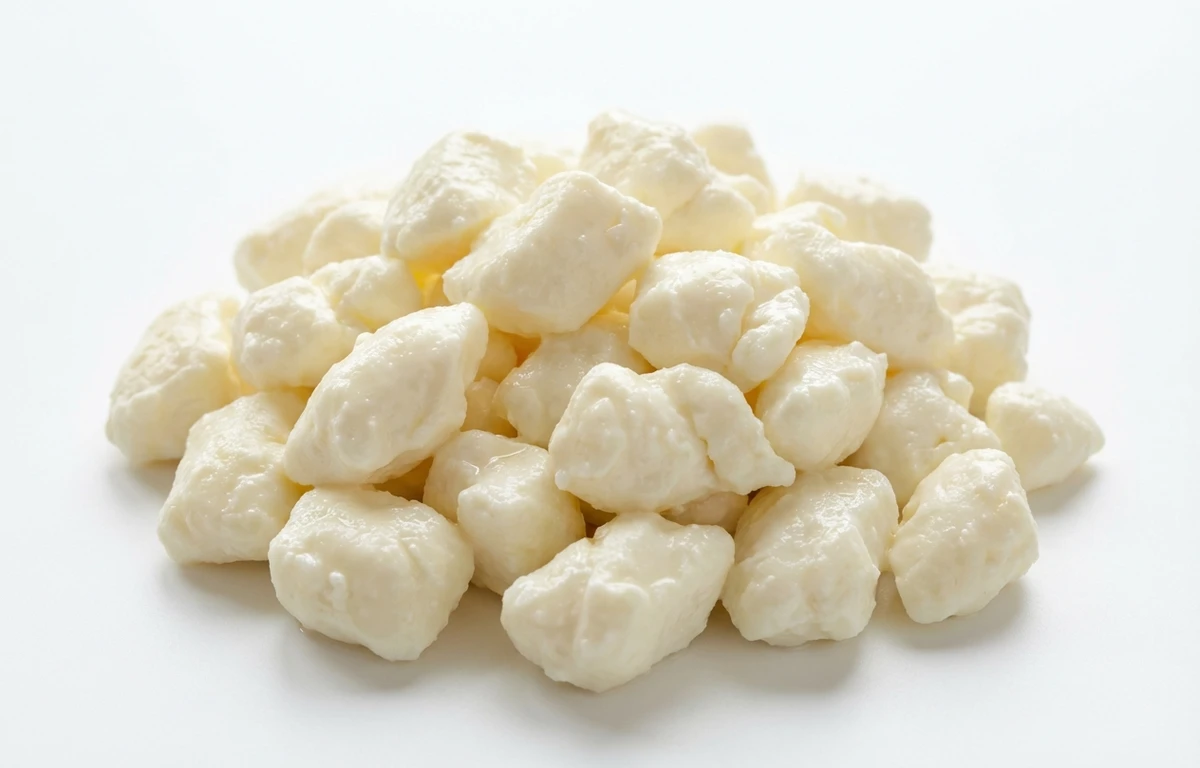
cheese curds.
VegetarianVeganGluten-freeDairy-freeNut-freePeanut-freeSoy-freeEgg-freeShellfish-freeHoney-freeAlcohol-freeFermented
ALSO KNOWN AS
squeaky cheese
SERVING
CALORIES
390
PROTEIN
23.5g
CARBS
2.5g
FAT
31.5g
FIBER
0g
NUTRITION PROFILE · per 100 g
Everything in this ingredient.
MACRONUTRIENTS
Calories390kcal—
Protein23.5g47%
Carbohydrates2.5g1%
Fiber0g0%
Sugar0.50g1%
Total fat31.5g40%
Saturated fat19.5g98%
Trans fat0g—
Cholesterol95mg32%
Water40.5g—
MINERALS
Sodium650mg28%
Potassium75mg2%
Calcium720mg55%
Iron0.25mg1%
Magnesium28mg7%
Phosphorus510mg41%
Zinc3.5mg32%
VITAMINS
Vitamin A280µg31%
Vitamin C0mg0%
Vitamin D0.70µg3%
Vitamin K1.0µg1%
Thiamin (B1)2.0mg167%
Riboflavin (B2)0.40mg31%
Niacin (B3)0.07mg0%
Vitamin B60.07mg4%
%DV based on a 2,000 cal diet. Source: USDA FoodData Central. A dash in the %DV column means there’s no established Daily Value for that nutrient.
MEASUREMENT CONVERSIONS
How much is what.
1 cup210g
1 tablespoon13.1g
1 teaspoon4.4g
1 oz28.4g
1 lb453.6g
1 ml0.9g
1 liter875g
HEALTH BENEFITS
Why eat it.
- ✓Excellent source of calcium, crucial for bone and tooth health.
- ✓High in complete protein, which is essential for muscle repair, growth, and overall body function.
- ✓Provides a significant amount of phosphorus, which works with calcium to build strong bones.
- ✓Contains Vitamin B12, important for nerve function and the formation of red blood cells.
COOKING TIPS
In the kitchen.
- 1The essential ingredient for authentic poutine; top hot french fries with curds and cover with hot gravy to slightly melt them.
- 2For fried cheese curds, coat cold curds in a seasoned flour or beer batter and deep-fry at 375°F (190°C) for 1-2 minutes until golden brown.
- 3Allow curds to come to room temperature for about 20-30 minutes before serving plain to restore their characteristic squeak.
- 4Crumble or chop and add to salads, omelets, or casseroles for a salty, cheesy flavor boost.
STORAGE
Keep it fresh.
- For the best 'squeak' and flavor, store at room temperature and consume within 24 hours of production.
- If not consumed immediately, refrigerate in a loosely sealed bag or container for up to a week, but they will lose their squeakiness.
- To freeze, place curds in a single layer on a baking sheet, freeze solid, then transfer to an airtight freezer bag for up to 4 months. Thaw in the refrigerator; texture will be altered.
FAQ
Frequently asked questions.
Are cheese curds healthy?
Cheese curds are a nutrient-dense source of calcium, phosphorus, and Vitamin B12, which support bone health and nerve function. However, they are high in saturated fat and calories (390 kcal per 100g), so they should be enjoyed in moderation as part of a balanced diet.
How much protein is in cheese curds?
Cheese curds are an excellent source of complete protein, providing approximately 23.5g per 100g serving. This high protein content is essential for muscle repair, growth, and maintaining overall body function.
Are cheese curds keto-friendly?
Yes, cheese curds are very keto-friendly. With only 2.5g of carbohydrates and 31.5g of fat per 100g, they fit well into a high-fat, low-carb ketogenic lifestyle.
Are cheese curds gluten-free?
Plain cheese curds are naturally gluten-free as they are made from milk, enzymes, and salt. However, if you are buying breaded or fried cheese curds at a restaurant, they likely contain wheat flour and are not gluten-free.
What do cheese curds taste like and why do they squeak?
Cheese curds have a mild, salty, and slightly tangy flavor similar to young cheddar. Their signature 'squeak' against the teeth is caused by air trapped in the protein network of the fresh curd, which is a primary indicator of freshness.
How are cheese curds typically used in cooking?
They are most famous as the key ingredient in poutine, where they are placed over fries and covered in hot gravy. They are also commonly eaten raw as a snack, breaded and deep-fried, or added to salads and omelets.
How should I store cheese curds to keep them fresh?
For the best 'squeak,' fresh curds should be kept at room temperature and eaten within 24 hours of production. For longer storage, refrigerate them for up to two weeks; you can briefly microwave refrigerated curds for 3-5 seconds to restore some of the squeaky texture.
Are cheese curds lactose-free?
Cheese curds are not lactose-free, but they are relatively low in lactose compared to fluid milk. During the cheesemaking process, much of the lactose is removed with the whey, though individuals with severe lactose intolerance should still exercise caution.
Can you freeze cheese curds?
Yes, you can freeze cheese curds for up to four months if they are tightly sealed. While freezing preserves the flavor, it often destroys the 'squeak' and can make the texture slightly more crumbly once thawed.
Are cheese curds good for weight loss?
While high in protein which can aid satiety, cheese curds are calorie-dense at 390 calories per 100g. They can be part of a weight loss plan if portion sizes are strictly controlled, but their high fat content makes it easy to exceed daily calorie goals.
RECIPES
Cook with cheese curds.
2 recipes · sorted by what’s quick